
Watering
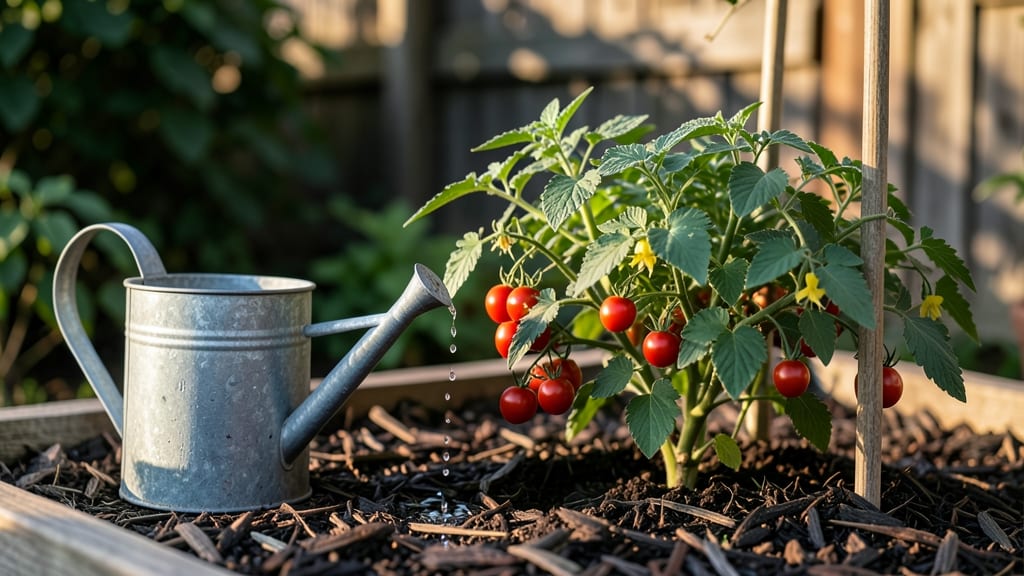
The perfect watering frequency for cherry tomatoes based on soil type
Mastering the watering schedule for your cherry tomatoes isn’t just about timing—it’s about understanding your soil type. Different soils hold moisture differently, meaning your sandy soil might need daily watering while clay soil could go weeks between drinks.
Let’s break down the science so you can grow juicy, crack-free fruit every time.
Your cherry tomato plants thrive on consistent moisture, but overwatering or underwatering leads to disasters like blossom-end rot or shriveled fruit. The key? A soil moisture test—stick your finger 1-2 inches deep.
If it feels dry, it’s time to water. For loamy soil, this might mean every 3-5 days, while sandy soil could need daily checks in summer.
🌱
In spring, your cherry tomatoes focus on root and leaf growth, so you can water less frequently—every 3-5 days for loamy soil. But when summer hits, evaporation skyrockets, and your plants may need water daily in sandy soil.
Always water deeply to encourage roots to grow downward, not just surface-level.
Your root depth plays a huge role. Mature cherry tomato plants can have roots 18-24 inches deep, so shallow watering stresses them. Aim to wet the soil to at least 6 inches deep each time.
Use a soaker hose or drip irrigation to deliver water slowly and evenly, reducing runoff.
💧
Watch for seasonal shifts. In fall, as temperatures drop, reduce watering to weekly for most soils. Overwatering in cool weather leads to fungal diseases like early blight.
And in clay soil, always let the top 2 inches dry out between waterings to prevent root rot—clay holds water like a sponge.
Pro tip: Morning watering is best. It gives foliage time to dry before evening, reducing disease risk. Avoid watering at night, even if your soil feels dry—wet leaves overnight invite fungal infections.
If you’re unsure, perform the finger test every morning: stick your finger in the soil near the plant’s base.
🌿
For crack-free fruit, consistency is key. Sudden dry spells cause uneven water absorption, leading to cracks. If you’ve missed a watering day, gradually increase frequency over 2-3 days to re-establish balance.
And remember: mulch is your best friend. A 3-inch layer of straw or wood chips locks in moisture, cuts down on weeds, and keeps soil temps stable.
Your cherry tomatoes will thank you with bursting flavor and vibrant color when you tailor your watering to your soil’s personality. Start with the finger test, adjust for your local climate, and soon you’ll have a harvest of perfect, plump tomatoes every season.
Signs your cherry tomatoes are overwatered or underwatered (and how to fix it)
Your cherry tomatoes might look healthy on the outside, but watering mistakes can silently sabotage your harvest. Overwatering and underwatering both cause distinct symptoms—like blossom-end rot or wilting leaves—that often get confused with other problems.
Let’s decode the clues your plants are sending and fix them before your crop suffers.
First, check the soil moisture by sticking your finger 1-2 inches deep. If it feels damp, you’re likely overwatering. If it’s bone-dry, your plants are thirsty. Yellowing leaves or mushy stems scream "too much water," while drooping foliage that doesn’t bounce back signals dehydration.
These signs aren’t just annoying—they can reduce yield by 50% if ignored.
⚠️ How Often to Water Cherry Tomatoes?
Summer: Every 1-2 days (deep soak, 1-2 inches of water). Spring/Fall: Every 3-5 days. Morning watering is key—it prevents fungal diseases like early blight and reduces fruit cracking. Use a moisture meter or the finger test to avoid guesswork.
Pro Tip: Mulch with straw or grass clippings to lock in moisture and keep roots cool.
One of the most heartbreaking signs of overwatering is blossom-end rot, where the bottom of your tomatoes turns black and mushy. This happens when calcium uptake fails due to inconsistent moisture.
To fix it, reduce watering slightly and add crushed eggshells or calcium-rich fertilizer to the soil. Prune affected fruits to redirect the plant’s energy.
On the flip side, underwatered cherry tomatoes often show leathery, wrinkled skin and stunted growth. The fruit may split open or stay small and tart.
If you see white edges on leaves (a sign of transpiration stress), it’s time to water deeply. Drip irrigation is ideal here—it delivers water straight to the roots without wetting the foliage, which can cause fungal infections.
Uneven watering is another common mistake that leads to cracked tomatoes. Rapid moisture swings cause fruits to expand and contract, creating unsightly (and unappetizing) splits.
To prevent this, water consistently—aim for the same time daily—and avoid letting the soil dry out completely between waterings. Container-grown tomatoes need even more attention, as pots dry out faster than in-ground soil.
If your tomato plants are struggling, don’t panic—most watering issues are reversible. Start by adjusting your schedule, improving drainage (raise beds if needed), and monitoring soil moisture. Within a week, you’ll see healthier leaves, firmer stems, and plump, crack-free cherry tomatoes ready for harvest.
The key is consistency: your plants will thank you with a bountiful, delicious reward! 🌱