
How To
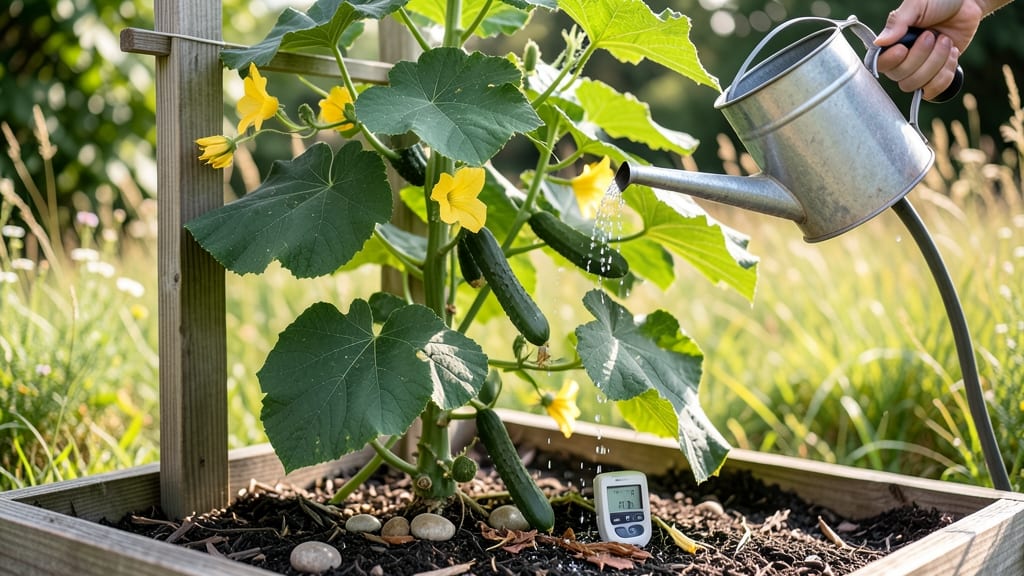
To water cucumbers properly, aim for deep soaks every 1-2 days—the key is keeping the soil consistently moist without drowning the roots.
Struggling to keep your cucumber plants healthy? Overwatering or underwatering can turn your thriving vines into a sad, wilted mess—here’s the science-backed watering schedule that actually works.
Cucumbers 🥒 thrive when their roots stay damp but never soggy, especially in Zone 6a where spring warmth meets occasional dry spells. Too little water and they wilt; too much and you risk rot or fungal diseases.
Below, I break down the exact 1-2 inch soil test method, how to adjust for containers vs. in-ground beds, and what to watch for when your plants start flowering or fruiting.
The 1-2 inch soil test: the gold standard for watering cucumbers
If you’ve ever wondered how often to water cucumbers without guessing, the 1-2 inch soil test is your secret weapon. Unlike rigid schedules, this method adapts to your cucumber’s real-time needs—preventing both root rot from overwatering and wilting from drought stress.
The key? Stick your finger into the soil and feel the moisture level. It’s simple, free, and beats relying on a calendar.
Cucumbers demand consistent moisture but despise soggy roots. Their shallow root systems absorb water quickly, making them vulnerable to both extremes. A 1-2 inch depth test reveals the truth: is the soil damp like a wrung-out sponge, or dry as yesterday’s breadcrumbs?
This tiny habit saves your plants from blossom-end rot and powdery mildew—two common cucumber killers tied to watering mistakes.
Here’s the golden rule: Water when the top 1-2 inches of soil feel dry to the touch. For most cucumbers, this means watering every 1-2 days in hot weather, but your finger test adjusts for rain, heatwaves, or clay soil. No more guesswork—just healthy, happy vines.
To perform the test, push your index finger 1-2 inches deep into the soil near the plant’s base. If it feels dry, it’s time to water.
For container-grown cucumbers, the soil dries out faster—check daily in summer. Pro tip: Use a moisture meter for precision if you’re a visual learner.
Why does depth matter? Cucumber roots spread 6-12 inches wide but stay shallow. Testing at 1-2 inches targets the zone where roots actively absorb water. Deeper tests might miss the moisture your plants need most.
Think of it like checking a baby’s diaper—you want to know the real story, not just the surface.
Overwatering is just as deadly as underwatering. Soggy soil cuts off oxygen, inviting root rot and fungal diseases. If your cucumbers’ leaves yellow or wilt despite wet soil, you’ve crossed the line. The fix? Improve drainage with compost or perlite and water only when the topsoil dries.
Heatwave? Double-check your soil every morning. Container plants? Water twice daily in summer. The 1-2 inch rule adapts to your garden’s quirks—no two cucumber patches are identical. Trust your finger over a timer; your plants will thank you with bigger, crisper cucumbers all season.
Here’s my weekly watering ritual: Test soil at dawn, water deeply before 10 AM, and mulch with straw to lock in moisture. In USDA Zone 6a, I’ve seen cucumbers thrive with this method—even in July’s brutal heat.
The secret? Consistency and adaptation. Your cucumbers will reward you with vines heavy enough to snap if you ignore them.
Remember: Cucumbers are 95% water. When their leaves droop by noon, it’s often a cry for hydration. But don’t drown them—aim for soil that’s moist like a damp washcloth, not drenched. Master this test, and you’ll grow cucumbers that taste sweeter and last longer. Happy gardening!
Watering frequency by cucumber growth stage: seedlings vs. flowering vs. fruiting
Cucumber plants don’t drink the same amount of water throughout their lifecycle. Seedlings need gentle moisture to avoid rotting, while flowering plants crave consistency, and fruiting vines demand deep hydration. The key? Adjusting your watering schedule based on their growth stage and container type.
In-ground plants hold moisture longer than pots, and hot climates evaporate water faster than mild ones. Let’s break it down by phase so you never over- or under-water again.
Your cucumber’s watering needs shift dramatically as it grows. Seedlings (weeks 1-3) should stay lightly moist—think damp sponge, not soggy. Flowering plants (weeks 4-6) need steady moisture to support pollination, while fruiting vines (weeks 7+) require deep, frequent watering to prevent bitter fruit.
Container-grown cucumbers dry out 2x faster than in-ground plants, so adjust accordingly. Let’s compare their exact needs below.
During the seedling stage, cucumbers are fragile. Overwatering causes root rot, while underwatering stunts growth. Use a spray bottle or drip irrigation to keep the soil evenly moist but never soggy. For container-grown seedlings, check moisture daily—pots dry out faster than garden beds.
If the top inch feels dry, water lightly. In mild climates, you might stretch this to every other day, but hot weather demands daily checks.
Once your cucumbers start flowering, they need consistent moisture to prevent flowers from dropping. Water deeply every 2 days, ensuring the top 2 inches of soil stay damp. In-ground plants can handle slightly longer gaps between waterings, but container cucumbers may need daily water in hot weather.
Morning watering is best—it reduces fungal risks and lets foliage dry before nightfall. Skip watering at night to avoid mildew.
When your cucumbers begin fruiting, they enter their thirstiest phase. Deep watering daily to every other day keeps fruits crisp and sweet.
Let the top 3 inches of soil dry slightly between waterings to encourage deep root growth. Container plants may need daily watering in summer, while in-ground cucumbers can stretch to every 2 days if mulched. Always water at the base of the plant to avoid wetting leaves, which attracts pests.
In hot climates, increase frequency by 30% and use mulch to lock in moisture.
Pro tip: Use your finger to test soil moisture. Stick it 1-2 inches deep—if it feels dry, water. If it’s damp, wait. This simple trick saves cucumbers from blossom-end rot (caused by inconsistent water) and bitter fruit (from drought stress).
Adjust for your climate: hot zones need more frequent watering, while cool regions can stretch intervals. Mulch always helps, regardless of where you garden.