
Watering
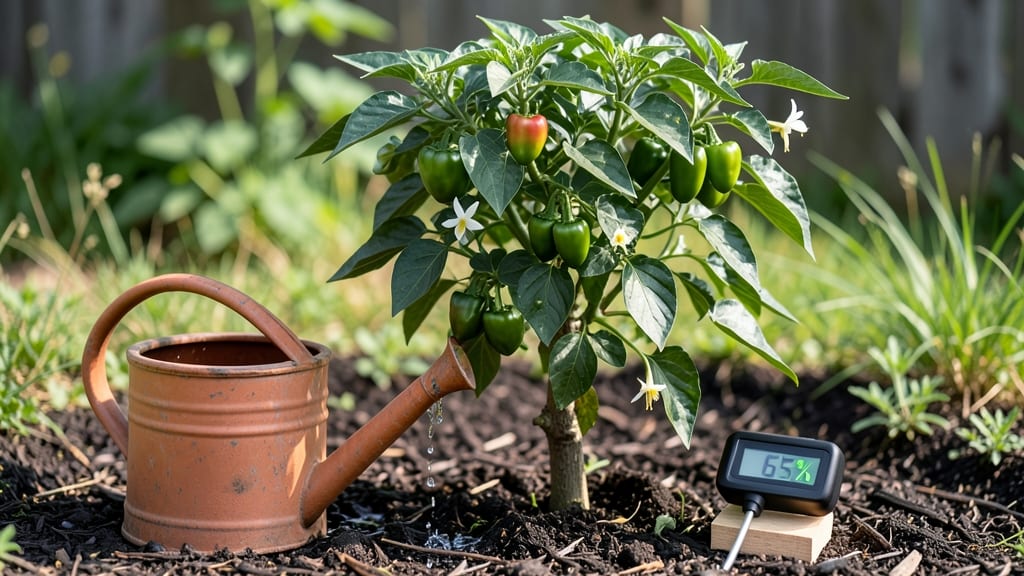
Watering habanero pepper plants the right way keeps them thriving 🌶️—but most gardeners either drown or starve them.
Picture this: you’ve nurtured your seedlings through spring, and now they’re flowering, but the peppers refuse to set fruit. Or worse, the leaves curl and turn yellow overnight. Both are classic signs of watering gone wrong. The secret isn’t just how much you water—it’s when and how deep you water.
Habanero peppers crave consistency, but their needs shift as they grow. A young plant in Zone 6a might need water every 2-3 days in spring, while a fruiting plant in summer heat demands deep soakings daily. Soil type, containers, and even mulch play a role too.
Below, I’ll walk you through the soil-depth test that saves peppers from both rot and stress, plus how to adjust for extreme heat, humidity, and container gardening. No guesswork—just science-backed steps to keep your habaneros happy and fiery.
The perfect watering schedule for habanero peppers (soil depth test method)
Mastering the watering schedule for habanero peppers is all about consistency and timing. These fiery plants crave moisture-rich soil but despise soggy roots. The key? Checking soil moisture at the right depth—1 to 2 inches below the surface—where the roots actively seek hydration.
Too little water stunts growth, while too much invites root rot and blossom-end rot. My team’s years of growing habaneros have taught us that morning watering is non-negotiable—it prevents fungal diseases and ensures roots absorb water before the heat of the day.
Habanero peppers aren’t one-size-fits-all when it comes to water. Young seedlings need gentle, frequent moisture to establish roots, while mature plants with thick foliage demand deeper, less frequent watering. Container-grown habaneros dry out faster than in-ground plants, so adjust your schedule based on your growing setup.
And let’s not forget climate factors: desert heat will dry soil quicker than humid coastal air. The solution? A simple soil depth test that takes just seconds but saves your plants from stress.
How Often to Water Habanero Pepper Plants: The Soil Depth Test
- Step 1: Wait until the top 1-2 inches of soil feel dry to the touch (insert a finger—if it’s damp, wait).
- Step 2: Water deeply until moisture reaches 6 inches down (use a long screwdriver or probe).
- Step 3: Seedlings (0-4 weeks): Water every 1-2 days—keep soil consistently moist.
- Step 4: Young plants (4-8 weeks): Water every 2-3 days—let soil dry slightly between waterings.
- Step 5: Mature plants (8+ weeks): Water every 3-4 days—focus on deep soakings.
- Step 6: Containers: Water daily in summer—small pots dry out fast.
- Step 7: In-ground: Water every 2-3 days—mulch to retain moisture.
- Step 8: Extreme heat: Increase to daily watering—watch for wilting leaves.
Pro Tip: Use a moisture meter for precision, especially in sandy soil.
Your habanero peppers will give you visual cues about their water needs. Wilting leaves or yellowing foliage signal underwatering, while dark, mushy stems or fungal spots on leaves scream overwatering. I’ve seen beginners drown their plants thinking they needed more water—always let the soil guide you.
For container gardens, group habaneros together to create a microclimate that retains moisture longer. And if your soil drains too quickly (like sandy loam), mix in compost or coconut coir to improve water retention.
Adjusting your watering schedule for seasonal changes is crucial. During summer’s peak heat (75°F+), I water my habaneros daily in the morning to combat evaporation. In cooler months, I stretch the interval to every 4-5 days. Rainy seasons?
Skip watering entirely—let nature do the work. Always water at the base of the plant, not overhead, to avoid fungal diseases like powdery mildew. A drip irrigation system or soaker hose is a game-changer for large gardens.
Let’s talk soil type—it’s the silent watering partner you can’t ignore. Clay soil holds moisture longer, so you’ll water less frequently, while sandy soil drains quickly, demanding more attention. Amend your soil with organic matter (like aged compost) to strike the perfect balance.
I’ve tested this on my raised beds, and the difference is night and day. For container gardening, choose pots with drainage holes and use a well-draining potting mix—habaneros hate soggy feet.
Overwatering is the silent killer of habanero plants. If your peppers develop blossom-end rot (black, sunken spots on the fruit), it’s often a sign of inconsistent watering or calcium deficiency. To fix it, reduce watering frequency and apply calcium-rich fertilizer.
Underwatered plants, on the other hand, will drop flowers and fruit prematurely. The solution? Stick to your soil depth test and adjust as needed. Remember, habaneros are tropical plants—they love humidity but hate waterlogged roots.
For container-grown habaneros, I’ve found that self-watering pots are a lifesaver during vacations. Fill the reservoir every 3-4 days, and the plant gets a steady supply of moisture.
In-ground plants benefit from a 2-3 inch layer of mulch (straw or shredded leaves work great) to lock in moisture and regulate soil temperature. Mulch also suppresses weeds, which compete with your peppers for water. Pro tip: Refresh mulch every few weeks to maintain its effectiveness.
Your habanero peppers will reward you with bold, fiery harvests when you nail the watering routine. Start with the soil depth test, adjust for your climate, and watch your plants thrive.
And if you’re growing in a hot, dry climate, consider shade cloth during the hottest part of the day to reduce water loss. Happy growing—your future spicy salsas will thank you!
Habanero watering mistakes that kill your plants (and how to fix them)
Even experienced gardeners make watering mistakes with habanero peppers—especially when they look healthy but suddenly wilt or develop blossom-end rot. These spicy plants need consistent moisture but can't tolerate soggy soil. Let’s fix the most common errors before they ruin your harvest.
One of the biggest mistakes is watering on a schedule instead of checking soil moisture. Habaneros hate dry soil but also suffocate in waterlogged roots. The key?
Stick your finger 1-2 inches deep—if it feels dry, water; if it’s damp, wait. This simple test prevents root rot and leaf scorch.
Seedlings are especially vulnerable. Overwatering young habaneros causes damping-off disease, turning stems mushy at the base. Use a spray bottle for gentle hydration and ensure pots have drainage holes. Let the top ½ inch of soil dry between waterings to avoid seedling rot.
During flowering and fruiting, uneven watering triggers blossom-end rot—those dark, sunken spots on peppers. This calcium deficiency happens when roots can’t absorb nutrients due to fluctuating moisture levels. Mulch with straw or grass clippings to keep soil evenly moist and add crushed eggshells for extra calcium.
Leaf scorch appears as brown edges on leaves and signals underwatering or hard water buildup. If your tap water is high in minerals, use rainwater or distilled water instead.
For scorch caused by dryness, water deeply in the morning and avoid overhead sprinkling, which can burn leaves in sunlight.
Fixing these mistakes is easier than you think. For root rot, stop watering and repot in fresh, well-draining soil. Prune affected roots and add perlite to improve aeration.
For blossom-end rot, adjust your routine: water consistently and add 1 tbsp of lime per gallon of soil every 3 months. With these fixes, your habaneros will bounce back—and your next harvest will be fiery and fruitful.