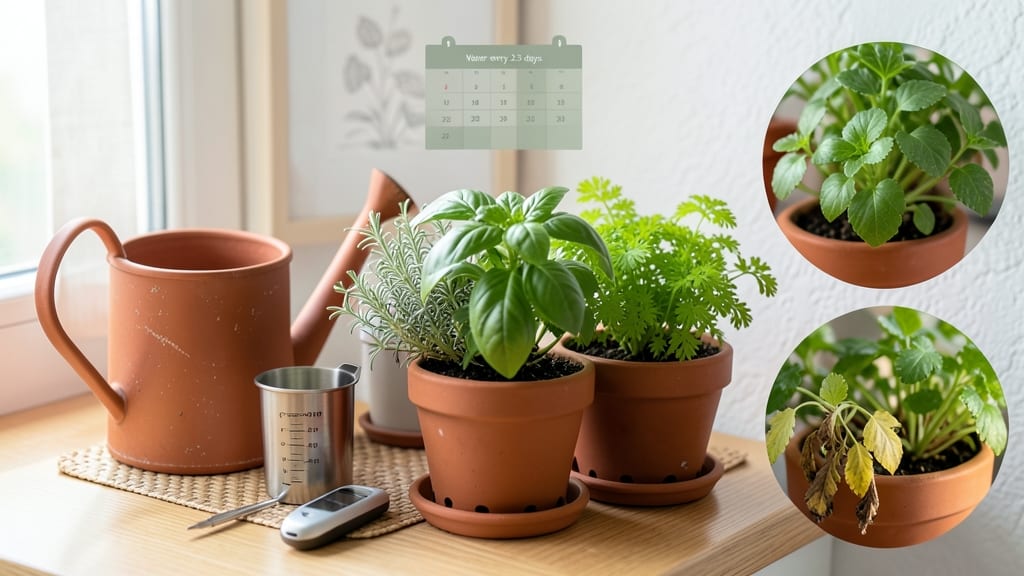
5 Signs you’re watering your herbs wrong (and how to fix it)
Your indoor herbs might look healthy on the surface, but subtle clues like yellowing leaves or crispy stems often signal watering mistakes. Most gardeners overwater by default—especially in low-light conditions—while others let their herbs dry out completely.
The key is finding that goldilocks zone of soil moisture where roots stay hydrated but never soggy.
Even experienced growers struggle with this balance. For example, basil wilts dramatically when thirsty, while mint develops brown edges from excess moisture. These visual cues help diagnose the problem before it’s too late. Let’s explore the five most common watering mistakes and how to fix them.
⚠️ Watering Herbs Indoors: The Critical Rule
Check soil moisture by sticking your finger 1 inch deep—if it feels dry, water thoroughly. If damp, wait 1-2 more days. Terracotta pots dry faster than plastic, so adjust frequency accordingly.
✅ Pro Tip: Use a moisture meter for accuracy, especially with humidity-loving herbs like cilantro.
Sign #1: Yellowing Leaves often means overwatering. When roots suffocate in soggy soil, they can’t absorb nutrients, causing leaves to turn yellow while remaining plump. Start by letting the top 2 inches of soil dry out between waterings.
For root rot recovery, repot in fresh, well-draining soil and trim affected roots.
Sign #2: Crispy or Brown Edges on leaves indicate underwatering. These dry, brittle edges appear first on older leaves as the plant conserves moisture.
To fix this, water deeply until it drains from the bottom, then place the pot on a pebble tray to increase humidity. Mist leaves lightly in the morning to mimic natural dew cycles.
Sign #3: Wilting Despite Wet Soil suggests root damage from overwatering or compacted soil. Gently remove the herb from its pot and inspect the roots. Healthy roots are white or light tan, while rotten roots are mushy and dark.
Prune the bad roots, rinse the remaining roots with water, and replant in fresh potting mix with perlite.
Sign #4: Leggy Growth with sparse leaves means your herb isn’t getting enough light—or water. Stretch toward light sources? It’s a cry for help. Move your herb to a sunnier spot and water only when the top 1 inch of soil is dry.
Avoid fertilizing until the plant regains vigor, as excess nutrients worsen stress.
Sign #5: Mold or Fungus on Soil is a red flag for overwatering. Fuzzy white or black spots on the soil surface indicate excess moisture and poor airflow.
Remove the top layer of soil, sprinkle fungicide powder, and let the pot dry out completely for 24 hours before watering again. Use a fan on low to improve airflow around the plant.