
Watering
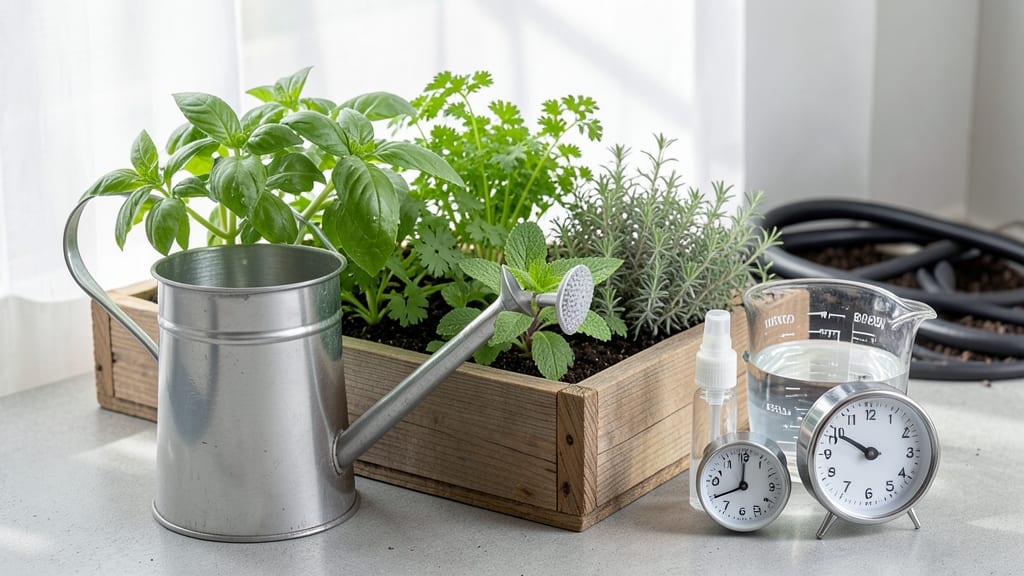
Watering herbs the right way keeps them healthy and packed with flavor, but figuring out how often to water them can feel like guessing—especially when some need moisture daily while others thrive on neglect.
Overwatering or underwatering herbs can turn your kitchen garden into a sad, wilted disappointment—but the right watering schedule keeps them thriving with vibrant flavors and lush growth.
Most herbs in containers need water every 2-3 days in summer, while in-ground varieties can go 7-10 days between drinks. The key? Checking soil moisture instead of sticking to a rigid calendar.
Below, I’ll break down the best watering tricks for different herbs, how to spot over- or under-watering, and seasonal adjustments to keep your 🌿 patch thriving all year.
The perfect watering schedule for different types of herbs
Not all herbs crave the same amount of water—some thrive with minimal moisture while others wilt without consistent hydration. Understanding your herbs' water needs is key to growing flavorful plants that last all season.
Drought-tolerant varieties like rosemary and thyme store water efficiently, while moisture-loving basil and cilantro need regular drinks to stay perky. Let’s break down the ideal watering schedule by herb category and how to adjust for seasons.
Your first step is identifying which herb category you’re growing. Mediterranean herbs like oregano and sage prefer dry conditions, while tropical herbs like mint and parsley need consistent moisture.
Even within categories, needs vary—basil wilts faster than thyme when thirsty. Below, I’ve organized herbs into three main groups with their specific watering guidelines.
For drought-tolerant herbs like rosemary and thyme, the key is letting the soil dry out completely between waterings. These Mediterranean natives store water in their woody stems, so overwatering causes root rot.
In summer, you might need to water every 5-7 days in containers, but reduce to every 10-14 days in winter when growth slows. Always check soil moisture before watering—stick your finger 1-2 inches deep; if it feels dry, it’s time to water.
Moderate-need herbs like basil, chives, and dill require more attention. Basil, in particular, wilts dramatically when thirsty but recovers quickly after a drink. During summer’s peak heat, I water my container-grown basil every 1-2 days, especially if it’s in full sun. In cooler months, every 3-4 days keeps them happy. Pro tip: Water at the base of the plant in the morning to reduce evaporation and fungal risks.
Moisture-loving herbs such as cilantro, mint, and parsley need consistent hydration to prevent bolting (flowering prematurely). These herbs thrive with 1-2 inches of water per week, more in containers where soil dries faster.
In summer, I water mine daily in containers and every 2-3 days in-ground. Mulching helps retain moisture—use straw or shredded leaves to keep roots cool and hydrated.
Seasonal adjustments are critical. In spring and fall, herbs generally need 30-50% less water than in summer. For example, my oregano in-ground plants go from every 7 days in spring to every 3-4 days in July.
In winter, most herbs enter dormancy, so I cut back to monthly watering or less, letting the soil dry out completely between sessions. This prevents soggy soil and root diseases.
Container herbs dry out faster than in-ground plants, so adjust your schedule accordingly. A 5-gallon pot may need watering every 2-3 days in summer, while a large raised bed might only need every 5-7 days.
Always consider your local climate—humid areas require more frequent watering, while dry climates need less. If you’re unsure, the finger test is foolproof: Stick your index finger 1-2 inches into the soil; if it feels dry, water thoroughly.
Overwatering is the #1 killer of herbs, so always prioritize well-draining soil. Amend your garden beds with compost or perlite to improve drainage, and use pots with drainage holes. If your herbs develop yellow leaves or
Soil dry test tricks to water herbs without overdoing it
Mastering the art of watering herbs starts with understanding your soil's moisture level. Instead of sticking to rigid schedules, I rely on simple soil dry tests that keep my basil, thyme, and parsley thriving without drowning their roots.
The key is learning how to read your plants' signals before they beg for water—or worse, rot from too much love.
Herbs like basil and cilantro crave consistently moist soil, while rosemary and oregano prefer drier conditions. The same watering routine won't work for all, which is why I've perfected three foolproof methods to check soil moisture.
These tricks save me time, prevent waste, and keep my herbs perky and flavorful all season long.
⚠️ Watering Herbs Too Often Kills Them Faster Than Too Little!
Most herbs hate soggy roots. Overwatering causes root rot and fungal diseases, while underwatering leads to stunted growth. The golden rule: Wait until the top 1-2 inches of soil feels dry before watering again. For container herbs, this might mean every 2-3 days in summer, while in-ground herbs may only need watering every 7-10 days.
Pro Tip: Lift your pots—if they feel light as a feather, it's time to water. If they're heavy, wait another day.
My first go-to method is the finger test, which takes just seconds. Stick your index finger about 1-2 inches deep into the soil. If it feels dry and crumbly, your herbs are thirsty.
If it's still damp or cool, hold off on watering. This works especially well for container-grown herbs like parsley and chives, where soil dries out faster.
For in-ground herb beds, I use the weight check method. Healthy soil should feel slightly moist but not soggy. If the soil feels light and fluffy, it's time to water.
I also look for visual cues like wilting leaves or soil pulling away from pot edges—these are clear signs your herbs need hydration. But be careful: yellowing leaves often mean overwatering, not underwatering!
Another trick I swear by is the visual inspection of the soil surface. Healthy herb soil should look dark and slightly damp but not muddy. If the top layer is cracked or powdery, it's a sign your herbs need water.
For sandy soils, which dry out quickly, I water more frequently but in smaller amounts. For clay soils, which hold moisture longer, I space waterings further apart.
Remember, morning watering is best—it gives plants time to drink up before the heat of the day causes evaporation. Avoid watering at night, as damp foliage invites fungal diseases.
By mastering these simple tests, you'll give your herbs the perfect balance of moisture, ensuring they stay lush, flavorful, and ready for your next recipe.