
Watering
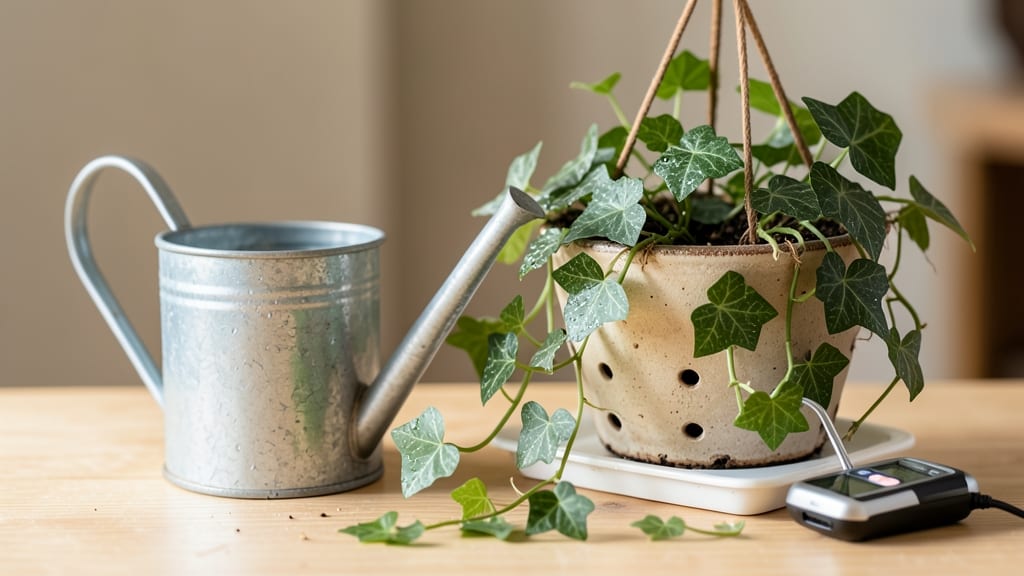
Watering your English Ivy 🌿 indoors too often or too little can turn its glossy leaves into sad, brown edges faster than you think.
Struggling to keep your indoor ivy lush and thriving? Overwatering or underwatering can turn those vibrant leaves into sad, crispy edges—fast. The secret to perfect moisture balance lies in a simple finger-dip trick that works for every ivy plant, no matter the season.
Most people assume a set schedule—like every week—will work, but ivy thrives on consistency in soil moisture, not a calendar. Humidity, pot size, and even the time of year shift how often you should water, and ignoring those factors leads to root rot or dehydrated vines.
Below, I’ll break down the exact finger-dip test to check soil moisture, seasonal adjustments for your ivy’s needs, and how to spot the first signs of over- or under-watering before it’s too late.
The finger-dip test: how to check ivy soil moisture like a pro
Forget guessing whether your ivy needs water—this simple finger-dip test reveals exactly what’s happening in the soil. Unlike rigid schedules, this method adapts to your plant’s real-time needs, preventing both soggy roots and parched leaves.
I’ve used it for years to keep my English ivy thriving, even through dry winters when humidity plummets.
Most indoor ivy owners make two critical mistakes: watering on a fixed schedule or relying on the pot’s weight. Both fail because they ignore soil moisture gradients—the top layer can feel dry while the bottom stays damp, or vice versa.
The finger-dip test cuts through the guesswork by giving you a tactile read of moisture at the root zone.
How to Perform the Finger-Dip Test
- Step 1: Wait until the top 1-2 inches of soil feel dry to the touch (insert your finger about 1 inch deep).
- Step 2: Dip your finger 2-3 inches deep—this is where ivy roots actively absorb water. If it feels damp but not soggy, hold off on watering.
- Step 3: For small pots (6" or less), water when the soil feels dry at 1 inch. Larger pots (8"+) can wait until 2-3 inches deep are dry.
- Step 4: Water thoroughly until it drains from the bottom. Empty the saucer after 10 minutes to prevent root rot.
- Step 5: Adjust frequency based on season: winter may mean waiting 3-4 weeks, while summer could require weekly checks.
Why does depth matter? Ivy roots spread horizontally, so moisture at 2-3 inches is what matters most—not just the surface. I once killed a Neptune ivy by only checking the top layer; it looked thirsty but had soggy roots below. The finger-dip test reveals this hidden moisture.
For Algerian ivy, which thrives in slightly drier conditions, wait until the soil feels completely dry at 2 inches deep. English ivy, however, prefers slightly more consistent moisture—aim for damp but not wet at that depth.
Pro tip: Use your pinky finger for small pots and your index finger for larger ones.
Seasonal adjustments are key. In winter, when indoor air is dry and growth slows, check soil every 2-3 weeks. Summer’s heat may demand weekly tests, especially if your ivy is near a sunny window.
I’ve seen ivy leaves curl within days of underwatering in July—don’t let that happen to yours!
If you’re using a self-watering pot, the finger-dip test still applies. Stick your finger into the soil (bypassing the reservoir) to check moisture levels. These pots can create a false sense of security—just because water’s available doesn’t mean the roots are using it.
Watch for soil texture changes too. Sandy mixes dry out faster, while peat-heavy blends hold moisture longer. If your ivy’s soil feels grainy and dry at 1 inch, it’s time to water. If it’s sticky or smells musty, you’ve overdone it.
For new ivy plants, the finger-dip test is even more critical. Young roots are delicate and prone to rot if overwatered. Start by checking soil every 5-7 days until you gauge the plant’s rhythm.
My first ivy died because I assumed it needed water daily—until I learned to trust the soil.
Remember: the finger-dip test isn’t just about moisture—it’s about plant communication. Your ivy can’t tell you when it’s thirsty, but the soil can. Master this method, and you’ll have lush, vibrant ivy year-round—no guesswork required. 🌿
Ivy watering schedule by season: adjustments for growth cycles
Indoor ivy thrives on consistency, but its water needs shift dramatically with each season. In spring and summer, your ivy will drink up to twice as much water as it does in winter, thanks to increased light and warmth.
The key is understanding how temperature, humidity, and light exposure change its moisture requirements—because a rigid schedule will either drown or dehydrate your plant.
Most gardeners make the mistake of watering on a fixed schedule, like every Monday. But ivy grows at different rates, and indoor conditions vary wildly. For example, a sunny south-facing window can dry out soil 30% faster than a dim corner.
Instead, focus on the soil's moisture level—not the calendar. This simple shift prevents root rot in summer and leaf drop in winter.
| Season | Watering Frequency | Soil Check Depth | Key Factors |
|---|---|---|---|
| Spring | Every 5-7 days | Top 1 inch | Increased light, new growth |
| Summer | Every 3-5 days | Top ½ inch | High heat, low humidity |
| Fall | Every 10-14 days | Top 1.5 inches | Cooler temps, slower growth |
| Winter | Every 3-4 weeks | Top 2 inches | Low light, dormancy |
In spring, your ivy will show its fastest growth as it wakes from dormancy. This is when you should increase watering frequency and use the finger-dip test to check moisture every 5-7 days.
Look for darker, glossy leaves—a sign your plant is happy and hydrated. If the soil feels dry just ½ inch down, it’s time to water thoroughly until it drains from the pot’s bottom.
Summer is the most critical season for ivy care. With temperature spikes and dry indoor air, your plant may need watering as often as every 3-5 days.
Place the pot on a pebble tray to boost humidity, and avoid letting soil stay soggy. Yellowing leaves or drooping vines are red flags—adjust immediately by watering only when the top ½ inch of soil feels dry.
As fall arrives, your ivy’s growth slows, and its water needs drop significantly. Reduce watering to every 10-14 days, checking for dryness 1.5 inches deep. This is also the time to prune leggy vines and reduce fertilizer, helping your plant prepare for winter.
Overwatering now can lead to mushy stems and fungal issues.
Winter is all about minimal intervention. Your ivy enters a dormant phase, and watering every 3-4 weeks is usually enough. Let the soil dry out 2 inches deep before watering again.
Place your plant near a bright, indirect light source, like a north-facing window, to prevent leaf drop from low light. If you notice crispy brown edges, it’s a sign the air is too dry—consider a humidifier or misting.