
How To
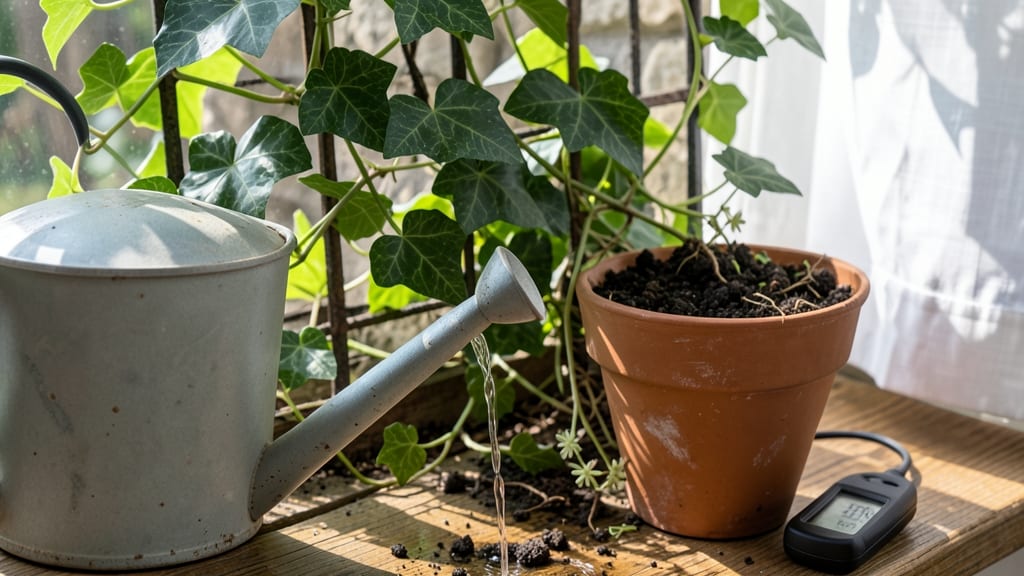
Watering English ivy too often or too little can turn your 🌿 thriving vine into a crispy mess—here’s the exact schedule to keep it lush without drowning the roots.
You’ve probably noticed those droopy leaves or yellowing patches, and it’s not just a bad day—it’s a watering problem. Ivy hates soggy soil but also wilts faster than a forgotten houseplant, so balancing the two is the key to keeping it happy.
Most gardeners water English ivy once a week in spring and every 5–7 days in summer, but that’s just the starting point. Soil type, pot size, and even your local humidity will tweak the timing—so we’ll break down the science-backed test to know when it’s really thirsty.
By the end, you’ll recognize the signs of overwatering (yellow leaves, mushy stems) and underwatering (brown tips, slow growth) and adjust your routine for every season—no guesswork, just healthy ivy all year.
The perfect watering frequency for ivy based on soil dry test
Ivy thrives on a consistent moisture balance, but guessing your watering schedule can lead to root rot or crispy leaves. The key? A simple soil dry test—whether you're growing English ivy, Swedish ivy, or Boston ivy.
This method ensures you water just enough to keep roots happy without drowning them. Let’s break it down so you can master the perfect routine for your ivy’s environment.
First, understand that potted ivy and garden-bed ivy have different needs. Containers dry out faster, while in-ground plants retain moisture longer. Your climate also plays a role: humid regions may need less frequent watering than dry, arid areas.
By learning to read your ivy’s soil, you’ll avoid the most common mistakes—like watering on a schedule instead of responding to the plant’s actual needs.
Here’s how to test your soil moisture like a pro, plus a clear guide on how often to water based on what you find. Grab a finger or a wooden stick, and let’s get started!
How Often to Water Ivy: Step-by-Step Guide
- Step 1: Insert your finger 1-2 inches into the soil near the plant’s base. If it feels dry at this depth, it’s time to water.
- Step 2: Use the stick method for deeper roots. Push a wooden stick in—if it comes out clean, water thoroughly. If soil clings, wait 1-2 more days.
- Step 3: Water potted ivy when the top 1 inch of soil is dry. Containers dry out faster, so check daily in hot weather.
- Step 4: For garden beds, water when the top 2-3 inches are dry. Ivy in soil stays moist longer, so reduce frequency.
- Step 5: Adjust for season. In summer heat, water every 3-5 days. In winter dormancy, cut back to every 2-4 weeks.
- Step 6: Deep water always. Soak the soil until water runs out the drainage holes (pots) or seeps 6 inches deep (garden beds).
Now that you’ve tested your soil, let’s apply this to your specific ivy type. English ivy and Boston ivy (the climbing varieties) prefer slightly drier soil than Swedish ivy, which stays lush with more consistent moisture.
If your ivy’s leaves feel crispy, you’re underwatering. If they’re yellowing or mushy, you’re overdoing it. The soil test is your best tool to strike that balance.
Pro tip: Morning watering is ideal. It gives leaves time to dry overnight, reducing fungal risks like powdery mildew. Avoid evening watering, especially in humid climates. If your ivy is in a terracotta pot, it’ll dry out faster than a plastic container—adjust your schedule accordingly.
Terracotta breathes, so it’s great for ivy, but it means more frequent checks.
Don’t forget to consider your mulch layer. A 2-inch layer of organic mulch (like shredded bark) helps retain moisture and keeps roots cool. This can reduce your watering frequency by up to 30%, especially in hot, dry months.
Just keep the mulch 2 inches away from the stem to prevent rot. For potted ivy, a layer of mulch on top of the soil can also slow evaporation.
If you’re still unsure, watch your ivy’s growth patterns. Healthy ivy grows steadily and has vibrant green leaves. If growth stalls or leaves turn brown at the edges, it’s a sign to adjust your watering.
Remember, ivy is resilient—it can bounce back from minor mistakes, but chronic overwatering or underwatering will weaken it over time. With this soil test method, you’ll build a routine that keeps your ivy thriving year-round.
Ready to put it into action? Grab your finger or stick, test that soil, and give your ivy the perfect drink—neither too much nor too little. Your plant will thank you with lush, vibrant growth all season long! 🌿
Seasonal watering schedule for ivy: spring to winter
Ivy thrives on consistent moisture but hates soggy roots—balancing these needs is key to keeping your plant vibrant year-round. Temperature, humidity, and daylight all shift seasonally, so your watering routine must adapt.
In spring, for example, your ivy will drink eagerly as new growth emerges, while winter slows its metabolism to a crawl. Let’s break down the month-by-month watering schedule to keep your ivy lush without drowning it.
First, understand that potted ivy needs more frequent watering than in-ground varieties—containers dry out faster. For both, the soil should dry 1-2 inches deep between waterings, but this changes dramatically with the seasons.
Humidity also plays a role: high humidity in summer means less evaporation, while dry winter air can dehydrate soil quicker than you’d expect. Always water in the morning to reduce fungal risks from prolonged leaf wetness.
| Season | Watering Frequency | Soil Check Depth | Key Factors |
|---|---|---|---|
| Spring (March-May) | Weekly (every 5-7 days) | 1-2 inches | New growth, increasing daylight |
| Summer (June-August) | Every 5-7 days (daily in extreme heat) | 1 inch (topsoil only) | High heat, humidity varies |
| Fall (September-November) | Bi-weekly (every 10-14 days) | 2 inches | Cooling temps, reduced growth |
| Winter (December-February) | Monthly (or when soil is completely dry) | 3+ inches | Dormancy, indoor heating dryness |
In spring, your ivy’s thirst increases as it prepares for its growing season. Water deeply when the top 1-2 inches of soil feel dry—this encourages strong root development.
Look for new leaf growth as a sign it’s happy; if leaves wilt or turn brown at the edges, it’s time to water. Mulching around the base helps retain moisture and regulates soil temperature, which is especially helpful in early spring when soil can still be cool.
Summer is the most demanding season for ivy watering. Heat waves can dry out soil in hours, so check moisture daily during extreme temperatures. If the soil feels dry just 1 inch below the surface, it’s time to water.
Watch for drooping leaves or crispy edges—these are clear signs of thirst. For potted ivy, consider placing the container on a pebble tray with water to increase humidity around the roots without overwatering.
As fall arrives, reduce watering frequency to match your ivy’s slowing metabolism. By late September, most ivy varieties enter a semi-dormant state, so water only when the top 2 inches of soil are bone-dry. Overwatering in fall can lead to root rot as cooler temps slow evaporation.
If your ivy is outdoors, protect it from early frosts by moving containers to a sheltered spot or wrapping the pot in bubble wrap.
Winter care is all about minimal intervention. Most ivy varieties become dormant, and watering should be reduced to once a month or only when the soil is completely dry.
Indoor ivy may need slightly more attention due to dry heating systems, but even then, let the top 3 inches of soil dry out between waterings. Yellowing leaves in winter are often a sign of overwatering, not thirst—adjust your schedule if you notice this.
Always pair watering with a quick soil check: stick your finger into the soil up to your second knuckle. If it feels dry, water thoroughly until it runs out the drainage holes.
For in-ground ivy, a deep soak once a month in winter is usually enough, while container-grown ivy may need watering every 3-4 weeks. Trust your plant’s signals—healthy ivy has deep green leaves and a vigorous growth habit, while struggling ivy shows yellowing, wilting, or mold.