
Watering
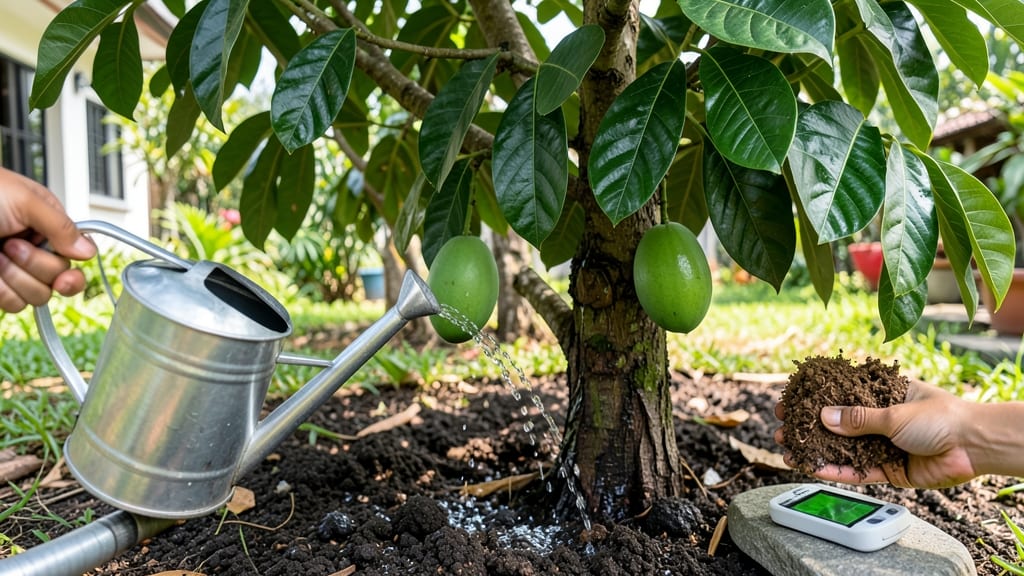
To water a mango tree properly means giving it just the right amount—too little and the fruit won’t ripen, too much and the roots rot 🥭. You’ve likely already learned this the hard way, watching your tree’s leaves droop or its branches sag under the weight of unripe fruit.
Here’s the truth: mango trees in General (Tropical/Subtropical Regions) like zones 10-11 need deep, infrequent waterings—think once a week for young trees and every 3-5 days in peak summer. But timing and soil type change everything, and getting it wrong can mean lost harvests.
Below, I’ll break down the exact watering schedule by season, how to tell if you’re overdoing it (those yellowing leaves are a red flag), and the one trick that saves mature trees from drought stress without drowning the roots.
By the end, you’ll know not just how often to water, but when to adjust for rain, heatwaves, and even your tree’s age—so you can go from guessing to growing bountiful, sweet mangos every season.
Mango tree watering schedule by season: what experts recommend
Watering your mango tree correctly is the difference between a bountiful harvest and a struggling plant. Unlike drought-resistant citrus, mangoes demand consistent moisture—especially during their fruit development phase. But here’s the catch: overwatering can suffocate roots in heavy clay soil, while underwatering stunts growth in sandy loam.
Let’s break down the expert-approved schedule tailored to your climate zone.
Mango trees thrive in USDA Zones 10-11, but even in subtropical Zone 9b, they need adjustments for rainy vs. dry seasons.
Young trees (3 years old) require frequent deep watering to establish roots, while mature trees develop deeper taproots that need less frequent but deeper soaks. The key? Soil moisture sensors or the finger test—insert your finger 2-3 inches deep; if dry, it’s time to water.
🌱⚠️ CRITICAL NOTE: Never water at night—this invites fungal diseases like anthracnose. Aim for early morning (5-8 AM) when evaporation rates are lowest. In container-grown mangoes, check soil moisture daily; pots dry out 3x faster than in-ground soil.
In tropical climates with year-round warmth, your mango tree’s water needs peak during fruit set (April-June). This is when 20-30% of your tree’s energy goes into developing mangoes, and water stress can cause fruit drop.
Use a drip irrigation system to deliver water slowly to roots, mimicking natural rainfall. For container-grown mangoes, switch to terracotta pots—they wick moisture away from roots faster than plastic.
If you’re in a subtropical zone (9b), like coastal California or Florida, expect hotter summers and cooler winters. During heatwaves (>95°F), increase watering to every other day for mature trees.
Watch for leaf scorch—a telltale sign of underwatering. In winter, reduce watering by 70% unless temperatures drop below 50°F, which can shock the tree.
One common mistake I see? Watering based on calendar days instead of soil conditions. For example, a mature mango tree in sandy soil might need watering every 2 days
Signs your mango tree is overwatered or underwatered (and how to fix it)
Your mango tree communicates water needs through subtle (and not-so-subtle) clues. Yellowing leaves, soft stems, or mushroom-like growths at the base can signal overwatering, while crispy edges, drooping foliage, and fruit drop often mean underwatering.
Learning these signs early prevents irreversible damage—like root rot or stunted growth—and keeps your tree thriving.
First, check the soil moisture by inserting your finger 2-3 inches deep. If it’s soggy, you’re likely overwatering. If dry, your tree needs hydration. Mango trees hate soggy roots, but they also suffer in drought stress.
The key is balance—especially during fruit development when water needs spike. I’ll walk you through the most common red flags and how to correct them.
🚨 Watering Warning
Mango trees in heavy clay soil need less frequent watering—they retain moisture longer. In sandy soil, water every 2-3 days in summer. Always water deeply (12+ inches) to encourage root growth. Morning watering (5-8 AM) prevents fungal diseases like anthracnose.
One of the first signs of overwatering is yellowing leaves that start at the bottom of the tree. Unlike nutrient deficiencies, these leaves stay yellow even as they dry out. Check for mushy stems or a foul smell at the base—classic root rot symptoms.
If you spot white fungal growth, act fast: reduce watering to every 10-14 days and improve drainage by adding organic matter (like compost) to the soil.
Underwatered mango trees show crispy leaf edges and wilting foliage that doesn’t perk up after watering. Young leaves may appear small and curled, and fruit might drop prematurely. In extreme cases, the tree’s canopy shrivels.
To fix this, water deeply 2-3 times per week during summer and mulch heavily to retain moisture. A drip irrigation system ensures consistent hydration without overwatering.
Another tricky sign is leaf drop, which can mean either too much or too little water. Pair it with other clues: if leaves are dark green and glossy, you’re overwatering.
If they’re dull and brittle, underwatering is likely. Adjust your schedule based on the season—summer heat demands more water, while winter slows root activity. Always water at the base of the tree, not the leaves, to prevent disease.
For a quick troubleshooting checklist, ask yourself: - Is the soil soggy or dry 2 inches down? - Are leaves yellowing or wilting? - Is there fungal growth at the base? - Has the tree dropped fruit prematurely?
If you answered “yes” to overwatering signs, cut back immediately. For underwatering, increase frequency and depth. Mulch with wood chips to lock in moisture and protect roots—this simple step can save your tree during heatwaves.
Remember, mango trees are drought-sensitive but hate waterlogged roots. The goal is consistent moisture, not saturation. By tuning into your tree’s signals and adjusting your watering routine, you’ll keep it healthy and fruit-bearing for years. 🌱💧