
Watering
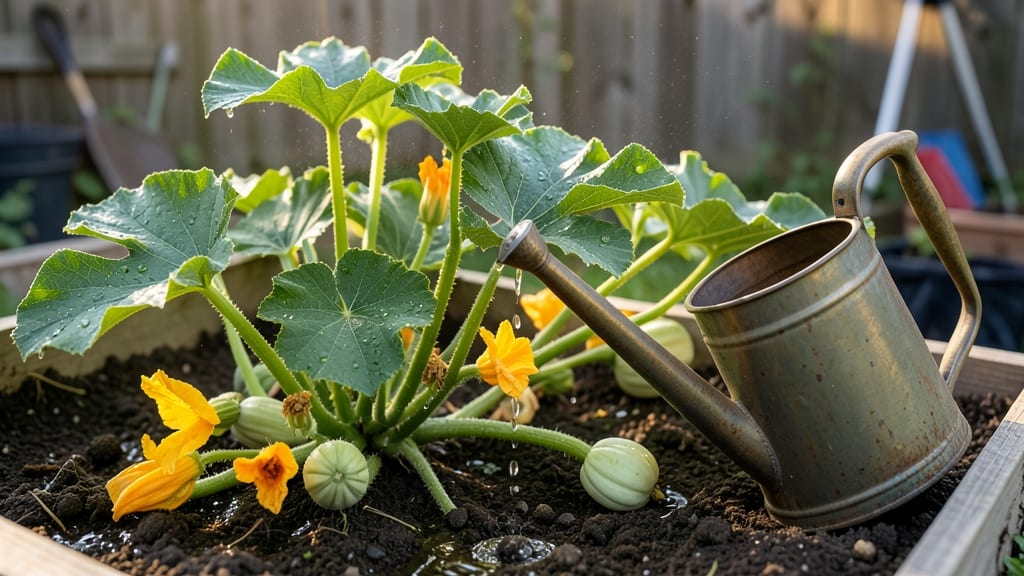
To water squash properly, aim for 1-2 inches of moisture per week—deep soaking at the base keeps those 🎃 vines thriving without drowning the roots.
Struggling to keep your squash plants thriving? Overwatering or underwatering can turn your garden dreams into a soggy or wilted disaster—and no one wants that when summer harvests are on the line.
Here’s the secret: squash plants need consistent moisture, especially when flowers turn into fruit, but soggy soil invites disease. I’ll show you how to read your soil, adjust for heat waves, and spot the early signs of thirst or rot before they ruin your crop.
By the end, you’ll know exactly when to reach for the hose, how much to give, and why skipping this step means smaller squash—or worse, no squash at all.
Squash watering schedule by growth stage: when and how much to give
Squash plants are thirsty but hate soggy roots—getting the watering balance right is key to healthy vines and big harvests. Unlike drought-tolerant herbs, squash needs consistent moisture, especially when flowers turn into fruit.
The trick? Adjust your watering as your plants grow from tiny seedlings to fruit-bearing giants. I’ll break it down by stage so you can avoid wilting or rot.
New seedlings need gentle care—too much water drowns them, while too little stunts growth. As they mature, their roots spread wider, demanding deeper watering. And when flowers appear?
That’s when you crank up the hydration to support fruit development. Let’s dive into the exact schedule for each phase, plus how to test soil moisture like a pro.
For seedlings, I start with a light mist every 2-3 days, using a spray bottle to avoid disturbing the soil. The goal is to keep the top ½ inch of soil damp—not wet.
Overwatering at this stage causes damping-off disease, a fungal killer of young plants. If your seedlings look yellow or limp, it’s a sign of too much water or poor drainage.
Once plants hit the vegetative stage (3-6 weeks), switch to deep watering at the base. Aim for 1 inch per week, splitting it into 2-3 sessions. Use your finger to test moisture: if the top 2 inches feel dry, it’s time to water.
Pro tip: Water in the morning to let foliage dry before nightfall, reducing powdery mildew risk.
When flowers appear, increase frequency to every 2-3 days with 1.5 inches per session. This is the most critical phase—underwatering causes flowers to drop, while overwatering stresses roots.
Look for wilted blooms or yellowing leaves as warning signs. If you see drooping flowers, water immediately and mulch to retain moisture.
During fruiting, squash plants drink the most. I water daily in extreme heat or every other day in milder weather, giving 2 inches per week. Focus on deep, slow watering at the soil’s base to avoid splashing water onto leaves.
If your squash starts cracking or turning bitter, inconsistent watering is usually the culprit.
To test soil moisture like a pro, stick your finger 2 inches deep. If it feels dry, water thoroughly. For container-grown squash, check daily—they dry out faster.
A moisture meter (or even a wooden skewer) works too: push it in and pull out. If it comes out clean, water; if dirt clings, wait a day.
Watch for stress signals like yellowing leaves (underwatering) or mushy stems (overwatering). Adjust your schedule based on weather: water more often in 90°F+ heat and less in cool, cloudy days. Mulching with straw helps retain moisture and keeps roots cool.
Remember, consistency is key. Squash plants thrive on predictable moisture, so stick to your schedule unless Mother Nature throws a curveball. With the right watering routine, you’ll go from wilted vines to bountiful harvests in no time! 🎃
Seasonal adjustments for watering squash: summer heat vs. cool weather
Squash plants are heavy drinkers, but their thirst changes dramatically with the seasons. In summer heat, they’ll beg for water daily, while in cool spring or fall, they’ll sip more slowly. Understanding these shifts is key to avoiding wilted leaves or fungal diseases like powdery mildew.
Your local climate zone also plays a role—southern gardens may need water every other day in July, while northern regions can stretch to every 3-4 days in June. Humidity matters too: dry air means more frequent watering, while muggy days slow evaporation but increase disease risk.
Here’s how to adjust your watering routine based on the season, with a quick pros-cons breakdown to help you decide:
Summer Watering (Hot & Dry)
Pros:
- Prevents wilting
- Supports rapid growth
- Encourages fruiting
Cons:
- Risk of fungal diseases
- Overhead watering burns leaves
- Requires morning watering
Cool Weather Watering (Spring/Fall)
Pros:
- Reduces disease risk
- Encourages root growth
- Less frequent watering
Cons:
- Underwatering stunts growth
- Slow-moaking soil
- Harder to monitor moisture
Humid Regions (Adjust for Fungal Risk)
Pros:
- Morning watering works best
- Drip irrigation reduces spores
Cons:
- Overhead watering spreads disease
- Mulch helps prevent soil splash
In summer’s peak heat, I water my squash deeply in the morning—aiming for the soil to stay moist but not soggy. Use a soil moisture meter to check; if the top 2 inches are dry, it’s time.
For cool spring or fall, I cut back to every 3-4 days, letting the soil dry slightly between waterings to encourage deeper roots.
If you’re in a humid climate, avoid watering at night to prevent fungal spores from thriving. Instead, use drip irrigation or soaker hoses to deliver water directly to the roots. Mulching with straw or shredded leaves helps retain moisture while keeping diseases at bay.
Pro tip: Watch your squash plants’ leaves for clues. Yellowing edges mean underwatering, while soft, mushy stems signal overwatering. Adjust your schedule weekly based on weather forecasts—heat waves demand extra attention, while cool snaps let you relax.
With these seasonal tweaks, your squash vines will stay happy, healthy, and productive—no soggy messes or wilted disappointments in sight. 🎃