
Watering
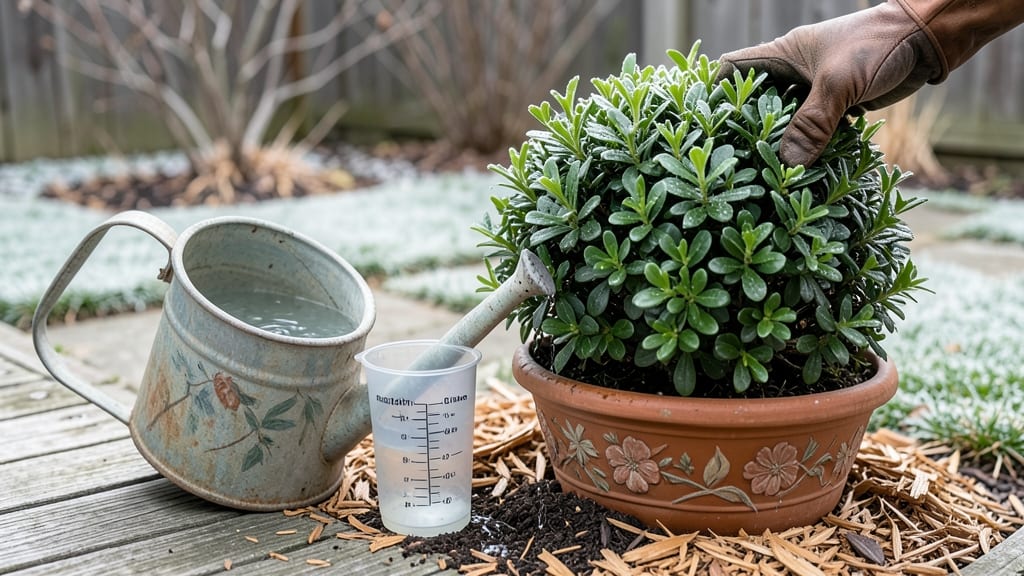
Watering outdoor potted plants in winter requires a completely different approach than the rest of the year, and getting it wrong can mean the difference between a plant that makes it through and one that doesn’t.
Most gardeners overwater during the cold months, thinking their 🌱 plants need more moisture to survive the chill. But frozen roots can’t absorb water—and that’s how you end up with soggy soil and rotting roots by spring.
Below, I’ll break down how often to water based on your USDA zone, plant type, and pot size, plus the simple tricks (like mulch or insulated containers) that cut watering needs in half without guesswork.
You’ll leave this guide knowing exactly when to check soil moisture, how frost affects watering, and the one sign that tells you to hold off for another week.
Winter watering schedule by US hardiness Zones: adjust frequency for cold climates
Winter watering isn’t just about cutting back—it’s about understanding how frost depth and container materials change your schedule. In USDA Zones 3-5, where frost can penetrate 12+ inches deep, roots may go dormant, while Zones 8-10 might still need occasional drinks.
The key? Soil moisture tests and pot insulation.
Most gardeners make the mistake of watering on a fixed schedule instead of checking soil moisture. A dry meter reading at 2-3 inches deep often means it’s time to water—even in winter. Terracotta pots dry faster than plastic, while insulated fabric pots retain moisture longer.
Adjust your routine based on these factors.
Frost penetration is critical: in Zones 3-4, frost can damage roots if soil stays wet too long. In Zones 6-7, milder winters mean roots stay active longer. Always water in the morning to allow excess moisture to evaporate before nighttime freezing.
Here’s how to adjust your watering by zone, pot type, and plant needs:
In Zones 3-4, where frost can damage roots, I recommend watering only when soil is bone-dry—usually every 3-5 weeks. Use a moisture meter to avoid guesswork.
For Zones 5-6, check soil at 3-inch depth; water lightly if the top inch is dry. Mulch with straw to insulate roots and reduce evaporation.
For Zones 7-10, some plants (like citrus or olive trees) stay active, while others (like roses or lavender) go dormant. Adjust based on plant type: water succulents and cacti sparingly, but keep ferns and fuchsias slightly moist.
Always water at the base of the plant to avoid wetting foliage, which can lead to fungal diseases.
Container material matters: Terracotta pots dry out faster, so water terracotta plants more frequently than plastic. Fabric pots retain moisture longer, reducing winter watering needs. If your pots lack drainage holes, drill them or switch to self-watering containers with built-in reservoirs.
Watch for these 3 signs you’re overwatering in winter: yellowing leaves, mushy stems, or mold on soil.
If you see these, let the soil dry completely before watering again. Underwatering signs include crispy leaf edges or wilting despite moist soil—adjust by watering lightly and checking soil moisture daily until improved.
Pro tip: Group pots by watering needs and use a spray bottle for light hydration. In Zones 9-10, where mild winters keep roots active, I water every 10-14 days—but always
Plant-specific watering needs in winter: drought-tolerant vs. moisture-loving species
Not all potted plants follow the same winter watering rules. Drought-tolerant varieties like sedum or lavender can go months without a drink, while moisture-loving ferns or calatheas need occasional sips to survive.
The key difference? Dormancy patterns—some plants slow their growth completely, while others stay semi-active even in cold weather.
For drought-tolerant species, I recommend checking soil moisture every 3-4 weeks using your finger.
If the top 2 inches feel dry, give a light watering—but only if temperatures stay above 32°F. Succulents and rosemary in pots can handle freezing soil better than their in-ground cousins because containers insulate roots.
Moisture-loving plants, however, need a completely different approach. Ferns, hostas, and impatiens (if kept outdoors) should get water every 2-3 weeks in mild winters (Zones 8-10), but reduce to weekly in colder zones where frost penetrates deeper. The trick? Water slowly and deeply to prevent surface evaporation.
| Plant Type | Winter Watering Frequency | Key Signs of Stress | Pro Tip |
|---|---|---|---|
| Drought-Tolerant (Succulents, Lavender, Sedum) | Every 4-6 weeks (or when soil is bone-dry) | Wrinkled leaves, shriveled stems | Use terracotta pots—they wick moisture away faster. |
| Moisture-Loving (Ferns, Calatheas, Hostas) | Every 2-3 weeks (or when top 1" is dry) | Brown leaf tips, crispy edges | Mulch with straw to retain moisture near roots. |
| Herbs (Rosemary, Thyme, Oregano) | Every 3-4 weeks (reduce in frost) | Yellowing foliage, stunted growth | Group pots together to create microclimates. |
| Tropicals (Caladiums, Begonias) | Every 2 weeks (keep soil barely moist) | Drooping leaves, moldy soil | Move to sheltered spots or bring indoors. |
Watch for frost heave—when soil expands and contracts, it can dislodge pots or crack containers. To prevent this, bury pots halfway into the ground or use insulated saucers filled with straw. This simple trick can cut watering needs by 50% by protecting roots from temperature swings.
One universal rule applies to all winter watering: Never water frozen soil. If your plants are in a hard freeze, skip watering entirely until temperatures rise above 40°F for 24 hours. Ice crystals in soil block oxygen, suffocating roots even if they’re not rotting.
Pro tip: Use a moisture meter or stick your finger 2 inches deep—if it feels damp, wait another week. Overwatering in winter is the #1 killer of potted plants, but with these adjustments, your succulents and ferns will both make it through spring ready to grow.