
How To
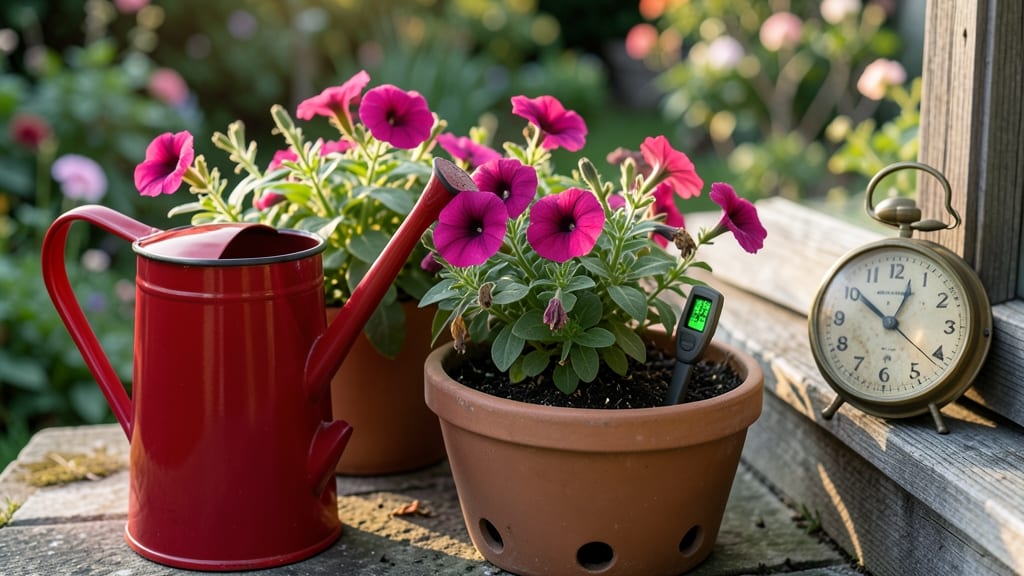
The 1-Inch dry soil rule: the exact watering schedule for potted petunias
If your potted petunias look more like wilted weeds than vibrant blooms, your watering routine might be the culprit. The 1-inch dry soil rule is my go-to method for keeping these thirsty beauties happy without drowning their roots.
Unlike in-ground plants, potted petunias dry out 3x faster—their roots have less soil to explore, and containers lack natural moisture retention.
This rule works by checking soil moisture 1 inch below the surface with your finger. When it feels dry to the touch, that’s your cue to water. It’s simple, foolproof, and prevents the two biggest petunia killers: root rot from overwatering and wilting from dehydration.
Let’s break down exactly how to apply it, from morning watering routines to adjusting for summer heatwaves.
| Season | Climate Zone | Pot Size | Watering Frequency | Time of Day | Notes |
|---|---|---|---|---|---|
| Spring | USDA Zones 6-10 | 6" diameter | Every 1-2 days | Morning (8-10 AM) | Soil warms up; roots wake from dormancy |
| Summer | All zones | 8-10" diameter | Daily (or every other day in shade) | Early morning (6-8 AM) | Evaporation spikes; check soil by 10 AM |
| Fall | USDA Zones 6-9 | Any size | Every 2-3 days | Morning | Cooler temps slow evaporation; reduce frequency |
| Winter | Zones 8-10 | 6" or larger | Every 5-7 days | Mid-morning | Minimal watering; let soil dry completely |
| Year-Round | Terracotta pots | Any size | Every 1-2 days | Morning | Porous material dries 2x faster than plastic |
First, let’s tackle the morning watering ritual. Watering petunias in the morning (between 6-10 AM) gives their leaves time to dry before evening, reducing fungal risks like powdery mildew.
Stick your finger 1 inch into the soil—if it feels dry, water until it drains from the pot’s bottom. For small pots (6" diameter), this usually means ½ cup of water. Larger containers (10"+) may need 1-1.5 cups.
Your pot size dramatically affects how often you water. A 6-inch pot dries out faster than a 12-inch one because there’s less soil to hold moisture. For example, my 8-inch terracotta pot needs watering every morning in July, while my 10-inch plastic pot might only need it every other day.
Terracotta pots are breathable but evaporate moisture quickly—check them twice daily in extreme heat.
Seasonal shifts demand adjustments. In spring (April-May), as temperatures rise, increase watering from every other day to daily. By summer (June-August), even shade-loving petunias may need watering twice daily if your thermometer hits 90°F+.
Move pots to dappled shade (30% sunlight) to cut evaporation by 40%. In fall (September-October), reduce watering as days shorten—soil stays moist longer.
Watch for seasonal signs that your routine needs tweaking.
Signs your petunias are thirsty (or drowned): common mistakes and fixes
Your potted petunias might be sending silent SOS signals through their leaves and soil. Drooping foliage or crispy leaf edges scream "I need water!" while yellowing leaves and mushy stems warn of overwatering. The key is learning to read these visual cues before your plants protest with wilting or mold.
Most gardeners make two critical mistakes: checking soil only after wilting appears or watering on a rigid schedule without considering pot material. Terracotta pots dry out faster than plastic, but both can trap excess moisture if drainage holes are missing.
Start by examining your petunias' leaves and soil—they hold all the clues.
How Often to Water Petunias in Pots
- Check soil 1 inch deep daily
- Water when topsoil feels dry
- Use terracotta pots for faster drying
- Water morning only to reduce evaporation
- Use well-draining soil with perlite
- Wait until leaves wilt completely
- Use plastic pots without drainage
- Water at night (promotes rot)
- Let soil stay soggy for days
- Ignore moldy soil or foul smells
For underwatered petunias, focus on leaf texture. Crispy edges or leaves that feel paper-thin mean your plants are thirsty. Increase watering frequency and move pots to shadier spots to slow moisture loss. In terracotta pots, you may need to water twice daily during hot afternoons.
Overwatering shows up as yellowing leaves starting from the bottom or blackened stems. If your soil smells like rotten eggs or feels slimy, your petunias are drowning.
Stop watering immediately, remove the plant, and check for root rot. Healthy roots should be white or light tan—dark, mushy roots need trimming before repotting.
Container size matters! Small pots (under 6 inches) dry out in hours, while large containers (10+ inches) may last 3-4 days between waterings. Group similar-sized pots together to create a microclimate—they'll all need water around the same time.
In summer heat, even large pots may require daily checks.
Remember: petunias in pots need more frequent watering than in-ground plants because their roots have less access to moisture. Master the 1-inch soil check, adjust for your pot type, and watch your petunias rebound with vibrant blooms instead of wilting leaves. 🌸