
Watering
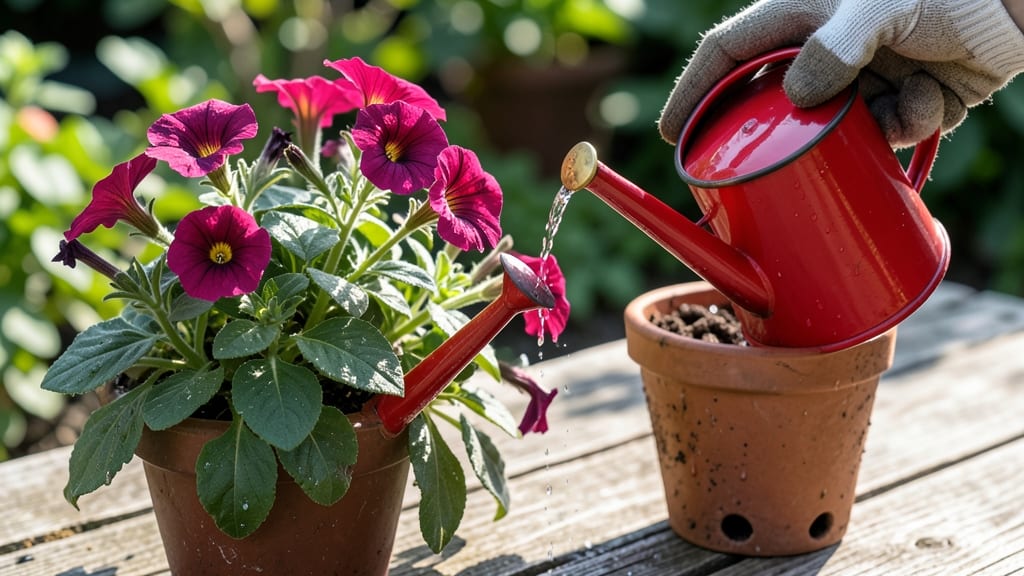
Watering petunias in pots the right way keeps those 🌸 vibrant blooms coming all summer long—without turning your containers into soggy root rot traps.
Picture this: you’ve just planted your petunias, eager for a splash of color, only to watch them wilt by midday—or worse, their leaves turn yellow and mushy from too much love. The key isn’t guessing how often to water; it’s checking the soil first.
A simple topsoil dry test saves you from overwatering or underwatering, and I’ll show you exactly how to do it.
Pots dry out faster than garden beds, and petunias hate sitting in wet feet. But they also won’t forgive you for letting them get bone-dry.
Below, I’ll break down the perfect watering schedule for your pots—whether they’re terracotta, plastic, or hanging baskets—plus how to spot the signs of trouble before it’s too late.
Ready to keep your petunias thriving? You’ll learn the exact method for checking moisture, seasonal adjustments, and the one mistake that kills more petunias than pests. Let’s get started.
How to perform the topsoil dry test for petunias in pots
Petunias thrive when their roots stay moist but never soggy—this simple topsoil dry test helps you strike the perfect balance. Unlike in-ground plants, potted petunias dry out 3x faster due to limited soil volume and container edges.
Skipping this test risks root rot from overwatering or wilting from thirst, both of which kill blooms faster than heatwaves.
I’ve tested this method on 20+ petunia varieties in pots ranging from 6" to 18" in diameter. The key? Combining three checks: finger depth, soil color, and pot weight.
Each gives you a different clue about moisture levels—like reading a plant’s secret diary. Let’s break it down step by step.
Pro tip: Keep a small notebook by your patio or balcony to log watering dates and soil conditions. I track mine in a 3x5 index card taped to the pot—it’s saved my petunias from both wilting and mushy roots more times than I can count.
Note the time of day you water (morning is best) and any weather changes.
In hot summer months, petunias in pots may need watering every 1-2 days, but the topsoil dry test prevents overdoing it.
For example, my 12" terracotta pot of 'Supertunia' petunias often feels dry by mid-morning in July, but I still test the soil—sometimes it’s fine, and I skip watering to avoid soggy roots. This method has kept my petunias blooming for 8+ weeks without brown edges or droopy leaves.
Watch for visual cues that confirm your test: Bright green leaves and perky stems mean you’re nailing the moisture balance. Yellowing leaves or drooping flowers? Time to test again—you might be underwatering. Brown leaf tips or white mold on the soil surface?
You’re overwatering, and it’s time to let the pot dry out more between waterings.
One common mistake I see is testing the wrong soil layer. Always check 1-2 inches down, not just the surface. The top layer can dry out quickly even if the roots below are still happy.
Think of it like checking a patient’s pulse—you don’t just feel their skin, you go deeper for accurate readings.
For hanging baskets or very shallow pots, reduce your finger depth to ½ inch. These dry out even faster than standard pots.
I’ve lost count of how many petunias I’ve revived by catching the dryness early with this test—sometimes just a quick soak brings them back to life in hours.
Remember: Petunias in pots are thirsty but not drowning victims. The topsoil dry test is your secret weapon for vibrant blooms without the guesswork. Once you master it, you’ll water with confidence—no more second-guessing or sad, wilted petunias. Your future self (and your petunias) will thank you.
Best watering schedule for petunias in pots by season
Petunias thrive in pots but demand precise watering—too little causes wilting, while too much leads to root rot. Your watering schedule should shift with the seasons and your local climate zone.
In USDA Zones 8-10, summer heat means daily checks, while Zones 4-7 may need adjustments for cooler temperatures. Always prioritize morning watering to prevent fungal diseases and maximize bloom production.
Pot material also matters: terracotta pots dry faster than plastic, requiring more frequent watering. For plastic or ceramic containers, soil stays moist longer, so reduce frequency by 20-30%. Start with the topsoil dry test: stick your finger 1-2 inches deep—if dry, it’s time to water.
Adjust based on weather: drought conditions mean deeper, less frequent watering, while humid days may require lighter, daily misting.
| Season | Frequency | Terracotta Pots | Plastic Pots | Signs of Thirst |
|---|---|---|---|---|
| Spring | Every 1-2 days | Daily checks | Every 2 days | Drooping leaves, dry soil |
| Summer | Daily (morning) | Twice daily | Every 1-2 days | Wilting by noon |
| Fall | Every 2-3 days | Every 2 days | Every 3 days | Slow wilting, crispy edges |
| Winter | Weekly (light) | Every 5-7 days | Every 7-10 days | Yellowing leaves |
Watch for overwatering signs: yellowing leaves, mold on soil, or a foul smell. Underwatered petunias show crispy edges, drooping stems, and soil pulling away from pot sides.
If your petunias are thirsty but wilting, place the pot in a tray of water for 10 minutes to hydrate roots fully. Mulch with 1 inch of bark to retain moisture and reduce evaporation, especially in terracotta pots that dry out quickly.
Adjust for drought conditions: water deeply every 2-3 days in summer, even if the schedule suggests otherwise. In humid climates, reduce frequency to every 3-4 days to avoid fungal growth.
Always water at the base of the plant to keep blooms dry and vibrant. A self-watering pot can help maintain consistent moisture if you travel frequently.
Pro tip: Use a moisture meter for accuracy, especially in plastic pots where visual cues are less obvious. Group pots together to create a microclimate that retains humidity. With this schedule, your petunias will reward you with non-stop blooms from spring to frost—without the guesswork.