
Watering
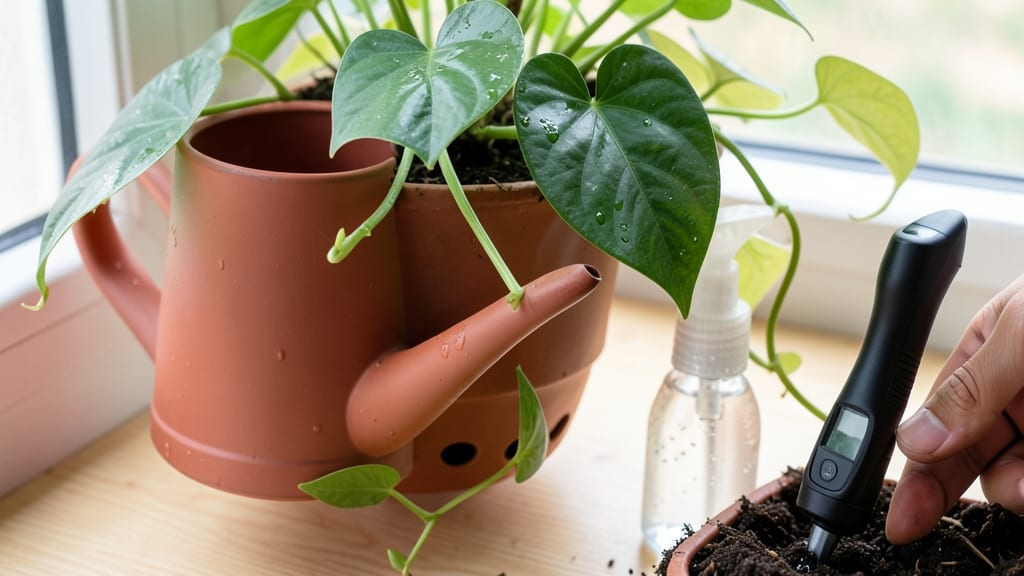
Watering a philodendron the right way means checking soil moisture—not sticking to a rigid schedule—because overwatering kills more plants than underwatering, and the knuckle-dip test is your secret weapon.
Picture this: your philodendron 🌿 sits on the shelf, leaves curling at the edges, and you’re not sure if it’s thirsty or drowning. That’s the frustration of guessing when to water.
The truth? Philodendrons thrive when their soil stays moist but never soggy, and the key is adjusting for your home’s humidity, pot size, and even the season.
Most guides tell you to water every 7-14 days, but that’s a starting point—not a rule. Too much water? Yellow leaves and mushy stems. Too little? Crispy edges and slow growth.
Below, I’ll show you how to read your plant’s signals, master the knuckle-dip test, and fine-tune your watering routine for perfect results every time.
Whether you’re a new plant parent or a seasoned grower, these tips will help you avoid the most common mistakes—and keep your philodendron lush, happy, and thriving year-round.
The philodendron watering schedule: how often based on soil type and season
Philodendrons thrive when their soil stays consistently moist but never soggy. Unlike succulents, these tropical plants hate dry roots, but they’ll suffer root rot if left in damp conditions. The key?
Adjusting your watering based on soil type, seasonal changes, and your home’s humidity levels. Let’s break down the science-backed schedule to keep your philodendron lush and healthy year-round.
Most beginners make two critical mistakes: watering on a fixed schedule or ignoring the soil’s actual moisture. A philodendron in a small pot with peat-heavy soil dries out faster than one in a large container with well-draining mix.
Even the same plant may need watering every 5 days in summer but only every 2 weeks in winter. The solution? Focus on soil moisture, not days.
| Soil Type | Season | Watering Frequency | Key Signs to Check |
|---|---|---|---|
| Well-draining mix (50% peat, 30% perlite, 20% orchid bark) | Spring/Fall | Every 7-10 days | Top 1-2 inches dry |
| Well-draining mix | Summer (high humidity) | Every 5-7 days | Top 1 inch dry |
| Well-draining mix | Winter (low humidity) | Every 14-21 days | Top 2-3 inches dry |
| Peat-heavy mix (70% peat, 30% perlite) | Spring/Fall | Every 5-7 days | Top ½ inch dry |
| Peat-heavy mix | Summer (low humidity) | Every 3-5 days | Top ½ inch dry |
| Peat-heavy mix | Winter (high humidity) | Every 10-14 days | Top 1 inch dry |
Your philodendron’s soil mix is the foundation of its watering needs. A well-draining blend (like 50% peat moss, 30% perlite, and 20% orchid bark) allows excess water to escape, reducing the risk of root rot.
This mix holds moisture longer than pure peat, so you’ll water less frequently. For example, in spring or fall, check the top 1-2 inches of soil—if it’s dry, it’s time to water.
In contrast, a peat-heavy mix retains moisture like a sponge, drying out much slower. This means you’ll need to water more often, especially in dry indoor air. The knuckle-dip test (insert your knuckle 1 inch deep) becomes your best friend here.
If it feels dry, water thoroughly until it drains from the pot’s bottom. Never let it sit in water—philodendrons despise soggy roots.
Seasonal shifts dramatically alter your watering routine. During summer months, when humidity drops and heat increases, your philodendron may need watering every 5-7 days. But in winter, when indoor air is dry and growth slows, reduce frequency to every 2-4 weeks.
Pay attention to your home’s humidity levels: a humid bathroom will dry out soil faster than a dry bedroom.
Pot size plays a surprisingly big role. A small 6-inch pot dries out in days, while a large 12-inch container can go weeks between waterings. Always use a pot with drainage holes—no exceptions—and consider upgrading to a larger pot if you notice the soil drying too quickly.
Pro tip: Group philodendrons together to create a microclimate with higher humidity, reducing how often you need to water.
Watch for early warning signs of overwatering or underwatering. Yellowing leaves with mushy stems signal root rot, while crispy brown edges mean your plant is thirsty. Adjust your schedule based on these cues, not just a calendar.
Remember: philodendrons forgive occasional underwatering more easily than they forgive consistent soggy soil. When in doubt, let the soil dry out slightly—your plant will thank you with glossy, vibrant leaves.
For extra peace of mind, use a moisture meter or the finger test (stick your finger 1-2 inches deep). If the soil feels damp, wait another day. If it’s bone dry, water thoroughly until water runs out the drainage holes.
This simple habit will prevent 90% of philodendron problems. With this science-backed approach, your plant will stay lush, healthy, and happy year-round.
How to use the knuckle-dip test: a step-by-step guide to perfect soil moisture
Mastering the knuckle-dip test is my go-to trick for keeping philodendrons happy without drowning them. Unlike rigid watering schedules, this tactile method adapts to your plant's real-time needs. The key?
Understanding what your fingers feel when they brush the soil—this simple check reveals whether your philodendron is thirsty, perfectly hydrated, or begging for rescue from soggy soil.
Most gardeners (myself included) make the mistake of watering based on time rather than soil conditions. A philodendron in a small terracotta pot needs water every 5-7 days, while one in a large ceramic container might go 10-14 days.
The knuckle-dip test bridges this gap by focusing on soil moisture, not pot size or calendar dates.
What you feel during the knuckle-dip test tells a story about your philodendron’s health. Dry, powdery soil means it’s time to water immediately, while sticky or cool soil signals overwatering.
Pro tip: If the soil smells musty, your plant is drowning—act fast by repotting in fresh, dry mix and reducing watering frequency by half.
Seasonal adjustments are critical. In summer heat, I check soil moisture every 3-4 days, while in winter dormancy, I stretch watering to every 2-3 weeks. Humidity also plays a role—philodendrons in dry indoor air need more frequent checks than those in humid basements or greenhouses.
Troubleshooting common mistakes starts with consistency. If your philodendron’s leaves yellow despite your best efforts, you might be overwatering. Conversely, crispy edges often mean underwatering. The knuckle-dip test eliminates guesswork by putting you in direct contact with your plant’s needs—literally.
Remember, the goal isn’t perfection but balanced moisture. With practice, you’ll develop an intuition for when your philodendron needs a drink. Trust your fingers—they’re the best tool in your gardening toolkit! 🌱