
How To
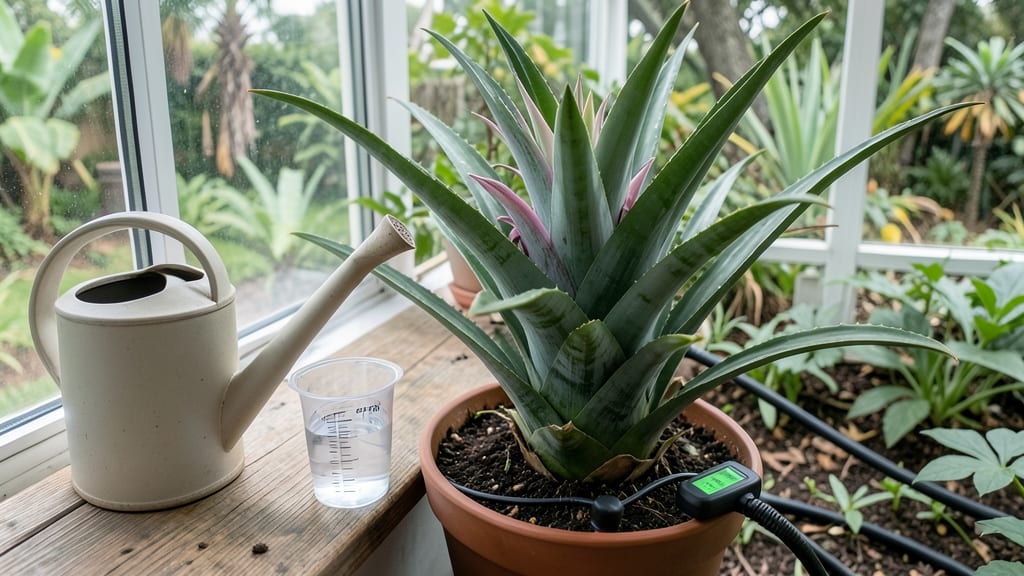
To water a pineapple plant correctly, check soil moisture every 7-10 days—or more often in heat—using a simple finger-dip test that saves you from drowning its roots.
Struggling to keep your 🍍 thriving? Overwatering or underwatering can both kill it—yet most gardeners get it wrong. The secret lies in a simple finger-dip test that reveals exactly when your pineapple’s roots need hydration (without drowning them).
These tropical plants hate soggy soil, but they also need consistent moisture to grow their signature spiky crowns. In Zone 10-12, watering every 5-7 days in summer keeps them happy, while cooler months stretch that to every 2-3 weeks.
The key? Let the top 2 inches dry out between waterings.
Below, I’ll break down the exact schedule for your soil type, how to spot over- or under-watering, and why morning watering beats evening—plus a foolproof test to keep your pineapple perfect from seedling to fruit.
Pineapple watering schedule: when and how much based on soil type
Mastering the pineapple watering schedule starts with understanding your soil type. Sandy soil drains too fast, loamy soil holds just the right balance, and clay soil traps moisture like a sponge—each requires a different approach.
My tropical pineapples (Ananas comosus) thrive when I adjust their watering based on these three soil types, preventing both root rot and dehydration.
For indoor pineapple plants, container size matters most. A 6-inch pot dries out faster than a gallon-sized container, so I water my small pots every 5-7 days while larger containers may need water every 10-14 days.
Outdoor plants in warm climates (Zones 10-12) need more frequent watering than those in cooler microclimates.
The finger-dip test is my go-to method. Stick your finger 1-2 inches into the soil—if it feels dry at that depth, it's time to water. For sandy soil, the top inch may dry daily, while clay soil stays damp for weeks.
This simple test eliminates guesswork and keeps my pineapples happy.
🌱
During summer months, I increase watering frequency by 30-50% to compensate for higher evaporation rates. My outdoor pineapples in full sun need water every 5-7 days, while shaded plants can go 10-14 days between waterings.
Always water in the early morning to prevent fungal diseases that thrive in damp leaves.
For clay soil, I've learned to water deeply but less frequently. The key is letting the soil dry completely between waterings—otherwise, root rot becomes a real threat.
I've had pineapples die from soggy roots in heavy clay, so I now use raised beds with 50% perlite mixed into the soil to improve drainage.
Young pineapple plants need more frequent watering than mature ones. Seedlings should be kept consistently moist but never waterlogged, while established plants can handle slightly drier conditions. I monitor my plants' leaf color—yellowing edges signal underwatering, while brown, mushy leaves mean overwatering.
💧
In cooler months, I reduce watering significantly. My pineapples in Zone 9 enter a semi-dormant state and only need water every 2-3 weeks. I also avoid wetting the leaves to prevent cold damage.
For indoor pineapples, I move them away from cold drafts and reduce humidity by using a dehumidifier if needed.
One common mistake I see is using tap water with high chlorine. Pineapples are sensitive to chemicals, so I always let tap water sit for 24 hours before using it.
For critical watering, I use rainwater or distilled water collected in a barrel. This small change has made a noticeable difference in my plants' health.
Remember, pineapples are succulents—they store water in their leaves. Overwatering is far more dangerous than underwatering. When in doubt, I always wait an extra day or two before watering again.
My goal is to keep the soil moist but never soggy, and the finger-dip test helps me achieve that balance every time.
☀️
Signs your pineapple plant needs water (or doesn’t!)
Your pineapple plant’s leaves tell a story about its hydration needs. Yellowing leaf tips or dry, crispy edges scream "I’m thirsty!" while soft, mushy leaves or blackened roots warn of overwatering.
These visual cues help you avoid both extremes and keep your plant thriving. The key is observing leaf color changes and soil moisture levels before symptoms worsen.
Start by checking the soil texture—stick your finger 1-2 inches deep. If it feels bone-dry, your pineapple needs water. But if it’s soggy or clumps together, you’ve overdone it.
Pineapples hate soggy roots, which can lead to root rot or fungal infections. Always ensure your pot has drainage holes to prevent waterlogging.
💧 Watering Pineapple Plants: Pros & Cons
| ✅ DO This | ❌ DON’T Do This |
|---|---|
| Water deeply until it drains from pot bottom | Water lightly at surface—roots need saturation |
| Check soil moisture with finger-dip test (1-2 inches) | Guess watering based on schedule—plants vary! |
| Water in morning to reduce fungal risk | Water at night—leads to damp leaves and rot |
| Use well-draining soil (cactus mix + perlite) | Use heavy clay soil—traps moisture and suffocates roots |
🌱 Pro Tip: Adjust frequency by season—water every 5-7 days in summer, every 2-3 weeks in winter.
Watch for leaf color shifts like brown patches or yellowing between veins, which signal underwatering. Meanwhile, purple or red tinges on leaves often mean overwatering or nutrient deficiency.
These changes happen faster in hot, dry climates, so monitor your pineapple closely during summer months when evaporation speeds up.
Common diseases from poor hydration include root rot (black, mushy roots) and leaf spot (brown spots with yellow halos). If you spot these, reduce watering immediately and repot in fresh, sterilized soil. Prune affected leaves to prevent spread, and ensure your pineapple gets bright, indirect light to aid recovery.
For container-grown pineapples, smaller pots dry faster, so check soil moisture every 3-4 days in summer. If your pineapple is in ground soil, water every 7-10 days unless your region experiences extreme heat or drought.
Always water at the base of the plant to avoid wetting leaves, which can cause fungal issues.
Remember, pineapples are drought-tolerant once established—underwatering is less risky than overwatering. If in doubt, wait one more day before watering. Your pineapple’s resilience will reward your cautious approach with vibrant growth and eventually, a sweet harvest! 🍍