
Watering
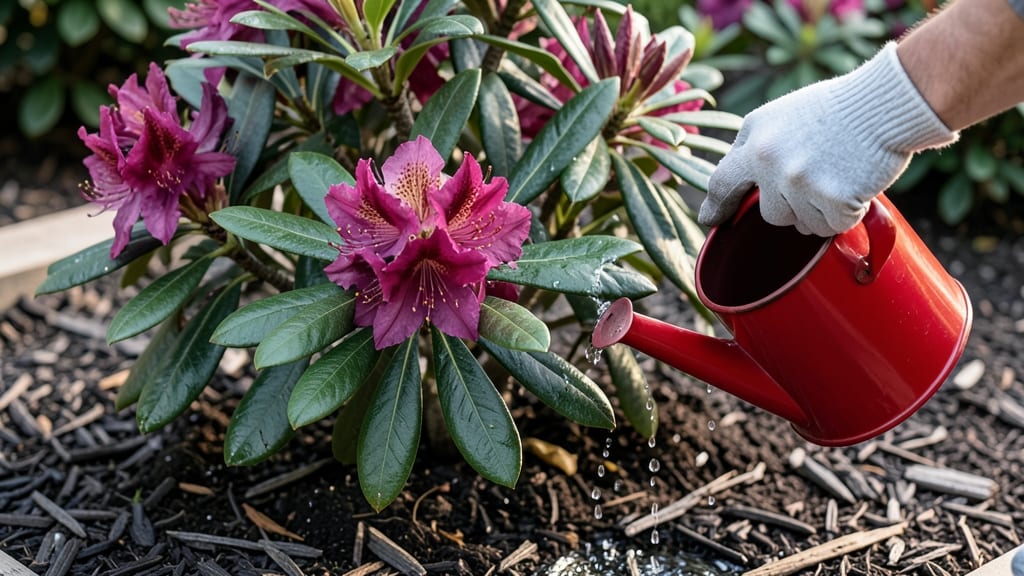
Watering rhododendrons in summer often depends on leaf color cues and soil moisture—too much or too little can stress your 🌸 shrubs.
Summer heat can turn your thriving rhododendrons into wilting casualties if you don’t adjust your watering schedule—yet overwatering is just as deadly. The secret? Reading your plant’s leaf color cues to strike the perfect balance.
Dark green leaves mean your rhododendron is happy, but yellowing or wilting signals it’s time to check the soil. A deep watering 1-2 inches into the soil once or twice a week keeps roots healthy, but clay soil or heavy rain may require adjustments.
Below, I’ll walk you through how to read your rhododendron’s signals, the best times to water, and how mulch can save you from midday stress. No more guessing—just thriving 🌸 shrubs all season.
Ideal rhododendron watering schedule in summer: leaf color as your guide
Summer heat transforms rhododendron care from routine to precision—water too little, and leaves crisp like autumn paper. Water too much, and roots suffocate in soggy soil. The key? Your plant’s leaf color whispers its needs before wilting becomes permanent.
Dark green signals thirst, while yellowing or drooping screams distress. Let’s decode these cues to create a summer watering schedule that keeps your rhododendrons lush and blooming.
Rhododendrons thrive on consistent moisture but despise soggy roots. In summer, aim for 1-2 inches of water per week, delivered deeply rather than lightly. The challenge? Adjusting for soil type, rainfall, and your local climate. Sandy soil drains fast, while clay holds moisture longer.
Start by testing soil moisture: Stick your finger 2 inches deep—if dry, it’s time to water. If damp, wait another day. Your rhododendron’s leaf color will confirm whether you’re nailing it or over/under-doing it.
Start your summer schedule with deep watering every 5-7 days in the morning. Water slowly at the base until soil is moist 6 inches deep. Avoid wetting leaves to prevent fungal diseases like powdery mildew. If your rhododendron’s leaves stay dark green and firm, you’re on track.
But if edges turn yellow, you’re overwatering—cut back and improve drainage with organic mulch. Mulch also locks in moisture, reducing your watering frequency by 20-30%.
Heatwaves demand extra attention. When temperatures hit 90°F+, increase watering to every 3-4 days and watch for wilting. A quick test: Gently tug a leaf—if it resists, it’s hydrated.
If it pulls away easily, it’s thirsty. Wilting leaves need immediate action: Water deeply and prune any crispy edges to prevent disease spread. Pro tip: Use a soaker hose for even moisture without leaf wetting.
Rainfall complicates schedules. If you get 1 inch of rain, skip a watering day. Track rainfall with a rain gauge or weather app. In humid climates, reduce watering slightly—rhododendrons absorb moisture through leaves.
In dry areas, water twice weekly and mulch heavily. Always water in the early morning to minimize evaporation and fungal risks.
Potted rhododendrons dry out faster than in-ground plants. Check soil daily in summer—if the top 1 inch feels dry, water thoroughly. Move pots to shadier spots during heatwaves to reduce stress.
Container plants also benefit from pebble trays to increase humidity around roots. Never let pots sit in standing water, or roots will rot.
Adjust your schedule weekly based on leaf color changes. Dark green? You’re golden. Yellowing? Reduce water. Brown patches? Increase shade and water less frequently. By tuning into your rhododendron’s visual cues, you’ll create a summer routine that keeps it thriving without guesswork.
Consistency is key—rhododendrons reward patience with vibrant blooms and lush foliage all season long.
Remember: Mulch is your best friend in summer. Apply 3 inches of organic mulch (pine bark or shredded leaves) around the base to retain moisture and regulate soil temperature.
Replenish mulch every 6 months to maintain its effectiveness. With this approach, your rhododendrons will sail through summer heat with minimal stress and maximum beauty.
🌸
Common mistakes that kill rhododendrons in summer heat
Your rhododendrons may look lush in spring, but summer heat exposes three deadly watering mistakes that turn leaves crispy or roots soggy. Overwatering drowns roots, while underwatering causes leaf scorch. Even ignoring soil conditions leads to stress. Let’s fix these before your plants protest with yellow or brown foliage.
The biggest killer? Watering on a schedule instead of checking soil moisture. Rhododendrons hate soggy roots but also can’t handle drought. Leaf color changes are your early warning system—dark green means happy, yellow means thirsty, brown means too much water. Adjust before damage becomes permanent.
⚠️ callout warning
Rhododendrons need 1-2 inches of water per week in summer, but frequency depends on soil. Sandy soil dries faster—water every 2-3 days. Clay holds moisture longer—wait 5-7 days between waterings. Check soil 1 inch deep—if dry, water deeply. Morning watering prevents fungal issues from wet foliage.
First mistake: Overwatering creates root rot by suffocating roots in soggy soil. I’ve seen rhododendrons collapse when gardeners assume "more water = better growth." Signs include yellow leaves that stay soft even when dry.
Fix it by letting the top 2 inches of soil dry between waterings and improving drainage with organic mulch.
Second mistake: Underwatering causes leaf edges to turn brown and crispy—a classic sign of leaf scorch. This happens when roots can’t reach moisture fast enough. Water deeply (6-8 inches) instead of light surface watering.
If you’re already watering daily but leaves still scorch, your soil may be too compacted—amend with compost to improve moisture retention.
Third mistake: Ignoring soil conditions leads to stress. Rhododendrons thrive in acidic, well-draining soil (pH 4.5-5.5). If your soil is alkaline or clay-heavy, roots struggle to absorb water.
Test your soil and amend with peat moss or pine bark to create the perfect environment. Mulch with pine needles to maintain acidity naturally.
Fix these issues now: Test soil moisture with your finger, water deeply but less often, and adjust mulch to protect roots. Your rhododendrons will reward you with vibrant blooms next spring—no wilting in sight! 🌸