
How To
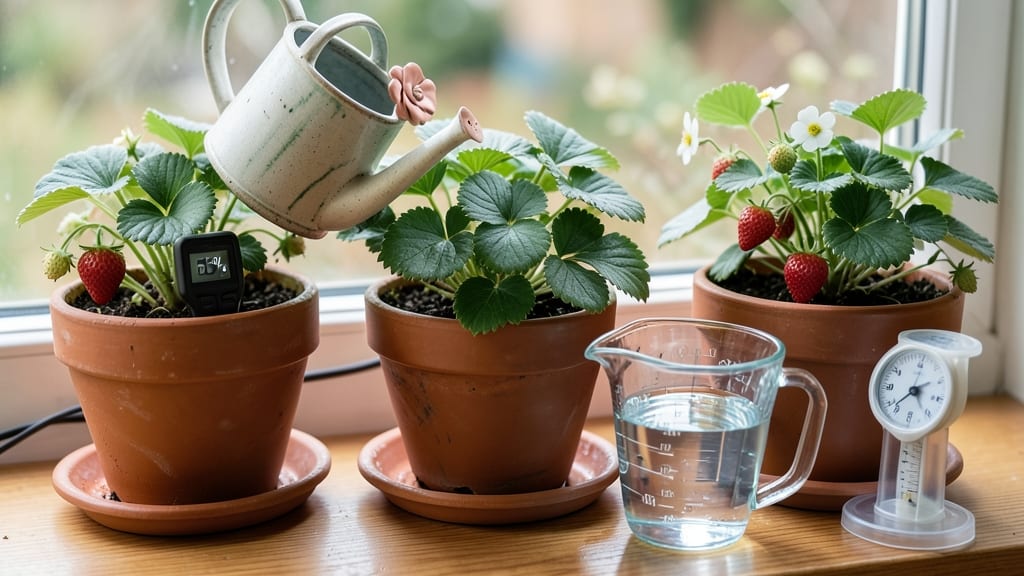
Watering strawberries in pots requires a consistent schedule—too little and the fruit turns sour, too much and roots drown. The key is checking soil moisture daily and adjusting for heat, pot size, and drainage.
Picture this: you’ve nurtured your 🍓 strawberries all spring, only to watch them wilt under the summer sun or rot from soggy soil. The difference between a bumper crop and a sad harvest often comes down to watering habits, not just sunlight or soil.
In this guide, I’ll break down the exact watering frequency for potted strawberries, from the simple soil-dry test to seasonal adjustments for summer heatwaves and winter dormancy. No guesswork—just science-backed tips to keep your plants thriving.
You’ll learn how to spot overwatering (yellow leaves, mold) versus underwatering (dry soil, wilting), plus how pot material (terracotta vs. plastic) changes the game. By the end, you’ll water like a pro—no more stressed plants or wasted effort.
The soil dry test method: how to check when potted strawberries need water
Potted strawberries thrive on consistent moisture, but overwatering or underwatering can ruin your harvest. The soil dry test is my go-to method to determine when your strawberries need water. This simple finger-check ensures you water just enough to keep roots happy without causing root rot or stressing the plant.
Unlike in-ground plants, potted strawberries dry out 3-5x faster due to limited soil volume. The key is testing the top 1-2 inches of soil—this is where the roots actively seek moisture.
If you wait until the soil feels completely dry at this depth, you're already late. Let's dive into the exact steps to perfect your watering routine.
Test soil moisture in the morning (6-9 AM) for accuracy. Evening tests may show dryness due to daytime evaporation, leading to overwatering.
Rub your index finger between your thumb and middle finger to remove debris. Dirty fingers can introduce pathogens to your soil.
Gently push your finger 1-2 inches deep into the soil. For small pots (<5 gallons), 1 inch is ideal. Larger pots can go to 2 inches.
If the soil feels dry and crumbly, it's time to water. If it's damp but not soggy, wait 1-2 days. Soggy soil means you're overwatering.
Small pots (<3 gallons) dry out fastest—check daily in summer. Medium pots (5-10 gallons) need testing every 2-3 days. Large pots (>10 gallons) can go 3-4 days.
When needed, water until it drains from the bottom. This encourages deep root growth. Empty the saucer after 10 minutes to prevent waterlogging.
Container size dramatically affects how often you'll need to water. A 5-gallon pot may require daily checks in summer, while a 15-gallon container can stretch to every 3 days. Always prioritize well-draining soil—amend with perlite or compost if your mix holds too much moisture.
Visual cues like wilted leaves or soil pulling away from the pot edges signal dehydration. However, don't rely solely on these—some strawberry varieties (like Albion) wilt naturally in heat. The finger test remains your most reliable gauge.
In humid climates, reduce watering frequency by 20-30% to prevent fungal diseases. Conversely, in dry conditions, increase checks to every 12-24 hours for small pots. Always water at the soil level, not over leaves, to avoid disease.
Pro tip: Keep a watering journal for 2 weeks to track patterns. Note your pot size, location (sun/shade), and weather. This helps you anticipate needs before the soil dries out. For example, my terracotta pots dry out faster than plastic ones due to evaporation.
Remember, strawberries hate inconsistent moisture. If you travel, group pots together and use a self-watering globe or mulch heavily with straw to retain moisture. This mimics natural rainfall patterns and keeps your plants stress-free.
Mastering the soil dry test takes practice, but it's worth the effort. Your strawberries will reward you with larger, sweeter berries and fewer problems like blossom end rot or yellowing leaves. Start today—grab your finger and dig in!
Seasonal watering schedule for potted strawberries: month-by-month guide
Potted strawberries need consistent moisture to thrive, but their watering needs change dramatically with the seasons. In spring, when roots are establishing, aim for 2-3 waterings per week. During summer heatwaves, daily watering may be necessary, while fall requires a gradual reduction to 1-2 times weekly.
Adjust based on your climate zone—humid areas dry out slower than drought-prone regions.
Pot size also matters: small pots (under 5 gallons) dry out faster than large containers (10+ gallons). Always check soil moisture before watering—dry topsoil signals it's time, but soggy soil means wait. Terracotta pots dry quicker than plastic, so monitor them closely.
📋 Seasonal Watering Summary for Potted Strawberries
| Season | Frequency | Notes |
|---|---|---|
| Spring | 2-3x/week | Increase during flowering |
| Summer | Daily (heatwaves) | Morning watering preferred |
| Fall | 1-2x/week | Reduce as temps drop |
| Winter | Every 7-10 days | Dormant phase—minimal water |
| Drought Conditions | Daily (early AM) | Mulch to retain moisture |
| Humid Climates | Every 2-3 days | Watch for fungal issues |
In spring, focus on establishing roots before flowering. Water deeply 2-3 times weekly, increasing to daily if temperatures exceed 80°F (27°C). Use the soil dry test—stick your finger 1-2 inches deep. If dry, water until it drains from the pot's bottom.
Summer demands the most attention. During heatwaves, water early in the morning to reduce evaporation and fungal risks. Large pots (10+ gallons) may need watering every 2-3 days, while small pots dry out faster. Always check soil moisture—wilting leaves mean it's time to water immediately.
As fall arrives, reduce watering to 1-2 times weekly as temperatures drop. This helps prepare plants for winter dormancy. In USDA Zones 7-10, continue light watering through mild winters, but avoid soggy soil to prevent root rot. Mulch with straw to insulate roots.
Winter care varies by climate. In cold zones (3-6), reduce watering to every 7-10 days unless potted strawberries are in a protected location. In mild zones (7-10), maintain light moisture but avoid overwatering. Always ensure pots have drainage holes to prevent waterlogging.