
How To
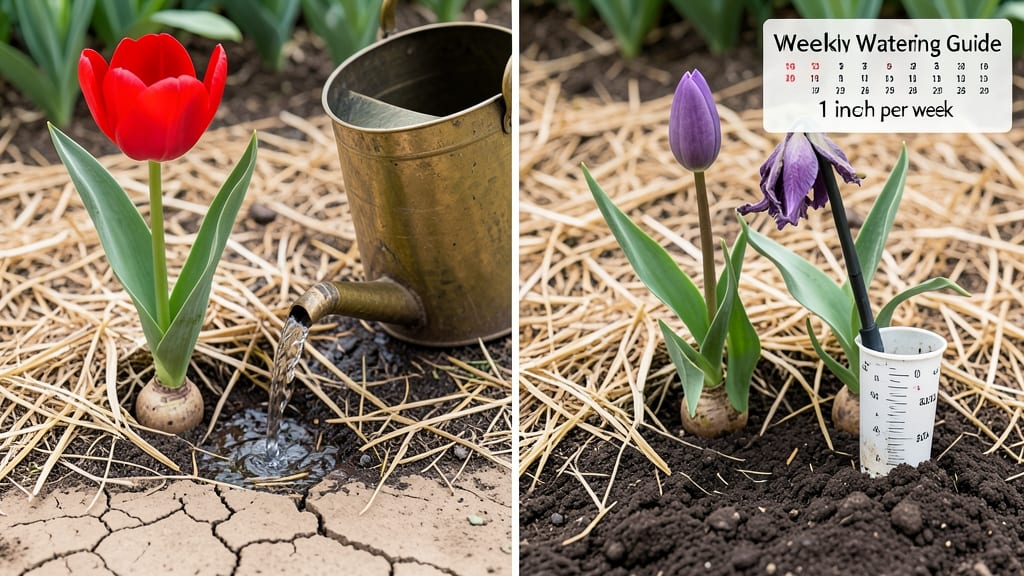
Watering tulips the right way means giving them just enough moisture to thrive without drowning their roots — a balance that keeps those 🌷 blooms bold and healthy.
Here’s the catch: too much water and you’ll smother them; too little, and they’ll wilt before spring. The key lies in understanding your soil, climate, and the season — because what works in Zone 6a in fall won’t cut it in summer heat.
In this guide, I’ll break down exactly how often to water tulips at each growth stage, from dormancy to full bloom, plus how to adjust for clay, sandy, or loamy soil. You’ll also learn the 5 biggest mistakes that turn vibrant bulbs into sad mush.
Ready to keep your tulips happy? Let’s dive into the seasonal watering schedule that’ll have them popping up year after year.
Optimal watering frequency for tulips by season and soil type
Tulips thrive on a consistent watering schedule, but their needs shift dramatically between seasons and soil types. Overwatering in clay soil can suffocate roots, while sandy soil drains too quickly, leaving bulbs parched. Understanding these variations ensures your tulips bloom vibrantly each spring without wasting water or risking rot.
Your soil type dictates how often you water—loamy soil holds moisture well but drains excess, making it ideal for tulips, while clay soil requires more frequent but shallower watering.
In sandy soil, you’ll need deeper, more frequent watering to reach the bulb’s roots. Let’s break down the perfect schedule for each scenario.
🌷 Tulip Watering Schedule by Soil Type & Season
| Season | Loamy Soil | Clay Soil | Sandy Soil | Key Tips |
|---|---|---|---|---|
| Spring (Growth) | Weekly (1 inch) | Every 5-6 days (½ inch) | Every 4-5 days (1.5 inches) | Water at soil level, avoid wetting leaves. |
| Summer (Dormancy) | Monthly (if dry) | Bi-weekly (light mist) | Every 10-14 days (deep soak) | Reduce watering to prevent rot during heatwaves. |
| Fall (Bulb Establishment) | Every 10-14 days | Every 7-10 days | Every 7 days (deep) | Encourage root growth before frost. |
| Winter (Dormancy) | None (unless snow-free) | None (unless thawing) | None (unless extreme drought) | Mulch with straw to retain moisture. |
💧 Adjust for rainfall: Skip watering if 1 inch of rain occurs in 7 days.
During the spring growth stage, tulips need the most attention—watering once a week in loamy soil keeps roots hydrated without drowning them. In clay soil, which compacts easily, shorter intervals prevent waterlogging, while sandy soil demands deeper watering to compensate for rapid drainage.
Always water at the base of the plant to avoid fungal diseases like tulip fire.
As tulips enter summer dormancy, reduce watering to prevent rot and encourage bulb storage of nutrients for next year’s blooms. In clay soil, even light watering can suffocate roots, so opt for misting instead.
For sandy soil, deeper but less frequent watering ensures moisture reaches the bulb’s depth without wasting resources.
Fall is critical for bulb establishment. Watering every 10-14 days in loamy soil helps roots expand before winter, while clay soil may need slightly more frequent watering to prevent cracking. In sandy soil, deeper watering mimics natural rainfall patterns, reducing stress on the bulb.
Winter watering is minimal—only water if there’s no snow cover and the ground is dry. Overwatering in freezing temperatures can cause root freeze-thaw damage. Instead, apply a 2-3 inch mulch of straw or leaves to insulate the soil and retain moisture for spring.
Pro tip: Use a moisture meter to check soil depth. Tulip bulbs need moisture at 6-8 inches deep, but never soggy. If the soil feels like a wrung-out sponge, it’s time to water.
For container tulips, water every 5-7 days in summer and reduce to bi-weekly in winter.
Watch for yellowing leaves or mushy stems, which signal overwatering, or wilting foliage, a sign of underwatering. Adjust your schedule based on these cues—tulips are resilient but need your attention to thrive.
Climate zone-specific watering adjustments for tulips
Your USDA climate zone dramatically impacts how often you should water tulips. In cooler zones 3-5, tulips thrive with less frequent watering due to natural moisture retention, while arid zones 8-10 demand daily attention during peak heat.
Even within these extremes, soil type and seasonal rainfall create additional variables that can make or break your bulbs.
Let's break down the watering schedules by zone, including drought-resistant techniques for desert climates and flood prevention for wetter regions. These adjustments will help your tulips establish strong roots while avoiding root rot or wilting from dehydration.
🌷 Zone-Specific Watering Highlights
- Zones 3-5: Water every 10-14 days in spring/fall; reduce to monthly in winter unless snow-free. Mulch heavily (4-6 inches) to retain moisture.
- Zones 6-7: Weekly watering during active growth (March-May), bi-weekly in summer heat. Monitor for yellowing leaves (overwatering) or dry soil (underwatering).
- Zones 8-9: Daily watering in peak summer (June-August); use drip irrigation to target roots. Avoid evening watering to prevent fungal diseases.
- Zone 10: Morning watering only (6-8 AM) with 50% more volume than other zones. Drought-proof with hydrogel crystals mixed into soil.
💧 Pro Tip: Always water at soil level—not leaves—to prevent disease spread.
In USDA zones 3-5, tulips benefit from natural snow cover during winter, reducing watering needs to just monthly checks unless your area experiences freeze-thaw cycles that disrupt soil moisture.
I've found that adding organic mulch like straw in late fall creates a protective barrier that locks in winter moisture while insulating bulbs from temperature swings.
For zones 6-7, where springs are often rainy but summers dry, I adjust my schedule by watering deeply every 7-10 days during blooming season (April-May) and reducing frequency once foliage yellows.
A soil moisture meter becomes my best friend here—tulips prefer "damp sponge" soil, not soggy or bone-dry conditions.
In arid zones 8-10, the challenge shifts to preventing evaporation. I've had success with cloche covers during the hottest months (July-August) and reflective mulch to deflect sunlight. For container-grown tulips, I double the water volume and use self-watering pots to maintain consistent moisture without over-saturating.
Even in humid zones like the Southeast, proper drainage is critical. I recommend amending heavy clay soils with perlite or sand to prevent waterlogging, which causes tulip bulbs to rot.
Raised beds work exceptionally well in these areas, giving you better control over moisture levels while improving airflow around the roots.
Remember that seasonal adjustments matter just as much as zone-specific rules. For example, in zone 6, I water daily in July but reduce to bi-weekly in September as temperatures drop.
Pay attention to your tulips' foliage color and stem firmness—these are the best indicators of whether you're getting the watering balance right. 🌷