
How To
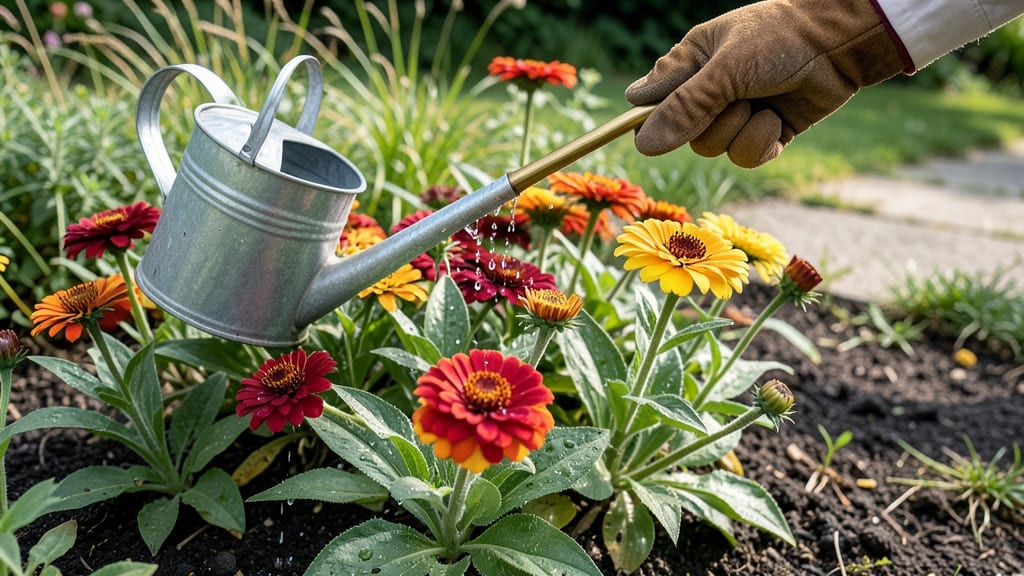
Watering zinnias the right way keeps those bright blooms thriving all season—about 1 to 1.5 inches per week is the golden rule, but timing matters more than you’d think.
Too much or too little water, and your cheerful 🌼 zinnias can go from vibrant to wilted in days. The trick isn’t just sticking to a schedule—it’s checking the soil first. Dig your finger in an inch deep; if it’s dry, it’s time to water.
Summer heat demands more frequent watering, while cooler months let the soil dry out longer. But here’s the catch: overwatering causes root rot and fungal issues, while underwatering leads to droopy stems and fewer blooms.
Below, I’ll break down the exact watering routine for your zone, how to spot trouble early, and the best methods to keep your zinnias happy without the guesswork.
Zinnia watering schedule by season: exact days and soil tests
Zinnias thrive on consistency, but their watering needs shift dramatically with the seasons. Spring calls for gentle hydration to wake up roots, while summer's heat demands frequent deep watering. Fall slows things down, and winter requires minimal intervention.
The key? Soil tests—not just guesswork. Stick your finger 1-2 inches deep; if it feels dry, it's time to water. Overwatering is just as deadly as drought for these sun-loving annuals.
Most gardeners make two critical mistakes: watering on a fixed schedule (like every Tuesday) or drowning zinnias when the soil is already moist. Seasonal adjustments are non-negotiable. For example, a weekly watering in spring might turn into daily checks during a July heatwave.
Let's break down the exact approach for each season, plus the foolproof soil test method that saves blooms.
| Season | Watering Frequency | Soil Test Depth | Best Time to Water | Key Risks |
|---|---|---|---|---|
| Spring (April-May) | Every 3-4 days | 1-2 inches | Morning (6-8 AM) | Root rot from cold, wet soil |
| Summer (June-August) | Every 2-3 days (daily in heatwaves) | 2-3 inches | Early morning or late evening | Wilting from drought stress |
| Fall (September-October) | Weekly (reduce as temps drop) | 1 inch | Morning only | Fungal growth from evening water |
| Winter (November-March) | Bi-weekly (if no frost) | ½ inch | Midday (avoid freezing) | Frost damage from overwatering |
Spring is all about gentle establishment. Water zinnias every 3-4 days in April and May, but always check soil moisture first. Cold, wet soil is the enemy—it smothers roots and invites fungal diseases. Use a soil moisture meter or the finger test: push your index finger 1-2 inches deep.
If it comes out clean, wait another day. Mulch with straw or shredded leaves to lock in moisture and regulate temperature.
Summer transforms zinnias into thirsty sun-worshippers. Heatwaves demand daily attention—water deeply in the early morning (before 8 AM) to prevent evaporation and fungal spores from splashing onto leaves.
Aim for 1-1.5 inches of water per week, but split it into two sessions: once mid-morning and again in the late afternoon. Drip irrigation is ideal here; it delivers water directly to roots without wetting foliage.
Fall slows everything down, but don't skip watering entirely. Reduce frequency to weekly as temperatures drop, and always water in the morning. Cool evenings mean less evaporation, so 1 inch of water every 7-10 days is usually enough.
Watch for yellowing leaves—a classic sign of overwatering in fall. If your zinnias start looking sad, they're either thirsty or drowned, and the soil test will tell you which.
Winter care depends on your climate. In USDA Zone 6 or warmer, zinnias may survive mild winters with bi-weekly watering if the ground isn't frozen. Always water at midday to prevent freezing.
In colder zones, let the soil dry out completely—zinnias are annuals and won't survive winter anyway. Stop watering entirely once the first frost hits, unless you're overwintering seeds for next year.
Pro tip: Group zinnias by size to customize watering. Dwarf varieties (6-12 inches) dry out faster than tall standards (3-4 feet), so water them more frequently. Container-grown zinnias need daily checks in summer—they bake in pots.
Always water until you see water draining from the bottom of the container. This ensures roots get the hydration they crave.
Here's how to fix common mistakes quickly: If your zinnias wilt by noon, they're underwatered. Give them a deep soak and mulch immediately.
If leaves turn yellow and mushy, you're overwatering. Let the soil dry out for 2-3 days and avoid watering until the top inch is bone-dry. Brown edges on leaves? That's drought stress—water deeply and shade the plants for a day
5 Signs your zinnias are overwatered or underwatered (with fixes)
Your zinnias might look happy at first glance, but subtle signs like yellowing leaves or soft stems reveal watering woes. Overwatering and underwatering both stress these drought-tolerant flowers, but the fixes are simple once you know what to watch for.
Start with the soil—stick your finger an inch deep. If it feels damp, you’re likely overwatering. If it’s bone-dry, your zinnias are thirsty. The key is balance: zinnias hate soggy roots but also struggle when their roots dry out completely.
💧 Quick Watering Fixes for Zinnias
- 1. Check soil moisture daily in summer—water only when top 1 inch is dry.
- 2. Water deeply at the base (not leaves) to encourage root growth.
- 3. Use mulch (2-3 inches) to retain moisture and prevent evaporation.
- 4. Adjust frequency by season: summer = every 2-3 days, fall = weekly.
- 5. Prune yellow leaves to redirect energy to healthy blooms.
If your zinnias show drooping leaves by midday, they’re underwatered. Give them a deep drink at the base and monitor closely. For overwatered plants, let the soil dry out completely between waterings—this prevents root rot and fungal diseases.
Watch for mold or mildew on leaves, a red flag for overwatering. Remove affected foliage immediately and space plants for better airflow. Underwatered zinnias, meanwhile, may show crispy leaf edges—a sign they’re conserving moisture.
Adjust your watering routine based on weather. After heavy rain, skip watering entirely. In extreme heat, water in the early morning to reduce evaporation. Consistency is key—zinnias thrive on routine.
With these fixes, your zinnias will bounce back in days. Keep an eye on their foliage and soil, and soon you’ll have a garden full of vibrant blooms—no guesswork required. 🌼