
Watering
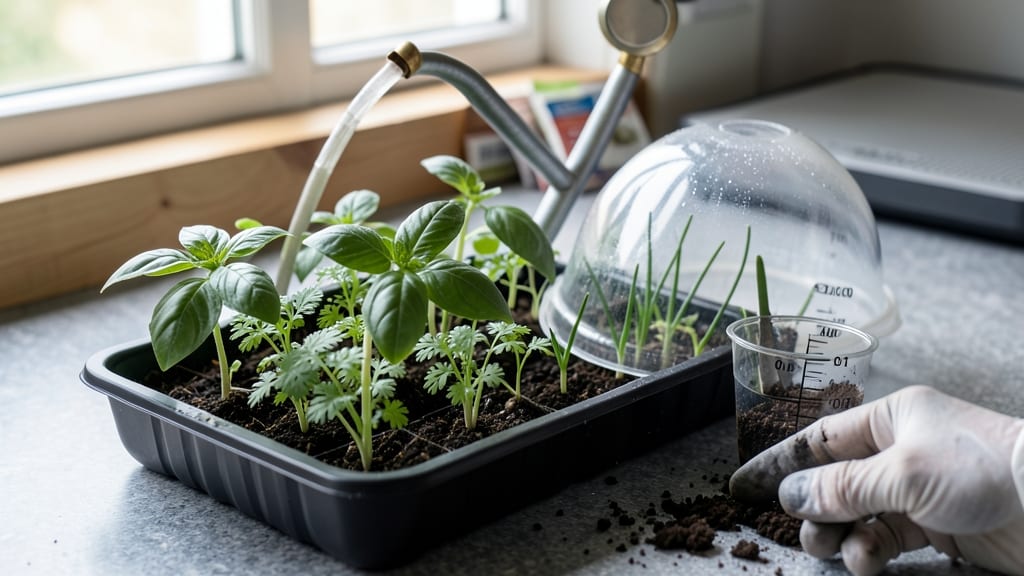
Watering seedlings in a tray too often or too little can turn your spring garden dreams into a sad pile of limp leaves.
Overwatering or underwatering seedlings in trays can stifle growth—or worse, kill them before they even sprout. The key to thriving seedlings lies in a precise watering rhythm that balances moisture without drowning roots.
Most beginners struggle with this balance because a tray’s shallow soil dries faster than garden beds, and uneven moisture invites rot or wilting. But here’s the good news: with a few simple checks, you can keep those 🌱 seedlings perfectly hydrated without guessing.
Below, I’ll show you the exact frequency and techniques to water seedlings in trays—plus how to spot when you’re doing it wrong. No more wasted sprouts!
The perfect watering frequency for seedlings in trays (by plant type)
Seedlings in trays demand precision watering—too much causes root rot, while too little stunts growth. The ideal schedule depends on plant type, tray material, and environmental conditions.
For example, leafy greens like lettuce tolerate slightly drier soil, while herbs such as basil need consistent moisture. Understanding these differences prevents common pitfalls like damping-off disease or weak stems.
Your seedling tray material also plays a critical role. Plastic trays retain moisture longer than biodegradable peat pots, which dry out faster. In humid climates, you may need to water less frequently, while dry, hot conditions require more frequent checks.
Always prioritize bottom-watering to encourage deep root growth and avoid disturbing delicate seedlings.
| Plant Type | Watering Frequency | Ideal Soil Moisture | Key Adjustments |
|---|---|---|---|
| Leafy Greens (Lettuce, Spinach) | Every 2-3 days | Lightly moist (top 1/2 inch dry) | Reduce in humidity; use bottom-watering |
| Herbs (Basil, Parsley, Cilantro) | Daily (morning) | Consistently moist (never soggy) | Increase frequency in heat; mist leaves lightly |
| Vegetables (Tomatoes, Peppers, Eggplants) | Every 1-2 days | Deeply moist (top 1 inch dry) | Use trays with drainage; avoid overhead watering |
| Flowers (Marigolds, Petunias, Snapdragons) | Every 2 days | Moderately moist (top 1/2 inch dry) | Reduce water if leaves yellow; check tray material |
| Succulents/Cacti (Seedlings) | Every 5-7 days | Very dry (top 1 inch dry) | Use well-draining mix; avoid plastic trays |
Note: Adjust for plastic vs. peat pots—peat dries faster.
For leafy greens, aim to water every 2-3 days—these plants thrive in slightly drier conditions. Use your finger to check the top 1/2 inch of soil: if it feels dry, it’s time to water. Bottom-watering is ideal here to prevent fungal spores from splashing onto leaves.
In high humidity, extend the gap to every 3-4 days to avoid stagnant moisture.
Herbs like basil and parsley are more sensitive, requiring daily watering in the morning. Their shallow roots need consistent moisture, but never let them sit in water. A spray bottle works well for gentle application, mimicking natural dew. If you notice wilting by afternoon, increase frequency to every 12 hours during heatwaves. Plastic trays trap heat, so monitor closely.
Vegetable seedlings like tomatoes and peppers need deep, even moisture—water every 1-2 days to keep the top inch of soil moist. These plants develop stronger roots when watered from below, so use a tray with drainage holes.
Overhead watering can cause damping-off disease, so always water at the base. In extreme heat, split the dose into two morning sessions.
Flower seedlings often tolerate slight dryness better than vegetables, so water every 2 days. Check for yellowing leaves, a sign of overwatering. If your trays are in a sunny window, reduce frequency to every 3 days.
For petunias and marigolds, a light misting in the evening can help, but avoid wetting the flowers themselves to prevent rot.
If you’re growing succulent seedlings, treat them like miniature adults—water only when the top inch is bone-dry. These drought-tolerant plants thrive in well-draining soil mixes and terracotta pots to prevent moisture buildup.
Plastic trays are a no-go; opt for biodegradable pots instead. Even then, water just once a week unless your home is exceptionally dry.
Environmental factors like temperature and humidity can shift your schedule dramatically. In low humidity (below 40%), increase frequency by 20-30%. Conversely, in high humidity (above 70%), reduce watering by 1-2 days to prevent fungal growth.
Always adjust based on visual cues: healthy seedlings have turgid leaves and vibrant color.
Pro tip: Group seedlings by watering needs in separate trays. This way, you won’t accidentally overwater succulents while tending to basil. Use a moisture meter for accuracy, especially if you’re new to seedling care. With practice, you’ll
How to check seedling moisture without overwatering (the 3-Step test)
Balancing moisture for seedlings in trays is tricky—too much water drowns roots, while too little stunts growth. Instead of guessing, I use a 3-step test to check soil moisture accurately.
This method saves time and prevents common pitfalls like damping-off disease or root rot. The best part? You don’t need fancy tools, just your fingers and a little observation.
Start by understanding the ideal moisture level for seedlings: soil should feel like a wrung-out sponge—damp but not soggy. Overwatered soil smells sour, while underwatered soil pulls away from the tray edges.
My goal is to keep the top ½ inch of soil consistently moist without waterlogging the roots below. This test helps me adjust watering frequency based on real conditions, not just a schedule.
3-Step Seedling Moisture Test
-
Step 1: The Finger Test (Top ½ Inch)
Stick your finger ½ inch deep into the soil. If it feels dry, water lightly. If it’s damp but not wet, wait 24 hours before checking again. For fine seeds like lettuce, aim for a barely damp feel.
-
Step 2: The Weight Check (Tray Lift)
Pick up the tray—dry soil feels light, while moist soil adds noticeable weight. If the tray feels unusually heavy, it’s overwatered. For plastic trays, condensation on the bottom signals excess moisture.
-
Step 3: Visual Cues (Surface & Leaves)
Check for surface crusting (underwatered) or glossy soil (overwatered). Healthy seedlings have dark green leaves and no wilting. Yellowing at the base? That’s often a sign of root suffocation from too much water.
Adjust your watering based on the test results. For example, if the finger test shows dry soil but the tray feels light, water until the soil is evenly moist. If the weight check reveals a heavy tray, let it sit uncovered for a few hours to dry slightly.
I’ve found that morning watering works best—it gives excess moisture time to evaporate before nightfall.
Environmental factors change the game: humid climates need less frequent watering, while dry air or direct sun may require daily checks. I keep a small notebook to track which plants (like herbs vs. vegetables) need adjustments.
For instance, basil seedlings dry out faster than tomato seedlings in the same tray.
Remember, consistency is key. Over time, you’ll learn your seedlings’ moisture rhythm. My rule of thumb? When in doubt, underwater slightly—seedlings bounce back from dryness better than from soggy roots. With this test, you’ll avoid the heartbreak of lost seedlings and enjoy a head start on your garden.