
How To
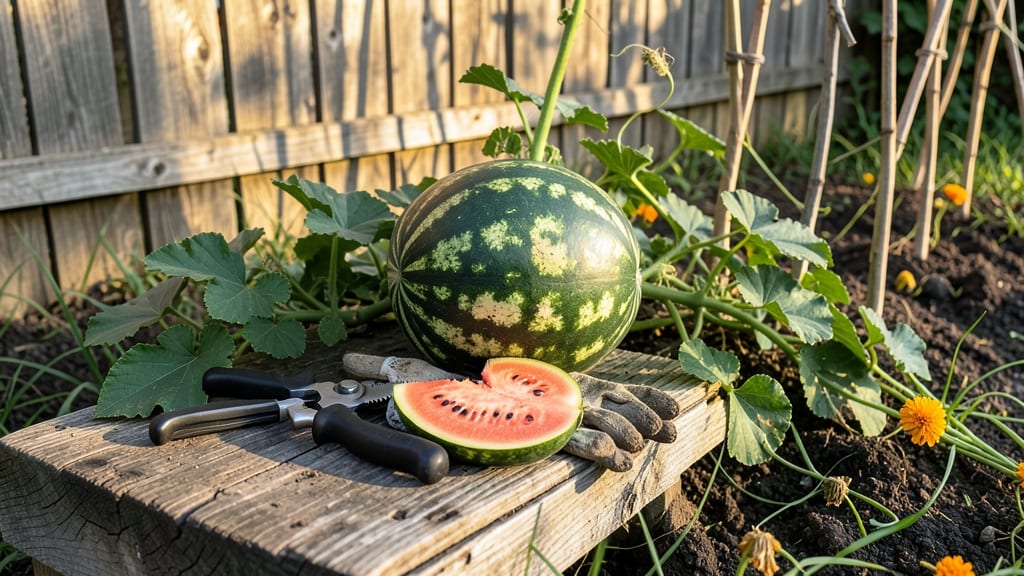
To know when a watermelon is ready to eat, check for a cream-colored ground spot, a hollow thump when tapped near the stem, and a vine that’s curled and dried out.
Picking a ripe watermelon at the peak of summer is an art—one wrong choice, and you’re left with a bland, watery disappointment. But with these field-tested tricks, you’ll never second-guess your 🍉 again.
Most gardeners overlook the field spot, that pale patch where the melon rested on the soil. A creamy yellow means ripeness, while a white spot signals underripe fruit. Combine that with a firm rind and a deep, rich color, and you’ve got a winner.
Below, I break down the exact tests to use—no guesswork, just science-backed cues—to ensure your watermelon is juicy, sweet, and ready to slice. No more sad, mushy surprises!

5 Field-tested tricks to identify a perfectly ripe watermelon
There’s nothing worse than slicing into a watermelon just to find it’s rock-hard or mushy inside. As someone who’s harvested hundreds of melons in my garden, I’ve learned the science behind ripeness—and it’s not just about size or color.
The ground spot, the thump test, and even the stem’s curl all tell a story. These tricks have saved me from countless disappointing cuts, and they’ll help you too.
Watermelons don’t ripen further after picking, so nailing the harvest timing is everything. Professional growers rely on a mix of visual cues, tactile tests, and even auditory clues.
Don’t overlook the field spot (the cream-colored patch where the melon rested on the ground) or the sound of the rind—these are your secret weapons. Let’s break down the five foolproof methods I use every harvest season.
🍉 How to Know When a Watermelon Is Ready
-
1. The Thump Test
Tap the melon near the stem end. A ripe one sounds hollow—like knocking on a drum. If it’s dull, it’s underripe. Pro tip: Do this near your ear for clarity. -
2. Field Spot Check
Look for a cream or buttery yellow spot where the melon touched the ground. If it’s still white or pale, wait a few days. Dark varieties may have a grayish spot—still ripe if firm. -
3. Stem vs. Vine Curl
A ripe watermelon’s stem will curl upward, while the vine tendril nearest the fruit turns brown and crispy. If the stem is still green, the melon isn’t ready. -
4. Weight Test
Lift the melon—it should feel heavy for its size. A light melon is often underripe. Pro growers say this is the most reliable indicator after the field spot. -
5. Rind Texture
Press your thumbnail into the rind. If it springs back, it’s ripe. If it leaves a dent, the melon is overripe. Avoid melons with soft spots or cracks—they’re past their prime.
I once picked a watermelon based solely on its size, only to find it was 90% water and seed. That’s when I learned to trust the field spot over assumptions. The thump test is especially useful at farmers’ markets, where you can’t see the vine or stem.
Tap near the stem end—a ripe melon will sound deep and hollow, like a drum. If it’s muffled, walk away.
The stem curl is another game-changer. When the main stem curls upward and the nearby tendril dries out, that’s your cue.
I’ve seen gardeners ignore this and end up with melons that never sweeten. Pro growers in my area swear by this trick—it’s a biological signal that the melon is ready to harvest.
Don’t fall for the myth that bigger = better. I’ve cut open giant watermelons that were rock-hard inside because they weren’t ripe. The weight test is your best friend here.
A ripe watermelon feels dense and heavy for its size. If it feels light, it’s likely underripe. Grocery store melons often trick you here—always test the weight!
Finally, the rind texture can’t be ignored. Press your thumbnail into the skin near the field spot. If it springs back, you’re golden. If it stays indented, the melon is overripe. Avoid melons with soft spots or cracks—these are signs of internal spoilage.
I’ve lost count of the melons I’ve saved by using this simple trick.
Here’s a common mistake I see all the time: people think a dull thump means the melon is ripe. Wrong! A dull sound actually signals an underripe melon.
The hollow thump is what you’re after. Pair this with the field spot and stem curl, and you’ll never be fooled again.
Once you master these tricks, you’ll become the go-to person at your local farmers’ market. I’ve even had neighbors ask me to inspect their melons before harvest. The key is patience—don’t rush the process. A watermelon won’t get sweeter after picking, so wait for all signs to align.
Now, grab a melon and put these tricks to the test. Trust me, your taste buds will thank you when you sink your teeth into a perfectly ripe, juicy slice this summer. Happy harvesting! 🌱
Watermelon ripeness indicators: what to look for (and what to ignore)
Let’s bust the biggest watermelon myth first: size doesn’t equal ripeness. I’ve seen tiny watermelons packed with sweet, juicy flesh and massive ones that taste like water. The real clues lie in what you can see, touch, and even hear.
As a gardener who’s harvested hundreds of melons, I’ve learned to trust my senses over assumptions.
Start with the field spot—the pale, cream-colored patch where the melon rested on the ground. A ripe watermelon’s spot should be a deep cream or buttery yellow. If it’s still white or greenish, the melon needs more time.
Pro growers also check for symmetry—uneven shapes often mean uneven ripening, while perfectly round melons (like Sugar Baby varieties) signal maturity.
🌱 Pro Techniques
- 🔍 Field spot: Cream/buttery yellow
- 🤏 Rind firmness: Resists thumbnail pressure
- 🔊 Thump test: Dull, hollow sound near stem
- 🌿 Vine check: Brown, dried tendril
⚠️ Amateur Mistakes
- 🟢 Green spots: Assuming all green = unripe
- 🤏 Soft rind: Overripe or underripe confusion
- 🔊 Thump test: Expecting loud = ripe (wrong!)
- 🌱 Size only: Bigger ≠ sweeter
Next, give the rind a gentle squeeze. A ripe watermelon’s skin should feel firm but with slight give. If it’s rock-hard, it’s underripe; if it’s mushy, it’s overripe. I also tap the melon near the stem end—a dull thump means ripe, while a hollow echo signals overripeness.
This trick works best when the melon is warm from the sun.
Don’t ignore the stem or vine. The tendril closest to the melon should be brown and dried, not green and plump. Some gardeners also check the curl of the vine near the fruit—if it’s curling upward, the melon’s ready.
I’ve found this especially reliable for heirloom varieties like Moon and Stars, which ripen unevenly.
Finally, trust your nose and eyes. A ripe watermelon should smell sweetly floral near the stem. Visually, the stripes or patterns should be fully developed—no pale or green patches. For dark green-skinned varieties, look for a yellowing underside where the melon rested.
Remember, every watermelon variety ripens slightly differently. Seedless varieties often ripen faster than seeded ones, while yellow-fleshed melons may show ripeness through a golden hue. When in doubt, pick a melon that meets 3-4 of these indicators—your taste buds will thank you! 🍉