
Picking
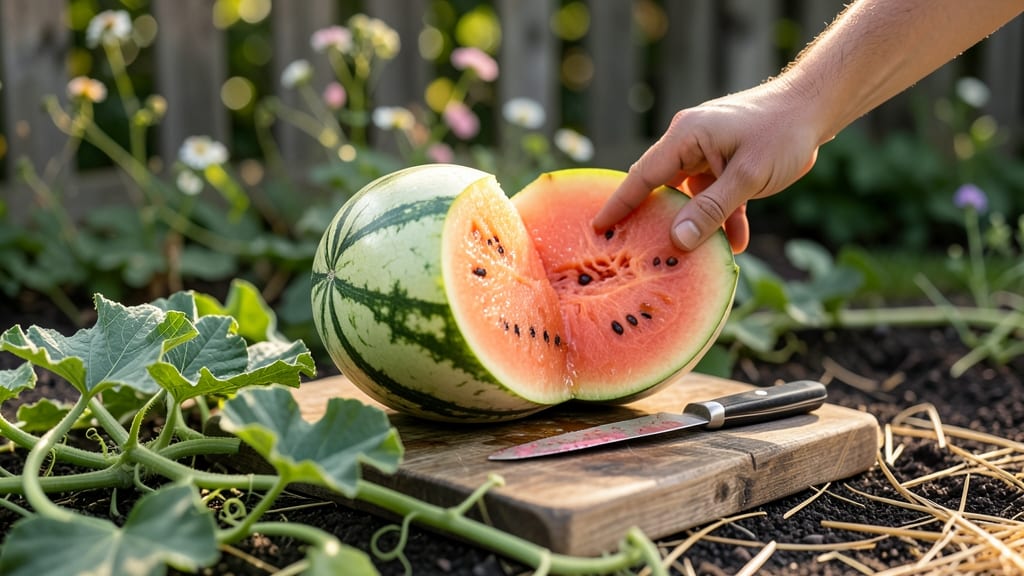
When are Sugar Baby watermelons ripe? The answer lies in their creamy green rind and browned tendrils—but timing this perfectly means the difference between a sweet burst and a bland bite.
Picture this: you’ve waited all summer, and now your vines are heavy with fruit. How do you know when to pick without guessing? The answer lies in three simple, field-tested tricks that take the guesswork out of harvest day.
Most gardeners rely on size or days after flowering, but those methods miss the mark for Sugar Baby varieties. Instead, focus on the rind’s texture, the stem’s dryness, and that satisfying thump when you tap the melon. These cues are foolproof — and they work even in hot, humid summers.
Below, I’ll walk you through exactly what to look for, plus what to do if your melons aren’t quite ready. No more overripe squish or underripe disappointment — just sweet, juicy perfection every time.
3 Field-tested signs your Sugar Baby watermelon is ripe
There’s nothing worse than slicing into a Sugar Baby watermelon only to find it’s still hard and bland—yet knowing exactly when to pick can turn that disappointment into sweet, juicy victory.
These mini watermelons ripen faster than their larger cousins, but their small size makes traditional ripeness cues trickier to spot. The good news? With these three science-backed signs, you’ll never guess again.
Sugar Baby watermelons rely on the same ripeness principles as other varieties, but their compact size and rapid growth demand sharper attention. Ignore the "big is better" myth—these melons reach peak sweetness when they’re still small, often just 3-5 pounds.
The key is combining visual clues with tactile tests to catch them at their sweetest moment.
- 1. Tendril Color: Look for the small tendrils near the stem to turn brown and crispy—this signals the melon is ready within 1-2 days.
- 2. Rind Texture: Press your thumbnail into the rind—it should leave a slight dent but not puncture. A deep green or striped rind is another dead giveaway.
- 3. Thump Test: Lift the melon and tap it—ripe Sugar Babies sound hollow and deep, like a drum. If it thuds softly, it’s not ready yet.
The tendril trick is often the most reliable for Sugar Baby varieties because their small size makes other methods less consistent. These tiny vines (about 1-2 inches long) dry out first when the melon is ripe.
Pro tip: Check the smaller tendrils closest to the fruit—they’re more sensitive than the larger ones near the main vine.
Don’t overlook the underside of the melon where it rests on the ground. A creamy yellow spot (about the size of a quarter) confirms ripeness. This happens because the melon’s ethylene gas builds up as it matures, triggering color change.
If you see this spot, harvest within 24 hours to avoid overripeness.
The thump test gets a bad rap because it’s easy to misjudge, but when done right, it’s foolproof. Hold the melon with both hands and tap it gently with your knuckles. A ripe Sugar Baby will sound deep and resonant, almost like a wooden drum.
If it thuds like a balloon, it’s still firm and underripe. Test a few melons side by side to compare—your ears will learn the difference quickly.
Timing matters too—Sugar Baby watermelons typically ripen 75-90 days after planting, but heat waves or cool snaps can speed this up. In hot climates (Zones 8-10), they may ripen in as little as 60 days, while cooler areas (Zones 4-6) might need the full 90 days.
Keep a planting journal to track your local conditions and adjust your expectations.
One common mistake is waiting for the vine to yellow—but Sugar Baby vines often stay green even when the melon is ripe. Instead, focus on the stem near the fruit.
A dry, brown stem means the melon is cutting off its own water supply, a clear sign it’s time to pick. If the stem is still green and moist, give it 3-5 more days.
For the ultimate test, cut one melon open to check its readiness. A ripe Sugar Baby will have bright red flesh, small black seeds, and a juicy, sweet interior.
If the seeds are white or the flesh is pale, it needs more time. This sacrifice pays off—once you master these signs, you’ll never buy store-bought watermelons again.
🍉
Common mistakes that make you pick Sugar Baby watermelons too early
Even experienced gardeners sometimes pick Sugar Baby watermelons too early—usually because they rely on visual shortcuts that don’t apply to this small, fast-maturing variety. The most common mistake? Assuming a dark green rind means ripeness, when in reality, Sugar Babies often stay green longer than larger watermelons.
Their striped patterns (if present) may also appear faint until the very last days.
Another trap is judging ripeness by vine color. While yellowing leaves can signal maturity in other plants, Sugar Baby vines often stay green well past harvest time. Even the creamy yellow spot (a classic watermelon cue) might not develop until just 24-48 hours before peak ripeness.
These delays make it easy to harvest too soon, leaving you with underripe, seedy, or bland fruit.
Store-bought watermelons follow different ripening rules—many are picked green and gassed to ripen during transport. But Sugar Baby watermelons don’t respond well to this method. If you’re used to grocery-store melons, you might grab yours too early, thinking it needs more time.
The result? A watery, fibrous disappointment instead of the sweet, tender flesh this variety promises.
⚠️ 3 Pitfalls That Trick You Into Early Harvests
- Size ≠ Ripeness: Sugar Babies max out at 3-5 lbs—picking at this weight guarantees overripe or underripe results.
- Vine color is unreliable: Yellowing vines often lag behind fruit maturity by 1-2 weeks.
- Thump test fails: Small melons sound hollow even when unripe; use skin firmness instead.
Here’s the hard truth: Sugar Baby watermelons ripen faster than their size suggests. While larger varieties take 80-90 days, Sugar Babies are ready in just 60-75 days. Missing this window means your melons won’t develop their signature sweetness or texture.
The key is to check for 3 simultaneous signs: a deep green or striped rind, a dry brown stem, and a heavy weight for their size.
If you’re still unsure, cut one open (yes, really!). A ripe Sugar Baby will have bright red flesh with small, dark seeds. If the center looks pale or the seeds are white, it’s not ready—wait 2-3 more days and check again.
This variety forgives late harvesting better than early, so when in doubt, leave it on the vine.
Pro tip: Mark your planting date and use a harvest calendar (Sugar Babies ripen 70-75 days after sowing). Set reminders to check ripeness every 2-3 days during the final week. The 10-minute daily check now saves you from weeks of disappointment later. 🌱