
How To
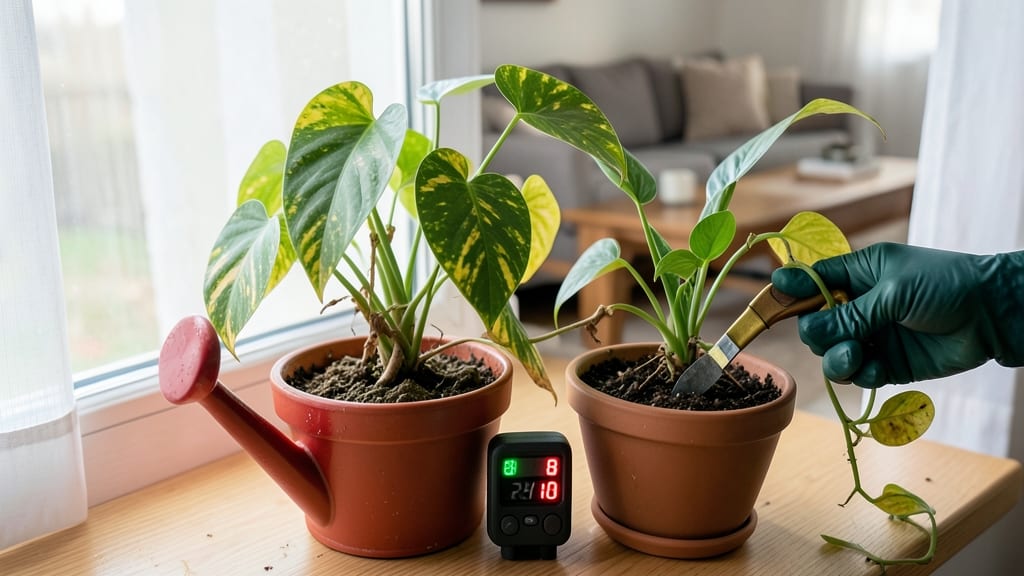
To tell if a plant is overwatered, check for yellowing leaves, mushy stems, wilting despite wet soil, moldy or foul-smelling soil, and slow or no new growth. These signs indicate root suffocation from excess moisture.
Overwatering creates a suffocating environment for roots by displacing oxygen and trapping excess moisture. 💧 When roots can't breathe, they start to rot, turning brown and mushy—a clear sign your plant is drowning.
This often happens in heavy clay soils that hold water too long, or when you water on a strict schedule without checking soil moisture first. Even plants that love humidity, like ferns, can suffer if their containers don't drain properly.
What's tricky is that overwatered plants often look wilted even when the soil is damp—this is called edema, where cells swell from too much water. 🌱 The key is to let the top inch of soil dry out between waterings, and always use pots with drainage holes.
If you're unsure, stick your finger in the soil: if it's cold and clinging, your plant needs less water than you think.
💡 In This Article
- Why Overwatering Damages Plant Roots
- Overwatered Plant Recovery Steps for Different Species
Why overwatering damages plant roots
When soil stays too wet, oxygen gets displaced by water molecules, creating an anaerobic environment where roots can't breathe.
This oxygen deprivation forces roots to switch from aerobic respiration (which produces energy efficiently) to fermentation—a process that releases toxic byproducts like ethanol and lactic acid. 🌱 Within just 24-48 hours of constant saturation, root cells start dying, turning brown and mushy as they rot.
The worst offenders are heavy clay soils, which hold water like a sponge, trapping roots in this suffocating state for days.
Root rot progresses in stages: first, the root tips die back, then the entire root system softens and collapses.
You'll notice this as your plant's stems feel spongy when touched—a sign the roots can no longer anchor or absorb water effectively. 💧 The soil around affected roots often develops a foul, sour odor from bacterial and fungal growth, like a damp basement.
Sandy soils, while better for drainage, can still cause problems if watered too frequently, as they leach nutrients faster, leaving roots starved even when oxygen is present.
Nutrient availability plummets when soil stays waterlogged because essential minerals like nitrogen and potassium get flushed away through runoff.
This nutrient leaching happens because excess water dissolves these compounds and carries them beyond the root zone. 🌿 What's more, waterlogged conditions create the perfect breeding ground for pathogens like Phytophthora and Pythium, which attack weakened roots.
Even hardy plants like snapdragons or impatiens can succumb if their roots remain waterlogged for more than 3-5 days.
Soil composition dramatically affects how quickly overwatering becomes fatal. Clay soils can hold 40-60% water by volume, while sandy soils retain only 5-10%.
This means a plant in clay may show signs of distress after just 2-3 days of overwatering, while the same plant in sandy soil might recover with 48 hours of dry conditions. 🔥 The key is monitoring soil moisture with your finger—if it feels cold and clinging 1 inch below the surface, your plant is getting too much water.
What most gardeners miss is how container size affects recovery. Small pots dry out faster but also become waterlogged quicker because roots fill the entire volume. A 6-inch pot may need water every 3-5 days in summer, while a 12-inch container might last 7-10 days between waterings.
Always check drainage holes—if water pools below the pot for more than 30 minutes after watering, your plant is at high risk of root suffocation. ✨