
Orchid Care
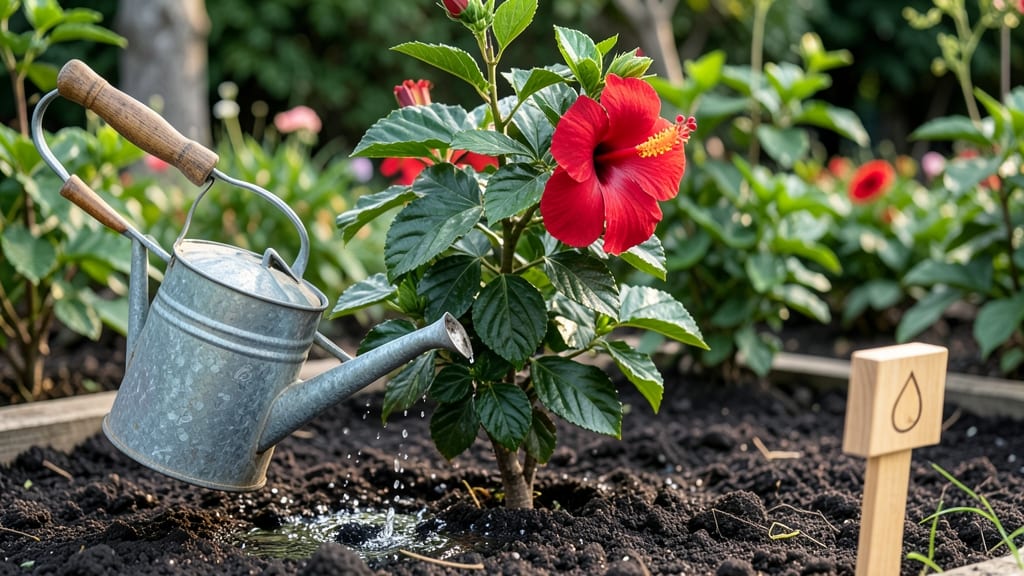
Watering hibiscus the right way is the key to those bold, tropical blooms you’ve been dreaming of — and it’s not what most gardeners think.
Picture this: your 🌸 hibiscus wilts by noon, even though you watered it yesterday. Or worse, its leaves turn yellow and drop off, leaving you scratching your head. The problem?
Hibiscus roots crave deep, infrequent drinks, not light sips that barely reach the soil. Too much or too little water, and you’re left with a sad, underperforming plant.
Here’s the good news: with the right technique, you can keep your hibiscus thriving year-round. I’ll walk you through the deep-watering method, how to read your plant’s thirst signals, and how to adjust for your climate—whether you’re in a humid tropical zone or a drier temperate region.
By the end, you’ll know exactly how to water hibiscus for maximum blooms, no guesswork involved. Let’s get started.
The deep watering technique hibiscus plants Actually Need
Most gardeners water hibiscus the wrong way—light sprinkles that barely reach the roots. This shallow watering creates a drought-stressed top layer while leaving deeper roots parched. Hibiscus thrive when water penetrates 12-18 inches deep, encouraging robust root systems that support vibrant blooms.
The key? Mimicking tropical rainfall patterns with slow, deep soaks rather than frequent shallow drinks.
Your hibiscus’s roots spread widely but shallowly, just below the surface. When you water lightly, only the top 1-2 inches get moisture, while deeper roots dry out and weaken. This stress triggers leaf drop and stunted growth—even if the soil looks wet.
The solution? A slow, thorough watering that saturates the root zone completely, once every 2-3 days in warm weather.
| Watering Method | Root Zone Reached | Bloom Impact | Best For |
|---|---|---|---|
| Shallow Watering | Top 1-2 inches | ❌ Fewer blooms, weak stems | New gardeners (accidental habit) |
| Deep Watering | 12-18 inches | ✅ More blooms, stronger roots | Established hibiscus (ideal method) |
| Drip Irrigation | Consistent 12+ inches | ✅ Year-round blooms, healthy foliage | Large gardens or containers |
| Surface Sprinkle | Top ½ inch | ❌ Stunted growth, leaf drop | Avoid entirely (worst method) |
To test if you’re watering deeply enough, stick your finger 3-4 inches into the soil after watering. If it’s dry, you didn’t go deep enough. Hibiscus roots need moisture consistency, not just occasional surface dampness.
Pro tip: Use a soil moisture meter ($10 at garden centers) for accuracy—it tells you exactly when to water based on root-zone moisture.
For container-grown hibiscus, deep watering means saturating the entire root ball until water drains from the bottom. Let excess water escape completely—soggy soil causes root rot just as fast as drought.
In-ground plants need 1.5–2 gallons per watering (adjust for pot size). The goal? Wet soil, not puddles.
Seasonal adjustments are critical. In summer heat, hibiscus may need daily deep watering, while winter dormancy reduces needs to every 7–10 days. Always water in the morning to prevent fungal diseases like powdery mildew—hibiscus hate wet foliage at night.
A 5-gallon watering can with a long spout makes deep watering effortless.
Improve drainage with organic matter like compost or coconut coir. Hibiscus roots suffocate in clay-heavy soil, so amend with perlite or sand if your garden retains too much moisture.
A 2-inch mulch layer (straw or wood chips) locks in moisture and regulates soil temperature—critical for tropical hibiscus in cooler climates.
Watch your hibiscus respond within 2–3 weeks of deep watering. You’ll see fewer wilted leaves, more buds, and darker green foliage. If blooms still lag, check for over-fertilizing (too much nitrogen = leaves, not flowers) or poor sunlight (hibiscus need 6+ hours of sun daily).
Deep watering alone won’t fix these, but it’s the foundation.
Remember: hibiscus are thirsty tropicals, not desert plants. They’ll tolerate brief dry spells but reward consistent deep watering with show-stopping blooms. Start today—your hibiscus (and your neighbors) will thank you. 🌸
Signs your hibiscus is thirsty (or drowning) and how to fix it
Your hibiscus sends clear visual signals when its water needs aren't met. Yellowing leaves or drooping stems can mean overwatering or underwatering, but the fixes couldn't be more different. Let's decode these hibiscus SOS signs so you can rescue your plant before it's too late.
First, check the leaf color—bright yellow leaves with crisp edges often signal underwatering, while yellowing with mushy stems points to root rot from overwatering. Both issues require immediate action, but the recovery steps are completely opposite.
- Deep soak: Water until 12 inches deep—check by inserting a screwdriver
- Morning watering: Always before 10 AM to prevent fungal growth
- Well-draining soil: Hibiscus hates soggy roots—amend with perlite or sand
- Container plants: Water every 1-2 days in summer (small pots dry faster)
For underwatered hibiscus, start by giving it a deep watering session—stick your finger 3-4 inches into the soil. If it's bone dry, water until you see excess draining from the bottom. Then, mulch heavily (3-4 inches) to retain moisture and reduce evaporation.
When you spot overwatered hibiscus, the first step is stopping all water immediately. Gently remove the plant from its pot and inspect the roots—healthy roots are white, while rotten roots appear brown and mushy.
Trim away any damaged roots with sterilized scissors and repot in fresh, well-draining mix.
To prevent future issues, test your soil regularly using a moisture meter. Hibiscus thrive when the top 2 inches of soil feel dry to the touch but the lower layers stay moist. In containers, use pots with drainage holes and a cache pot underneath to catch excess water.
Remember, hibiscus are tropical plants that love moisture but hate soggy feet. The key is finding that sweet spot where the soil stays consistently damp but never waterlogged.
With these visual cues and recovery steps, your hibiscus will bounce back—and reward you with bold, vibrant blooms all season long. 🌸