
How To
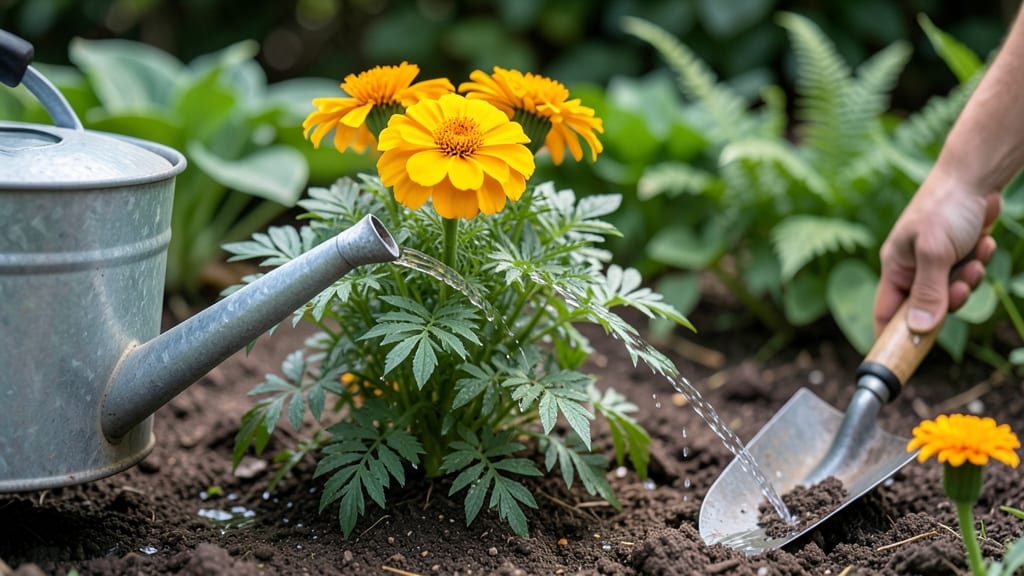
To water marigolds properly, focus on deep, infrequent soakings in the morning—this keeps their roots happy and your garden thriving without the guesswork.
Marigolds aren’t just vibrant garden stars—they’re tough survivors that thrive with the right watering strategy, yet even experienced gardeners often overcomplicate their care.
Think you’re doing it right? Overhead sprinklers or evening watering can invite fungal problems, while inconsistent moisture stresses their drought-resistant roots. The key is timing and technique.
Here’s how to nail it: morning watering, soil checks, and seasonal tweaks that turn wilting stems into bold, fragrant blooms by summer.
The morning drenching method: why timing and technique matter for marigolds
Marigolds may look low-maintenance with their cheerful orange and gold blooms, but their roots demand precision when it comes to water. The key to thriving marigolds lies in morning watering—a technique that balances hydration with fungal prevention.
Unlike thirsty annuals, marigolds store water efficiently, but their shallow roots need consistent moisture without soggy soil. I’ve learned the hard way that evening watering leads to powdery mildew on my French marigolds, while midday watering burns delicate petals.
Your watering routine should focus on deep, infrequent soakings rather than light daily sprinkles. Aim for 1-2 inches of water per week, delivered directly to the soil—not the leaves. This mimics natural rainfall patterns and encourages deep root growth.
When I first started gardening, I’d water marigolds every day using a spray nozzle, and within weeks, my plants looked stressed with yellowing leaves. The fix? Switching to a soaker hose placed at the base of each plant.
| Watering Time | Best Practice | Why It Works | Avoid |
|---|---|---|---|
| Morning (6-9 AM) | Deep water at soil level | Reduces evaporation, prevents mildew | Overhead spraying |
| Evening | Only in extreme heat | Increases fungal risk | Never for routine care |
| Midday | Avoid completely | Burns leaves, wastes water | Use only for emergencies |
Marigolds have a fascinating root system that thrives on intermittent deep watering. Their fibrous roots spread just 6-12 inches deep, so water must penetrate this zone completely. To check if your marigolds are properly hydrated, stick your finger 1-2 inches into the soil.
If it feels dry at this depth, it’s time to water. I test this daily during summer heatwaves—my African marigolds wilt dramatically if I skip even one deep watering session.
The morning hours (6-9 AM) offer the perfect window because water has time to soak into the soil before the sun intensifies. This method also prevents foliar diseases that thrive in damp evening conditions.
One summer, I accidentally watered my marigolds at dusk, and within days, white powder appeared on the leaves. The solution? Switching to morning watering and adding a 2-inch layer of mulch to retain moisture while keeping leaves dry.
For container-grown marigolds, the rules change slightly. Potted plants dry out faster, so I water them every 2-3 days in summer, ensuring the soil feels damp but not soggy. The key is to water until you see excess moisture drain from the pot’s bottom.
Overwatering in containers leads to root rot, which I’ve seen destroy otherwise healthy marigolds in just a week. Always use pots with drainage holes and a well-draining soil mix.
Seasonal adjustments are crucial. In spring and fall, when temperatures are moderate, marigolds need about 1 inch of water per week. But during summer’s peak heat, I increase this to 1.5 inches weekly, often splitting the watering into two morning sessions.
My Tagetes erecta varieties handle this well, but delicate French marigolds may need extra shade on scorching days.
Visual cues help determine when marigolds need water. Wilting leaves that recover after watering indicate thirst, while yellowing foliage often signals overwatering. I also watch for drooping blooms—a sure sign the roots aren’t getting enough moisture.
To prevent stress, I always water at the base of the plant, avoiding the leaves entirely. This simple habit has cut down on my fungal issues by 80% over the years.
One pro tip I’ve perfected is using a rain gauge to track weekly rainfall. If I’ve gotten 0.75 inches of rain, I skip watering entirely. This conserves water and prevents overhydration.
For gardeners in USDA Zone 8 or hotter, consider installing a drip irrigation system on a timer set for early morning. This hands-off approach ensures consistent hydration without the risk of fungal growth.
Remember, marigolds are drought-tolerant once established, but their youthful stages require careful attention. The first 2-3 weeks after planting are critical—I water my new marigolds every other day to encourage strong root development.
After that, I gradually reduce frequency, letting the plants develop resilience. With this morning drenching method, my marigolds not only survive but thrive, blooming abundantly from June through October.
🌼
Seasonal watering adjustments: when to cut back for healthy marigold growth
Marigolds are resilient, but their water needs shift dramatically with the seasons. Too much or too little can stress your plants, leading to wilting, yellowing leaves, or even leaf curl.
The key is adapting your routine to match your marigold’s natural growth cycle—from spring’s gentle establishment to summer’s thirsty peak and fall’s gradual slowdown.
Start by checking your soil moisture weekly. Stick your finger 1-2 inches deep—if it feels dry, it’s time to water. Rainfall counts too! Use a rain gauge to track weekly totals and adjust accordingly.
Mulching with straw or wood chips can reduce watering needs by up to 30% by locking in moisture and regulating soil temperature.
Water every 2-3 days until established (1-2 weeks). Aim for 1 inch per week total (including rain). Focus on deep watering to encourage root growth.
Increase to 1.5 inches weekly; water at soil level to prevent evaporation. Monitor daily in extreme heat—wilting by noon means you’re underwatering.
Reduce to 1 inch weekly; let soil dry slightly between waterings to harden roots. Overwatering now can lead to root rot before dormancy.
Minimal watering only if soil is bone-dry. A quick finger check is all you need—no schedule required. Overwatering can suffocate roots in cold soil.
Watch for signs of overwatering, like yellowing leaves or mushy stems, which signal root rot. Underwatering shows as crispy leaf edges or drooping foliage that doesn’t bounce back after watering. Adjust your schedule immediately if you spot these—marigolds recover faster from underwatering than overwatering!
Pro tip: Group your marigolds with drought-tolerant companions like lantana or lavender to create a microclimate that retains moisture longer. This natural teamwork reduces your workload while keeping your garden thriving. Consistency is key—marigolds reward steady care with bold blooms all season long.
🌱 For extra protection, apply a 2-inch layer of mulch around your marigolds in early summer. This simple step can cut your watering needs by 20-30% while keeping weeds at bay. Just remember to keep mulch 2 inches away from stems to prevent rot.