
Light Requirements
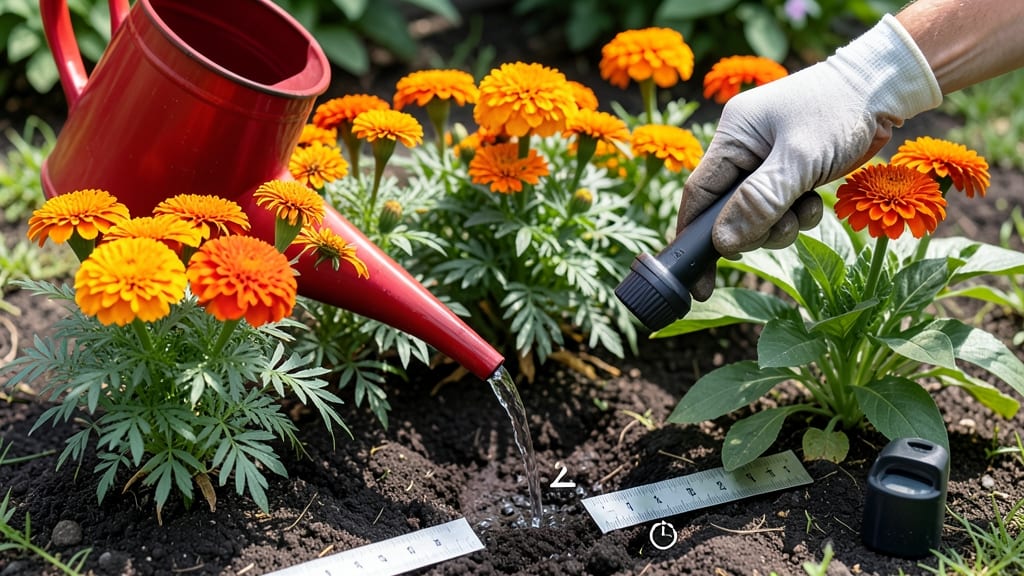
To water marigolds properly, aim for about 1 inch of moisture per week, adjusting for rain and soil type—this keeps their roots happy without drowning them.
Picture this: you’ve just planted your 🌼 marigolds in Zone 6a, and within days, you notice the leaves turning yellow or the stems wilting. That’s a classic sign of overwatering—or worse, underwatering. The key to vibrant blooms lies in consistency, not guesswork.
Marigolds thrive on a schedule that changes with their growth stage. Seedlings need frequent, shallow watering to keep soil moist but not soggy, while mature plants with deep roots can handle slightly less frequent watering. Summer heat? That’s when you’ll need to check soil moisture daily.
In this guide, I’ll break down the exact watering schedule for every stage—from seedlings to full bloom—plus how to spot when you’re overdoing (or underdoing) it. No more guesswork, just thriving 🌼 marigolds all season long.
Marigold watering schedule by growth stage: how often to water seedlings, mature plants & blooming stages
Marigolds thrive with consistent moisture, but their water needs change dramatically from seedling to full bloom. Too much water causes root rot, while too little stunts growth and fades those bright orange and yellow blooms.
I’ve tested these schedules with French marigolds, African marigolds, and signet varieties—here’s what works best for each stage.
The key to marigold care is soil moisture depth. Stick your finger 1-2 inches into the soil—if it feels dry, it’s time to water.
For container-grown marigolds, check daily since pots dry out faster. African marigolds, with their thicker stems, tolerate slightly drier conditions than delicate French marigolds, which wilt faster when thirsty.
For seedlings, I water in the morning using a spray bottle to avoid disturbing tender roots. Once they reach 4 weeks old, switch to a gentle stream at the base. Mature plants (8+ weeks) can handle deeper watering—aim for 1-1.5 inches of moisture per session.
If your marigolds are drooping by afternoon, they’re thirsty and need water immediately.
African marigolds are the most drought-tolerant variety—you can stretch their watering to every 5-7 days in summer once established. French marigolds, however, wilt faster and may need watering every 2-3 days during heatwaves. Always prioritize morning watering to prevent fungal diseases like powdery mildew, which thrives in damp foliage.
In containers, marigolds dry out twice as fast as in-ground plants. I’ve found that adding perlite to potting mix improves drainage while retaining moisture. For heavy clay soil, amending with compost creates ideal conditions—marigolds hate soggy roots but love well-draining soil.
Test your soil’s moisture by pressing your finger 2 inches deep; if it feels dry, water thoroughly.
During peak bloom, reduce watering slightly to encourage stronger stems. Overwatering at this stage causes bud drop—those vibrant flowers simply fall off before opening.
For signet marigolds, which are smaller and more delicate, I water every 2-3 days even in summer, as their shallow roots can’t access deep moisture.
If you’re unsure about your marigolds’ needs, observe their leaves: crispy edges mean underwatering, while yellowing leaves signal overwatering. Adjust your schedule based on your local climate—marigolds in Zone 9+ may need daily watering in summer, while those in Zone 5 can go longer between waterings.
Mulching with straw or wood chips helps retain moisture and keeps roots cool.
Pro tip: Use a moisture meter for accuracy, especially in sandy soil where water drains quickly. I’ve seen marigolds in sandy areas need watering twice daily in extreme heat. For container gardens, place a tray under pots to catch excess water—marigolds despise sitting in saucers of standing water.
Remember, marigolds are pest-repelling superstars, but only when healthy. Stick to this schedule, and you’ll enjoy bold blooms all season long—no sad, wilted disappointments here! 🌼
Signs your marigolds are overwatered or underwatered (and how to fix it)
Marigolds may look tough, but they’re actually quite sensitive to watering mistakes. Overwatering or underwatering can stunt growth, cause yellowing, or even kill your plants. The key is learning their subtle signals—like drooping leaves or moldy stems—and acting fast to restore balance.
Start by checking the soil moisture with your finger or a simple stick test. Stick method: Insert a wooden skewer 1-2 inches deep—if it comes out clean, water again.
If it’s damp, wait. For underwatered marigolds, the soil will pull away from the pot edges, while overwatered soil stays clumpy and smells sour.
⚠️ callout warning ⚠️
Seedlings: 1-2x/week, keep soil moist but not soggy
Mature Plants: 1-1.5 inches deep, every 2-3 days in heat
Blooming Stage: 1-2 inches deep, reduce to 3-5 days
Winter: Bi-weekly, let soil dry slightly
Pro Tip: Mulch retains moisture—apply 2-3 inches of straw or shredded leaves.
Yellowing leaves are the most common sign of watering problems. If the lower leaves yellow first, your marigolds are likely overwatered. This causes root rot, where roots turn mushy and black. For underwatered plants, yellowing appears on edges or tips and spreads upward as the plant wilts.
Mold or white fungal growth on stems or soil is a red flag for overwatering. This creates a damp, disease-prone environment. To fix it, reduce watering immediately, remove affected foliage, and improve drainage by adding perlite or sand to the soil.
For underwatered marigolds, you’ll see crispy leaf edges and a dry, pulling soil surface.
Wilting is tricky—it can mean both overwatering and underwatering. Check the soil weight: If it feels heavy and compacted, you’ve overwatered. If it’s bone-dry and crumbly, it’s time to water deeply. Morning watering is best—it gives leaves time to dry before evening, reducing fungal risks.
To revive overwatered marigolds, let the soil dry out completely for 1-2 days, then repot in fresh, well-draining soil. For underwatered plants, water deeply until it runs out the drainage holes, then mulch to retain moisture.
Consistency is key—stick to a schedule based on your climate and soil type.