
Flowers
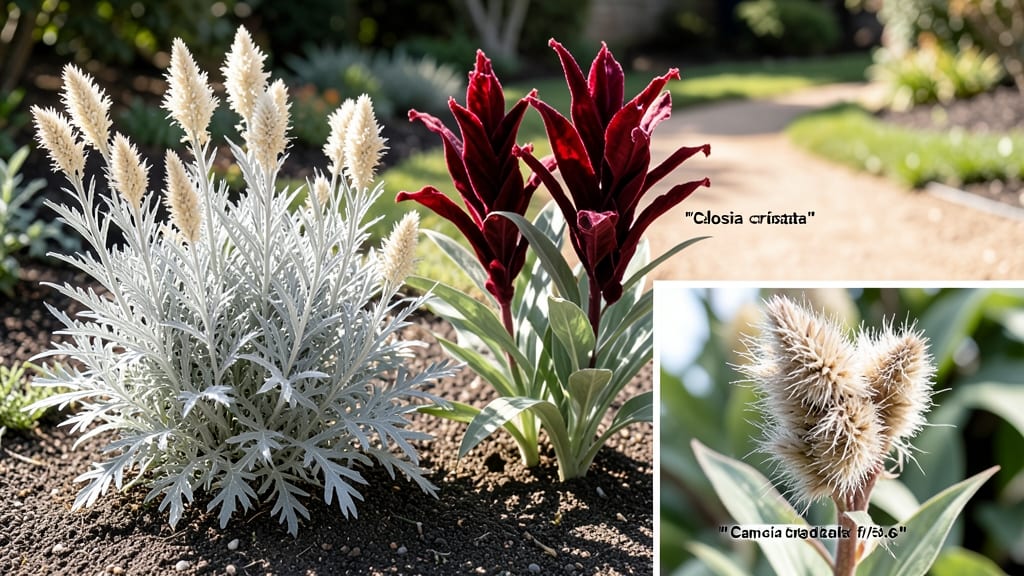
Celosia is not a true perennial in most climates, typically grown as an annual or short-lived tender perennial in frost-free zones (USDA 11-12). In cooler regions, it dies back with frost but may self-seed prolifically for seasonal regrowth. Overwintering requires protective measures or indoor care.
Celosia thrives as a seasonal plant because its tropical origins make it highly sensitive to frost. 🌱 In regions with cold winters, the plant's vibrant foliage and flowers will wilt when temperatures drop below 32°F, but the roots may survive briefly in protected microclimates.
Many gardeners treat celosia as an annual simply because it's easier than managing overwintering—though in warmer zones like Southern California or Florida, it can persist for multiple years without intervention.
The key difference lies in how quickly celosia recovers after cold exposure versus true perennials, which regrow from established root systems each spring.
What makes celosia unique is its ability to self-seed aggressively in mild climates, creating natural regrowth that mimics perennial behavior. This adaptation explains why some gardeners in frost-free areas can enjoy celosia year after year without planting new seeds.
However, true perennial status requires consistent temperatures above 40°F throughout winter, which most U.S. regions don't naturally provide. For those in cooler zones, container growing with winter protection offers the best chance to extend celosia's lifespan beyond a single season.
💡 In This Article
- Celosia Hardiness Zones and Cold Tolerance Limits
- How to Extend Celosia’s Season: Overwintering Hacks
Celosia hardiness zones and cold tolerance limits
Celosia's tropical origins explain why it struggles in cold climates. Native to regions like Africa and Asia, this plant evolved in environments where temperatures rarely drop below 50°F.
When exposed to frost (32°F), the plant's cellular membranes rupture due to ice crystal formation, causing irreversible damage. 🌡️ Unlike hardy perennials, celosia lacks cold-resistant adaptations like antifreeze proteins or deep root systems that insulate against temperature fluctuations.
The USDA hardiness zone map clearly shows celosia's limitations. In zones 9-10, it thrives year-round with minimal care, while zones 8 and below require special attention. Even in zone 9, light frosts can cause leaf scorch, though the plant often recovers if protected.
The critical threshold occurs at 28°F, where most celosia varieties experience complete dieback. This explains why gardeners in cooler regions treat it as an annual despite its vibrant seasonal display.
Physiologically, celosia's response to cold involves a cascade of stress reactions. When temperatures drop below 45°F, the plant begins producing ethylene—a hormone that triggers leaf abscission (dropping leaves) as a survival mechanism.
This process conserves energy but ultimately weakens the plant's ability to regenerate. 🌱 In contrast, true perennials like hostas or daylilies enter dormancy, preserving their root systems for spring regrowth. Celosia's lack of this dormancy phase means it cannot recover from frost damage like its perennial counterparts.
Microclimates can extend celosia's growing season in marginal zones. For example, planting near south-facing walls or using black plastic mulch can raise soil temperatures by 5-10°F, creating pockets where celosia might survive light frosts.
However, these methods only provide temporary protection during brief cold snaps. The plant's inability to withstand prolonged exposure to 40°F temperatures or below remains its fundamental limitation as a non-perennial.
Comparing celosia to similar tropical plants reveals its unique challenges. While hibiscus (another tropical) can survive in zone 8 with protection, celosia's more delicate structure makes it far more frost-sensitive. The plant's upright growth habit and thin stems lack the structural support needed to withstand wind and cold stress.
This fragility explains why even in zone 8, most gardeners opt to replant celosia annually rather than attempt overwintering.
Understanding these physiological limits helps explain why celosia behaves differently across regions. In frost-free zones, it can persist for multiple years through self-seeding, while in colder areas, it must be replanted each spring.
The key difference lies in whether the plant can complete its life cycle before winter arrives—something only possible in warmer climates where growing seasons extend beyond 240 days annually.