
Watering
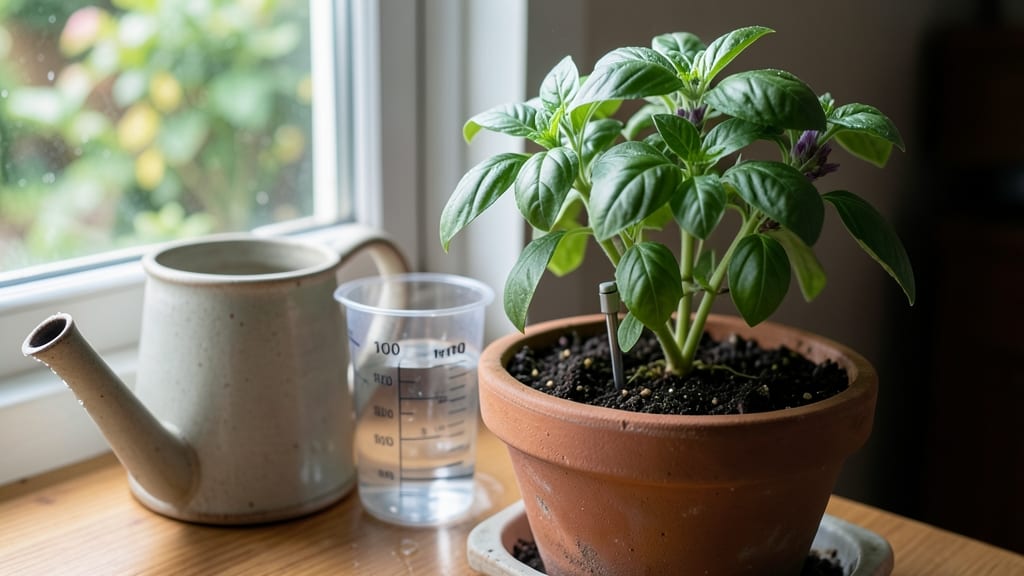
To know how much water to give a plant, check soil moisture, leaf wilting, pot weight, drainage, and seasonal conditions. Insert your finger into the soil—if the top inch feels dry, it's time to water. Conversely, soggy soil or yellowing leaves indicate overwatering. Adjust your approach based on humidity, sunlight exposure, and the specific needs of your plant type.
Most gardeners learn the hard way that plants don't come with built-in water gauges, but there are simple ways to read their needs. 💧 The soil's moisture level is your best indicator—stick your finger about an inch deep; if it feels dry, your plant is thirsty.
However, don't rely solely on a schedule: leaf wilting can signal dehydration, but drooping leaves might also mean overwatering if they're mushy or yellowing. Pot weight is another trick—lift it before and after watering to gauge how much moisture it holds.
Remember, factors like humidity, sunlight, and even the season can shift a plant's thirst dramatically. For example, a fern in bright light may need daily watering, while a cactus in shade might go weeks without it.
Beyond these signs, consider your plant's environment. Tropical varieties like ferns and calatheas thrive in consistently moist soil, while succulents and cacti prefer dry conditions. 🌱 Container size matters too—small pots dry out faster than large ones.
If you're unsure, a DIY moisture meter (like a wooden skewer) can help track soil dampness without guesswork. The key is observation: pay attention to how your plants respond to different watering patterns over time.
💡 In This Article
- 5 Key Signs Your Plant Needs (or Doesn’t Need) Water
- Watering Schedule Guide by Plant Type and Environment
5 Key signs your plant needs (or doesn’t need) water
Plants communicate their hydration needs through subtle physical cues rooted in their cellular biology. When a plant's root zone dries out, its cells lose turgor pressure—the natural rigidity that keeps leaves plump. This happens because water moves from the soil into the roots via osmosis, creating a pressure gradient.
When soil moisture drops below 30-40% volumetric water content, roots struggle to absorb water, triggering wilting as a survival mechanism. 🌱 However, wilting isn't always dehydration—some plants (like jade) naturally droop in the evening, only to perk up in the morning.
The "finger test" works because human skin can detect moisture changes in soil at 1-2 inches deep, where most plant roots actively absorb water. For container plants, press your finger gently—if the soil feels like a damp sponge (not sticky or bone-dry), it's holding adequate moisture.
A 1-gallon pot typically needs about 1 cup of water per watering, but this varies by soil type: sandy soil drains faster than clay, requiring more frequent watering. Always check drainage holes—if water pools there for more than 15 minutes, your plant is getting too much water.
Leaf texture reveals critical clues about hydration extremes. Overwatered plants often develop yellowing leaves (chlorosis) because roots suffocate in waterlogged soil, blocking oxygen and nutrient uptake. Underwatered plants, meanwhile, show crispy brown edges where cells dehydrate. 💧 The key difference?
Overwatered leaves feel mushy when pressed, while underwatered leaves feel papery and brittle. For tropical plants like pothos, this means soil should stay consistently moist but never soggy—think of a wrung-out sponge rather than a dripping one.
Seasonal adjustments are non-negotiable because plant metabolism slows in winter. During cool months, most houseplants need 30-50% less water than in summer, when higher temperatures and sunlight increase evaporation rates.
Even indoor humidity matters: in dry winter air (below 40% humidity), soil loses moisture 3x faster than in humid summer conditions. This is why your snake plant might need watering every 2-3 weeks in winter but weekly in summer—its environment changes dramatically.
Pot material affects watering needs too. Terracotta pots breathe, allowing moisture to evaporate through their walls, while plastic traps humidity. A 6-inch terracotta pot may need watering every 5-7 days in summer, while an identical plastic pot could go 10-14 days**.
This difference occurs because terracotta's porous surface mimics natural soil conditions, helping prevent overwatering. For precision, try the "lift test": if a 1-gallon pot feels noticeably lighter than when full, it's time to water.
Don't overlook the science of root health. Roots need oxygen to respire, which is why waterlogged soil kills plants faster than drought.
The ideal soil moisture creates tiny air pockets between particles, allowing roots to breathe while still accessing water. 🌿 This balance is why "bottom watering" (placing pots in trays of water) works for many plants—it lets them drink only what they need, preventing over-saturation.
For succulents, this method mimics their desert origins, where water is scarce but roots must access every drop efficiently.