
Watering
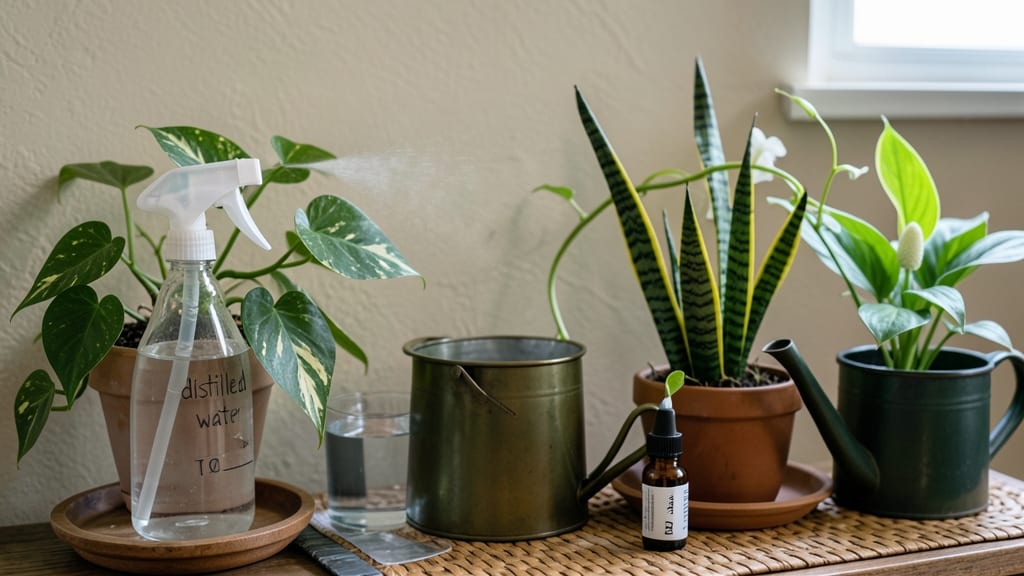
The answer is no—is distilled water good for plants? Generally, no, because its pure composition lacks essential minerals and has a neutral pH (around 7), which can disrupt nutrient absorption and harm beneficial soil microbes over time—though it can work in emergencies or hydroponic systems.
Distilled water’s purity is actually its biggest drawback for most plants. Without dissolved minerals like calcium and magnesium, roots struggle to absorb nutrients efficiently, leading to stunted growth or yellowing leaves. 💧 The neutral pH also fails to support the microbial ecosystems in soil that help break down organic matter.
That said, if you’re dealing with a waterborne disease outbreak or setting up a sterile hydroponic system, distilled water can be a temporary solution—but it’s not ideal for long-term care.
For everyday use, I recommend rainwater (when collected safely) or tap water with added nutrients. If you’re committed to using distilled water, consider adding a pinch of Epsom salt (for magnesium) or a balanced fertilizer every few waterings to compensate for the mineral loss.
Always monitor your plants for signs of deficiency, like weak stems or pale foliage.
💡 In This Article
- How Distilled Water Affects Soil pH and Nutrient Balance
- Best Alternatives to Distilled Water for Healthy Plant Growth
How distilled water affects soil pH and nutrient balance
Distilled water’s purity comes from removing all dissolved minerals and impurities through distillation, leaving behind H₂O molecules with a neutral pH of 7.0.
While this makes it chemically inert, it creates a problem for plants: soil naturally contains trace minerals like calcium, magnesium, and potassium that roots rely on for nutrient absorption.
When you water with distilled water, you’re essentially flushing these minerals out of the soil over time, leaving plants starved of essential elements. 🌱 This is especially critical for heavy feeders like tomatoes or peppers, which require steady access to calcium for cell wall strength and magnesium for chlorophyll production.
The pH impact is equally significant. Most healthy soils have a slightly acidic to neutral range (6.0-7.5), with the exact balance depending on the plant species.
Distilled water’s neutral pH doesn’t help—it neither acidifies nor buffers the soil, which means any existing pH imbalance (like alkaline soil) can worsen.
For example, blueberries thrive in acidic soil (4.5-5.5), but distilled water won’t help lower pH; in fact, it may accelerate leaching of aluminum and manganese, which are toxic in high concentrations.
The lack of buffering capacity also makes soil more vulnerable to sudden pH swings from other water sources.
Even more concerning is the effect on soil microbes—the tiny bacteria and fungi that break down organic matter and make nutrients available to plants. These microorganisms rely on dissolved minerals in water for their own metabolism.
When you use distilled water regularly, you’re essentially starving these beneficial microbes, reducing their population by up to 30-50% over time. This microbial decline slows down nutrient cycling, meaning even if you add fertilizer, plants may struggle to access it efficiently.
You’ll often see signs like stunted growth, yellowing leaves (chlorosis), or brown leaf tips—classic symptoms of nutrient deficiency that many gardeners mistakenly attribute to overwatering.
There’s also the issue of osmosis. Plant roots absorb water through a process called osmosis, where water moves from an area of lower solute concentration (the soil solution) to higher concentration (inside root cells).
Distilled water has virtually no solutes, which can create an imbalance that forces roots to work harder to absorb water. In extreme cases, this can lead to cell dehydration despite the soil appearing wet—a phenomenon called "physiological drought."
This is why some plants may develop crispy leaf edges even when the soil is moist, a clear sign the water quality is disrupting their natural processes. 💧
For comparison, tap water typically contains 30-100 parts per million (ppm) of dissolved minerals, while distilled water has 0 ppm. Rainwater, on the other hand, naturally contains trace minerals like nitrogen and sulfur from the atmosphere, making it a far better alternative for most plants.
The key takeaway is that distilled water’s purity is a double-edged sword: while it’s sterile and safe for short-term use, its long-term effects on soil chemistry and microbial life make it a poor choice for most gardening scenarios.
If you’re using distilled water in hydroponics, the story changes slightly. In sterile systems where you’re manually dosing nutrients, the lack of minerals isn’t an issue because you’re providing everything the plants need. But for soil-based plants, the risks far outweigh any benefits.
The solution? Use distilled water sparingly—only in emergencies or for specific plants that tolerate low-mineral conditions—and always supplement with nutrients or switch to a more balanced water source.