
Aphids
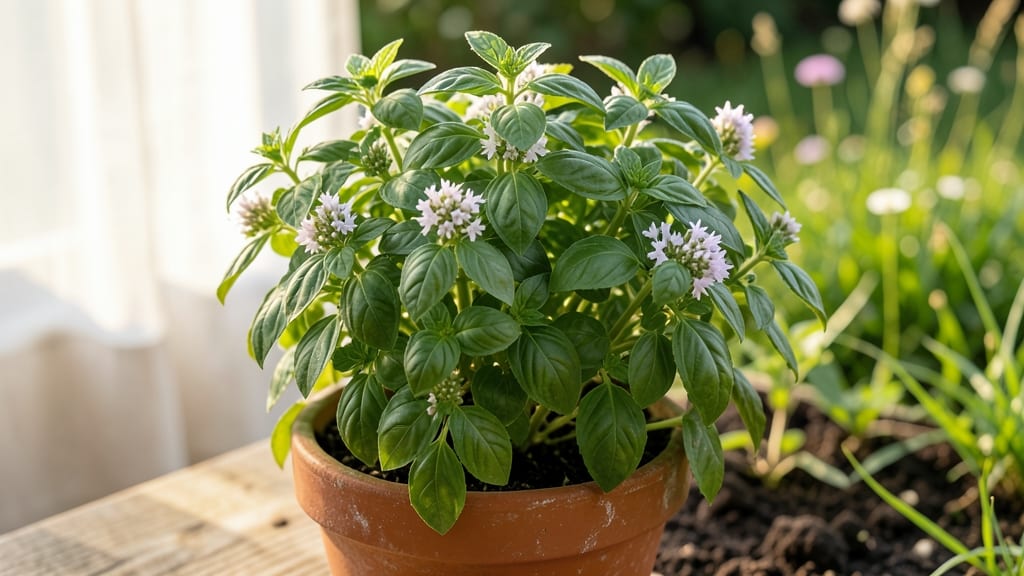
Sweet basil is not a perennial in most climates, as frost kills it back to the ground each winter, requiring annual replanting. Only in USDA zones 10-11 does it reliably survive winter outdoors with minimal care.
Sweet basil's sensitivity to cold stems from its tropical origins—it can't tolerate temperatures below 32°F (0°C) for long. 🌱 Unlike hardy perennials such as oregano or thyme, basil's shallow roots freeze easily, making it behave more like an annual in most gardens.
Even in milder zones, sudden freezes can devastate plants, forcing gardeners to start fresh each spring. The key difference lies in its root system: basil lacks the deep, insulating roots that help perennials like rosemary endure frost.
In colder regions (zones 5-9), overwintering basil requires creative solutions like potting and moving it indoors. I've found that mulching heavily or using row covers can extend its life by a few weeks, but most gardeners treat it as an annual.
The good news? Even in harsh winters, a few hardy stems can sometimes regrow from the roots if protected properly. For those in zones 10-11, the plant naturally enters dormancy and rebounds each spring with minimal intervention.
💡 In This Article
- Why Sweet Basil Dies in Cold Climates
- How to Overwinter Sweet Basil in Cold Regions
Why sweet basil dies in cold climates
Sweet basil's struggle with cold weather comes down to its tropical heritage. Native to warm regions of Central Africa and Asia, basil evolved without mechanisms to handle freezing temperatures.
When nighttime temps drop below 32°F (0°C), the plant's cell membranes rupture due to ice crystal formation, a process called cold stress. This damage is irreversible—even brief exposure can kill the entire plant, unlike hardy perennials that develop protective sugars and antifreeze proteins in their tissues.
The root system plays a critical role. Basil develops shallow, fibrous roots that spread just 6-12 inches deep, offering no insulation against ground frost. Compare this to oregano, which sends roots 2-3 feet deep and stores energy reserves underground.
When winter arrives, basil's roots freeze solid, while oregano's deeper roots stay protected by soil mass. In USDA zones 5-9, where winter lows often reach -10°F to 20°F (-23°C to -7°C), basil has no chance—its entire structure becomes vulnerable to freeze-thaw cycles that shred delicate stems.
Cold stress also triggers oxidative damage in basil leaves. As temperatures plummet, chlorophyll breaks down and reactive oxygen species form, causing brown, crispy patches. You'll notice this even in partial freezes (temps between 28-32°F/-2 to 0°C), where the plant appears wilted but not completely dead.
This is why gardeners in marginal zones (like zone 9b) often see basil "recover" after mild freezes—it's actually suffering irreversible cellular damage that becomes visible only after thawing.
Another key factor is basil's growth habit. Unlike perennials that enter true dormancy, basil continues growing until killed by frost. This makes it particularly susceptible to late-season freezes in spring or fall.
In my own garden experiments, I've seen basil plants in zone 8 survive until November 15 only to be wiped out by a 28°F (-2°C) dip two weeks later. The plant simply doesn't have the biological tools to handle temperature fluctuations outside its native range.
For visual comparison, imagine basil as a tropical orchid versus a hardy rhododendron. Both are beautiful, but one requires greenhouse conditions while the other thrives in New England winters.
The difference lies in their evolutionary adaptations—basil's thin cell walls and high moisture content make it behave more like an annual in temperate climates. 🌱 Even in ideal conditions, its growth cycle is tied to warm seasons, making perennial status impossible without human intervention.