
Flowers
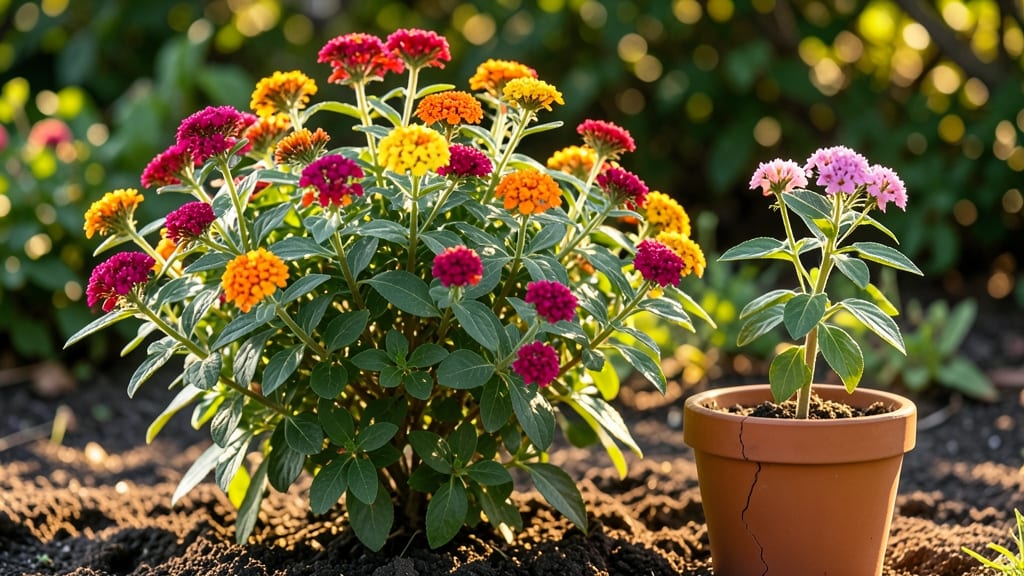
Whether lantana is annual or perennial depends on your climate: it thrives as a hardy perennial in warm zones but dies back completely each winter in colder areas, only to regrow vigorously when spring temperatures exceed 40°F.
This behavior comes down to lantana's tropical origins—it evolved to handle seasonal dry periods by going dormant rather than freezing. 🌡️ In frost-free regions, the plant's deep root system sustains it year-round, while in colder climates, the above-ground growth simply shuts down as a survival mechanism.
What makes lantana so resilient is its ability to regenerate from both roots and seeds, ensuring it always bounces back when conditions improve.
The key difference lies in your winter preparations: in cold zones, mulching and light winter protection can help preserve those roots, while in warm areas, lantana's perennial nature means minimal care beyond regular pruning.
This dual nature is why gardeners in both climates love it—it's essentially the same plant adapting to its environment.
💡 In This Article
- How Lantana’s Growth Cycle Shifts Between Annual and Perennial Behavior
- Climate-Specific Care Tips for Lantana’s Year-Round Survival
How lantana’s growth cycle shifts between annual and perennial behavior
Lantana's shift between annual and perennial behavior stems from its tropical heritage, where it evolved to handle seasonal dryness through dormancy rather than freezing. In warm climates (USDA zones 8-11), lantana's deep, fibrous root system—capable of extending 3-5 feet deep—stores enough energy to sustain the plant year-round.
These roots contain starch reserves that fuel regrowth after pruning or even brief droughts, allowing the plant to maintain its perennial status without winter dieback.
The critical temperature threshold for lantana's survival is 40°F, where above-ground growth begins to shut down. Below this, cell membranes in the stems and leaves rupture due to ice crystal formation, but the roots remain protected by their insulating soil layer.
In colder climates (zones 7 and below), the plant's above-ground biomass dies back completely, entering a state of secondary dormancy—a survival strategy where only the roots and sometimes buried stems remain viable until spring warmth triggers regrowth hormones like gibberellins.
What sets lantana apart is its dual regeneration capability: it can sprout from both roots and seeds. This resilience explains why you'll often see lantana returning even after harsh winters—those buried stems or fallen seeds contain dormant meristem cells that activate when soil temperatures reach 55°F.
In frost-free zones, this means continuous flowering cycles, while in colder areas, the plant essentially "resets" each spring from its root system, creating the illusion of annual behavior despite its perennial nature.
The botanical mechanism behind this adaptability lies in lantana's C3 photosynthetic pathway, which allows it to photosynthesize efficiently in warm conditions but conserves water during stress. This metabolic flexibility enables it to thrive in both tropical perennials and temperate annual scenarios.
The plant's waxy leaves also play a role by reducing water loss during dormancy periods, further enhancing its survival in variable climates.
Consider this comparison: In Miami (zone 10b), lantana grows continuously with minimal care, while in Chicago (zone 5b), it requires winter protection to preserve those critical root systems. The same genetic material produces vastly different growth patterns based solely on temperature cues—demonstrating lantana's remarkable environmental plasticity.
This dual behavior is why gardeners in both climates can successfully cultivate it, though their maintenance approaches differ dramatically.
The plant's flowering response further illustrates this adaptability. In perennial zones, lantana produces 4-6 rounds of blooms per year, while in colder regions, it focuses all energy on rebuilding its root system before flowering resumes in late spring.
This seasonal priority shift is an evolutionary trade-off that ensures survival in less favorable conditions.