
Watering
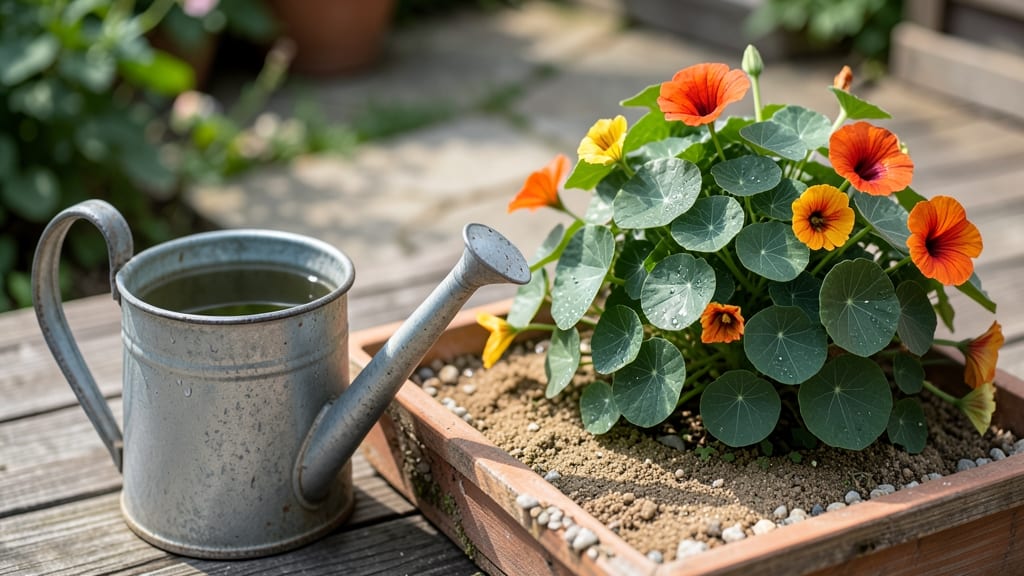
Your nasturtiums need the right water requirements—about an inch of water every 3-5 days—to keep those 🌸 blooms popping all season—but get it wrong, and you’ll end up with sad, wilted leaves instead of vibrant edible flowers.
Here’s the catch: these hardy plants are drought-tolerant once established, but they’re picky about consistency. Too much water, and you’ll drown the roots; too little, and the flowers won’t open. I’ve seen both mistakes firsthand, and the difference between thriving and struggling nasturtiums comes down to a few simple rules.
In this guide, I’ll break down the exact watering schedule for spring, summer, and fall—plus how to adjust for containers, drought, and even mulch.
You’ll learn when to water deeply, when to let the soil dry slightly, and how to spot the early signs of over- or under-watering before it’s too late.
By the end, you’ll have a foolproof system to keep your nasturtiums blooming like crazy, even in the hottest summer or driest spell. No guesswork, just lush, happy plants that reward you with flavorful flowers all season long.
How often to water nasturtiums for maximum blooms and growth
Nasturtiums thrive with consistent moisture but hate soggy soil—balancing these needs is key to vibrant blooms and lush foliage. Unlike drought-tolerant succulents, nasturtiums prefer even watering without letting roots dry out completely.
The right schedule depends on seasonal heat, soil type, and whether your plants are in containers or garden beds. Let’s break down the science-backed approach to keep your nasturtiums happy without overcomplicating it.
For newly planted nasturtiums, aim for daily watering for the first 7–10 days to encourage root establishment. After that, adjust based on weather conditions and soil drainage. Sandy soils dry faster than clay, so check soil moisture 1–2 inches below the surface before watering.
Stick your finger in—if it feels dry, it’s time to water. This simple test prevents both underwatering stress and overwatering root rot.
| Season | Watering Frequency | Soil Type | Notes |
|---|---|---|---|
| Spring | Every 3–4 days | Well-draining | Light watering; avoid soggy soil |
| Summer | Every 2–3 days | Sandy or loamy | Deep watering; morning sessions |
| Fall | Every 5–7 days | Clay or loamy | Reduce watering; prep for dormancy |
| Winter | Monthly (light) | All types | Minimal water; protect from frost |
| Containers | Every 2–3 days | Potting mix | Dries out faster; use saucers |
Summer is the most critical season for nasturtium watering, especially in hot, dry climates. During peak heat (75°F+), water your nasturtiums deeply every 2–3 days—aim for 1 inch of water per week.
Shallow watering encourages weak root development, while deep soaking (watering until it drains from the bottom of pots or 6 inches into garden soil) promotes stronger, drought-resistant roots. For container-grown nasturtiums, check moisture daily; pots dry out 2–3x faster than in-ground plants.
Drought-tolerant varieties like ‘Alaska’ or ‘Dwarf Jewel Mix’ handle mild dry spells better than ‘Empress of India’, which thrives with more consistent moisture. If you’re growing nasturtiums for edible flowers and leaves, prioritize even watering to prevent bitter flavors caused by stress. Always water at soil level (not leaves) to avoid fungal diseases like powdery mildew, which loves damp foliage.
Watch for signs of underwatering: Wilting leaves, yellowing foliage, or crispy edges mean it’s time to hydrate. Overwatering, however, causes mushy stems, yellowing leaves, and a sour smell from the soil.
If your nasturtiums show these symptoms, pause watering and let the soil dry out for 24–48 hours before resuming. Well-draining soil is non-negotiable—amend heavy clay with compost or perlite to improve aeration.
Mulching is a game-changer for nasturtium watering. Apply 2–3 inches of organic mulch (straw, shredded leaves, or pine needles) around plants to retain moisture, regulate soil temperature, and suppress weeds. Just keep mulch 2 inches away from stems to prevent rot.
In container gardens, use hydrogel crystals or coco coir to boost water retention between waterings. These tricks help nasturtiums stay hydrated with less effort.
Morning watering is non-negotiable for nasturtium
Nasturtium watering mistakes that kill your plants (and how to fix them)
Nasturtiums are famously low-maintenance, but even these resilient plants can suffer when watered incorrectly. The most common mistake I see is overwatering, which leads to root rot and yellowing leaves. Meanwhile, underwatering causes crispy leaf edges and stunted growth. Both problems are fixable—once you know the signs and solutions.
Container-grown nasturtiums dry out faster than in-ground plants, so their water needs differ significantly. If you're using pots, check soil moisture daily during summer heat. In-ground nasturtiums, however, need less frequent watering once established. The key is understanding your specific growing conditions.
Deadly Nasturtium Watering Mistakes
1. Overwatering causes root rot—check soil before watering by sticking your finger 1 inch deep. If damp, wait.
2. Underwatering leads to leaf scorch—water deeply in the morning to prevent stress.
3. Ignoring containers—small pots dry out in hours, while in-ground plants need days between waterings.
For in-ground nasturtiums, the biggest mistake is mulching too heavily. While mulch helps retain moisture, a thick layer can suffocate roots. Use 1-2 inches of organic mulch like straw or shredded leaves, keeping it 2 inches away from the plant stem. This prevents fungal diseases while still conserving water.
If your nasturtiums show signs of overwatering, like yellow leaves or mushy stems, stop watering immediately and let the soil dry out. For underwatered plants, give them a deep soak until water runs out the drainage holes (for containers). Repeat every 2-3 days until leaves regain their glossy appearance.
Container nasturtiums need special attention during summer. Their roots have limited access to moisture, so I recommend using self-watering pots or adding hydrogel crystals to the soil mix. These tricks help maintain consistent moisture without drowning the roots. Always ensure containers have drainage holes to prevent waterlogging.
Remember, nasturtiums are drought-tolerant once established, but they still need consistent moisture during their growing season. Adjust your watering schedule based on weather—more during heatwaves, less during cool, rainy periods. With the right approach, your nasturtiums will reward you with vibrant blooms all season long. 🌸