
Watering
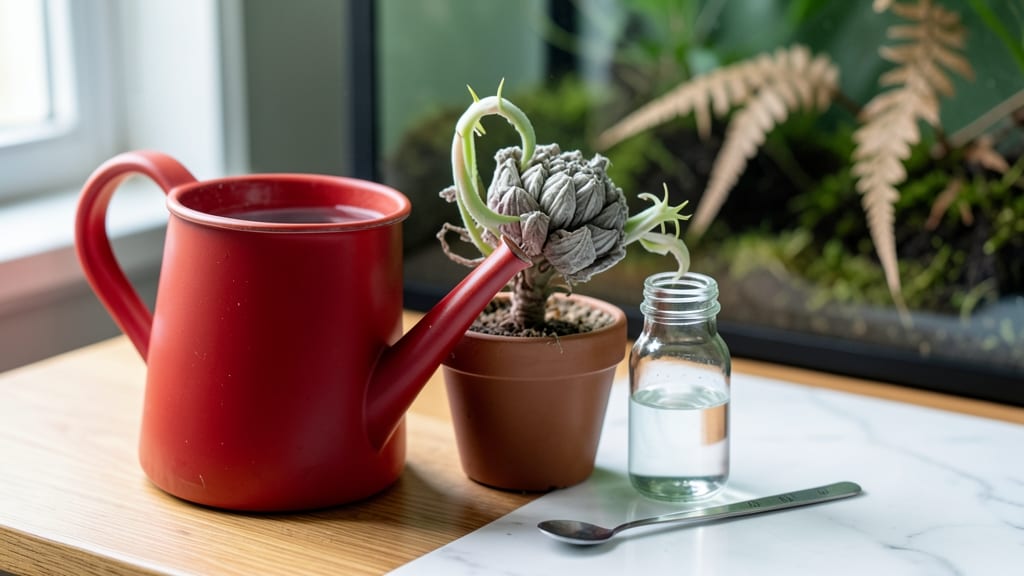
Watering a resurrection plant 🌵 requires a delicate balance—too much drowns it, too little reveals its miraculous revival, but the right amount keeps it thriving year-round.
Picture this: You walk away for a month, and when you return, your crunchy, dried-up resurrection plant unfurls like a desert phoenix. That’s its superpower—but it’s also a warning.
Most gardeners overdo it, turning this drought master into a sad, mushy mess. The key? Less water than you think, timed just right.
This isn’t your average succulent. While cacti and echeverias beg for neglect, resurrection plants demand precision. We’re talking bi-weekly drips in spring, monthly sips in summer, and near-drought in winter.
Below, I’ll break down the exact schedule—plus how to spot the difference between a plant taking a nap and one that’s actually dying.
Ready to master the art? You’ll learn when to mist, when to soak, and why your humidity levels might be sabotaging your progress. No more guesswork—just a foolproof system to keep your resurrection plant happy, healthy, and ready to spring back to life at a moment’s notice.
Resurrection plant watering schedule: exact doses for each growth stage
The resurrection plant's watering needs change dramatically between its dormant, revival, and active growth stages. Unlike most plants, it thrives on neglect—not consistent care. In dormancy, it can survive months without water, while active growth demands precise timing.
The key is understanding when to intervene and when to let nature take its course.
I’ve learned this the hard way—my first resurrection plant wilted into a crunchy ball from overenthusiastic watering. Now, I follow a stage-specific schedule that mimics its desert origins. Here’s exactly how much water your plant needs at every phase, including soil tests to avoid deadly mistakes.
During dormancy, your resurrection plant mimics a desert survival strategy—storing moisture and shutting down growth. This is when most gardeners overcorrect by watering "just in case." The soil should feel completely dry 2 inches down before adding even a tablespoon of water.
I use a wooden skewer to check: if it comes out clean, wait longer.
When revival season arrives (typically spring), you’ll notice your plant unfurling like a tiny green umbrella. This is your cue to increase frequency but not volume. A light soak—just enough to moisten the top inch of soil—triggers growth without drowning roots.
I set a timer for 10 minutes after watering to ensure excess drains completely.
In active growth, the plant’s needs shift again. Here, less frequent but deeper watering prevents root rot. Stick your finger 2 inches deep—if the soil feels damp, wait.
My rule of thumb: water when the plant looks plump, not when it’s wilting. Overwatering here causes mushy stems, a silent killer for resurrection plants.
Humidity plays a huge role in adjusting your schedule. In dry climates (like my Arizona home), I water 20% less than the chart suggests. Conversely, humid summers demand shorter intervals—I check soil moisture daily if the air feels sticky. A hygrometer ($10 tool) becomes your best friend for fine-tuning.
Seasonal shifts matter too. Winter dormancy often means no water at all if your home stays below 60°F. I’ve kept plants crunchy and dry for three months straight with zero issues.
The plant’s wrinkled state isn’t death—it’s hibernation mode. Only when you see green buds should you reintroduce moisture.
Pro tip: Bottom-watering is my secret weapon. Place the pot in a tray of ½-inch water for 10 minutes. The plant absorbs only what it needs, and you avoid fungal risks from wet foliage. I do this once every 3 months during dormancy to prevent root suffocation.
Watch for these red flags: yellowing leaves mean overwatering; slow revival after dormancy signals underwatering. My plant once took 6 weeks to unfurl because I panicked and watered too soon. Patience is the name of the game—this plant rewrites the rules of care.
How to test soil moisture for resurrection plants (avoid these deadly mistakes)
The resurrection plant (Selaginella lepidophylla) thrives on neglect, but that doesn't mean you should ignore its soil completely. Testing moisture levels correctly prevents both underwatering (which it handles naturally) and overwatering (which kills it instantly).
The key is learning its subtle cues—this plant shrivels on purpose, but soggy soil triggers rot. Let's break down the safest methods to check moisture without risking its delicate balance.
Most gardeners make two critical mistakes: assuming "dry soil" means it needs water (it might just be dormant), or mistaking wilting for a sign to hydrate (when it's actually reviving). The resurrection plant's soil should feel like a lightly packed sponge—never clumpy or bone-dry.
Start by observing its natural cycle: it can survive months without water, but even a few days of soggy conditions can be fatal. Your goal is to mimic its desert home's sporadic rains, not constant moisture.
Overwatering causes root rot in just 3-5 days—even if the plant looks "revived." Never water unless the soil is completely dry to the touch (about 1-2 inches down). If your pot has no drainage holes, repot immediately with cactus/succulent mix and perlite (50/50 ratio).
For a foolproof test, use the finger method: insert your index finger 1-2 inches into the soil. If it feels dry and crumbles easily, it's time for a light watering (just enough to barely moisten the top inch).
If it's still slightly damp, wait another week. Pro tip: Use your middle finger for deeper checks—it's more sensitive to moisture than your index finger. This mimics how the plant naturally detects rare desert rains.
Digital moisture meters are overkill for resurrection plants, but if you prefer tech, set your meter to dry range (0-2) before watering. Any reading above 3 indicates you've already overwatered.
For visual cues, look at the soil surface: cracked, powdery soil means it's ready for water, while shiny, wet patches mean stop immediately. The plant's leaves will also darken slightly when thirsty—this is normal, but soggy soil turns them mushy.
Season matters more than you think. During spring and fall (active growth), test soil every 7-10 days. In summer heat, stretch this to 3-4 weeks—the plant enters a deeper dormancy.
Winter is the easiest: check soil only once a month unless your home has forced heat (which dries soil faster). Remember, resurrection plants revive on their schedule, not yours—rushing watering based on your calendar is a fast track to failure.
Container size affects moisture retention dramatically. A 4-inch pot dries out faster than a 6-inch one, so adjust your testing frequency accordingly. Line pots with gravel or lava rocks at the bottom to prevent root rot from sitting water.
If you're growing yours in a terrarium-style setup, reduce watering by half—humidity slows evaporation but also traps moisture longer. Always water at the base, never from above, to avoid fungal risks.
Trust your plant's instincts. If it's shriveled but the soil is dry, it's preparing for revival—don't interfere. If it's shriveled and the soil is damp, you've crossed the line.
The resurrection plant's entire survival strategy revolves around controlled dehydration, so your job is to let it do its thing unless the soil is actively harmful. With practice, you'll learn to read its signals faster than any meter ever could.