
Planting
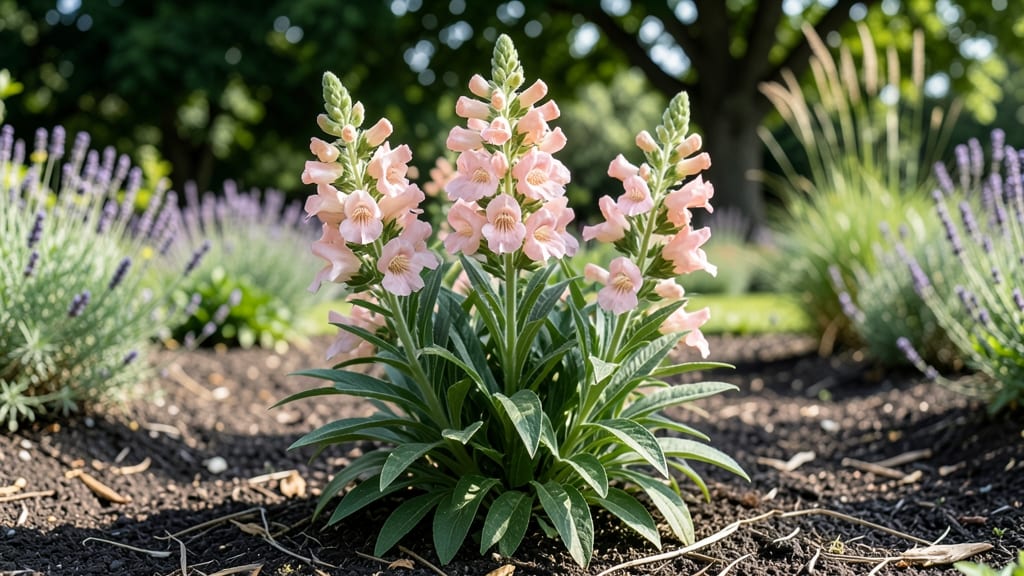
Snapdragon plants function as perennials in warmer climates (Zones 7-10), where they die back to the ground each winter but regrow from their roots. In colder regions (Zones 3-6), they act as annuals unless you take steps to protect them through winter.
Snapdragons thrive as perennials because their roots remain dormant but alive during winter, ready to sprout when conditions warm. 🌱 In milder zones, this means they'll return year after year with minimal effort, while colder climates demand extra care to preserve those hardy root systems.
The key difference lies in temperature tolerance—most varieties can handle light freezes but struggle with prolonged sub-freezing conditions.
For gardeners in Zones 3-6, overwintering becomes essential. You can protect plants by mulching heavily, moving containers to sheltered spots, or even dividing and storing roots indoors. This transforms what would otherwise be an annual into a reliable perennial with just a little extra work.
💡 In This Article
- Snapdragon Cold Hardiness: How Zones Affect Survival
- Overwintering Snapdragons: Step-by-Step Protection Methods
Snapdragon cold hardiness: how Zones affect survival
Snapdragons exhibit a fascinating survival strategy where their roots act as a biological hard drive, storing energy and genetic instructions to regrow when conditions improve. In USDA Zones 7-10, where winter temperatures rarely drop below 20°F, these roots remain dormant but viable through the cold months.
The key lies in their cold acclimation process—when nights consistently drop below 50°F for several weeks, the plants trigger dormancy by converting sugars into antifreeze-like compounds that protect cellular structures.
The critical threshold for snapdragon survival sits around -10°F to -15°F, where most varieties can endure brief exposures. However, prolonged sub-zero temperatures or repeated freeze-thaw cycles (common in Zones 4-6) cause irreversible damage to the root crown—the growth zone where new shoots emerge.
This explains why snapdragons in colder climates often appear dead in spring but actually lack the energy reserves to regenerate. 🌱 The root system's ability to survive depends on both temperature AND moisture—dry roots can withstand colder temps, while saturated roots risk freezing damage.
What sets snapdragons apart from true perennials is their short-lived root system. While their tops die back annually, the roots typically last 2-3 years before declining.
This is why gardeners in Zones 7-10 often see diminishing returns after the second or third year unless they divide and refresh the roots. The plant's biennial nature means it focuses energy on flowering in its second year, then gradually weakens unless properly cared for.
Zone differences create dramatic variations in growth patterns. In Zone 10, snapdragons may bloom continuously with minimal dieback, while Zone 7 plants typically go completely dormant but regrow robustly. The transition zone (Zone 6) presents the biggest challenge—mild enough for root survival but often too cold for reliable regrowth.
This is why gardeners in these areas use microclimates (like south-facing slopes) or protective techniques to push the boundaries of snapdragon perennialism.
Interestingly, snapdragon varieties show significant hardiness differences. 'Black Prince' and 'Rocket' series tend to be more cold-tolerant, while the popular 'Matrix' hybrids often struggle in Zone 6 without protection.
The plant's natural habitat in Mediterranean climates (where winters are wet but mild) explains this sensitivity to freezing—it's not a native cold-hardy species but has been selectively bred for garden conditions. 🌿 This genetic adaptation means their survival depends entirely on human intervention in colder climates.
Understanding these zone-specific behaviors helps explain why snapdragons thrive as perennials in some regions but require annual replanting in others. The root system's ability to persist through winter creates the potential for perennial growth, but only when environmental conditions remain within that delicate -10°F to 20°F window.
Outside these parameters, the plant's natural survival instincts shift from perennial persistence to annual completion of its life cycle.