
Watering
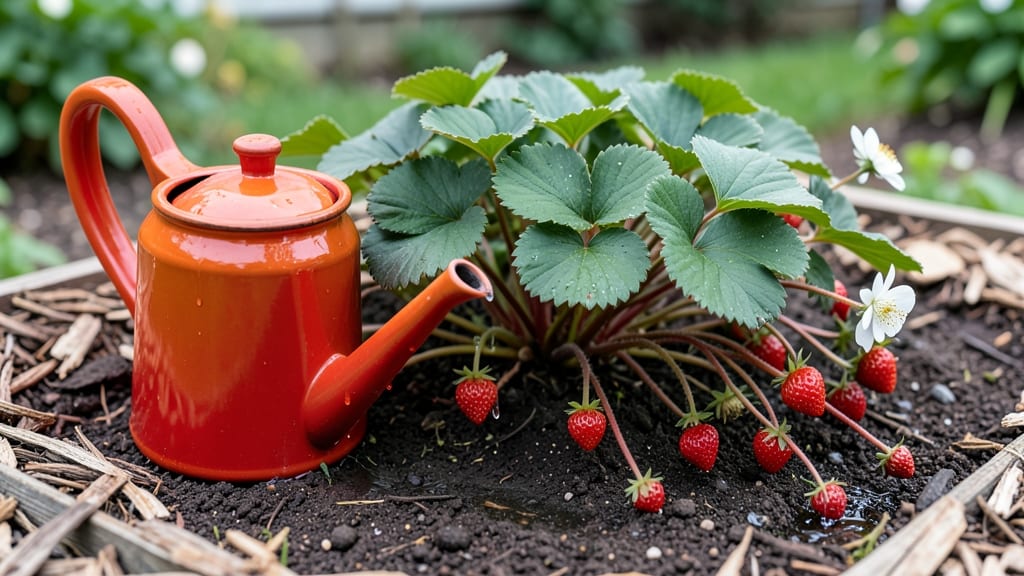
The strawberry plant water requirements are all about finding that sweet spot—enough moisture to fuel growth and flavor, but never so much that roots suffocate. Too much water, and you risk root rot; too little, and your berries stay small and sour.
The secret lies in understanding how much to water, when, and how to adjust for heat, rain, or drought—without drowning your plants or leaving them thirsty.
In this guide, I’ll break down the exact watering schedule your 🍓 strawberries need at every growth stage, from seedlings to fruiting, plus the best methods to deliver water efficiently. No guesswork, just science-backed tips to keep your plants happy and your harvest bountiful.
You’ll also learn how to spot overwatering or underwatering before it’s too late, so you can fix it fast and keep your plants thriving all season long.
How much water do strawberry plants need per week?
Strawberries are thirsty plants that need consistent moisture, but too much water can drown their roots. The key is deep, infrequent watering—about 1-1.5 inches per week—while adjusting for heat, rain, and growth stages.
I’ve grown strawberries for years, and this schedule keeps my plants lush and productive without soggy soil or shrunken berries.
Your strawberry plants’ water needs change as they grow. Seedlings need frequent light watering, while flowering plants demand more to support fruit development. During fruiting season, deep watering ensures plump, sweet berries. Let’s break it down by stage so you can water with confidence.
For seedlings, I use a spray bottle to mist the soil lightly, keeping it damp but not soggy. Once they’ve established roots (after about 4 weeks), switch to deeper watering—aim for 1-1.5 inches per week.
Stick your finger 1-2 inches into the soil; if it feels dry, it’s time to water.
When strawberries flower and fruit, they need more water—up to 2 inches per week. This is when I rely on a soaker hose or drip system to deliver water directly to the roots without wetting the leaves.
Wet foliage invites fungal diseases like gray mold, so always water at the base of the plant in the morning.
Heatwaves and drought stress strawberries quickly. If temperatures rise above 85°F (29°C), increase watering to daily deep soakings of 2-3 inches per week. Check for wilting leaves or dry soil cracks—these are clear signs your plants need more water.
Mulching with straw or wood chips helps retain moisture and keeps roots cool.
Rain counts toward your weekly water total, but 1 inch of rain isn’t always enough. After heavy rain, check the soil moisture—if the top 3 inches are still damp, hold off on watering.
Overwatering in rainy seasons leads to root rot, which can kill your plants faster than drought.
In containers or raised beds, strawberries dry out faster. I water potted strawberries every 1-2 days in summer, ensuring water drains freely. Add perlite or sand to potting mix to improve drainage. For in-ground plants, focus on deep watering every 2-3 days during peak growing months.
Adjust your watering based on your strawberries’ variety and soil type. June-bearing types need consistent moisture during their 6-week fruiting window, while everbearing varieties benefit from gradual water reduction as they produce multiple harvests.
Sandy soil drains quickly, so water more frequently, while clay soil holds moisture longer—water less often but deeply.
Watch for yellowing leaves or small, hard berries—these are red flags. Yellow leaves often mean overwatering, while shriveled berries signal underwatering. Fine-tune your schedule by observing your plants’ response and adjusting weekly. With the right balance, you’ll enjoy juicy, sweet strawberries all season long.
Signs of overwatering vs. underwatering strawberries (with fixes)
Strawberries are sensitive to water, and getting the balance wrong can mean the difference between plump, sweet berries and wilted, moldy plants. Overwatering suffocates roots, while underwatering stresses the plant and shrinks your harvest. Let’s decode the visual clues and fix your watering routine before it’s too late.
Start by checking the soil moisture—stick your finger 1-2 inches deep. If it feels damp, hold off on watering. If it’s dry, it’s time to hydrate. But watch for these red flags that reveal whether you’re drowning or starving your strawberries.
Overwatering Strawberries
On the flip side, underwatered strawberries show crispy, curled leaves and small, hard berries. The soil pulls away from pot edges, and the plant wilts by midday. These signs scream for immediate hydration—aim for 1 inch of water per week during fruiting.
For container-grown strawberries, check soil moisture daily in summer. If the top inch is dry, water until it drains from the bottom. Mulch with straw to lock in moisture and prevent evaporation—this is my secret weapon for consistent yields.
Adjust your routine by watering deeply but less often. Morning watering (before 10 AM) gives roots time to dry, while evening water can invite fungal diseases. Drip irrigation delivers water straight to roots without wetting leaves, cutting down on waste and disease risk.
Pro tip: Use a moisture meter to track soil conditions. Strawberries thrive with consistently moist (not soggy) soil. When in doubt, underwater slightly—roots will seek moisture deeper, making them hardier. Your berries (and your sanity) will thank you!