
Flowers
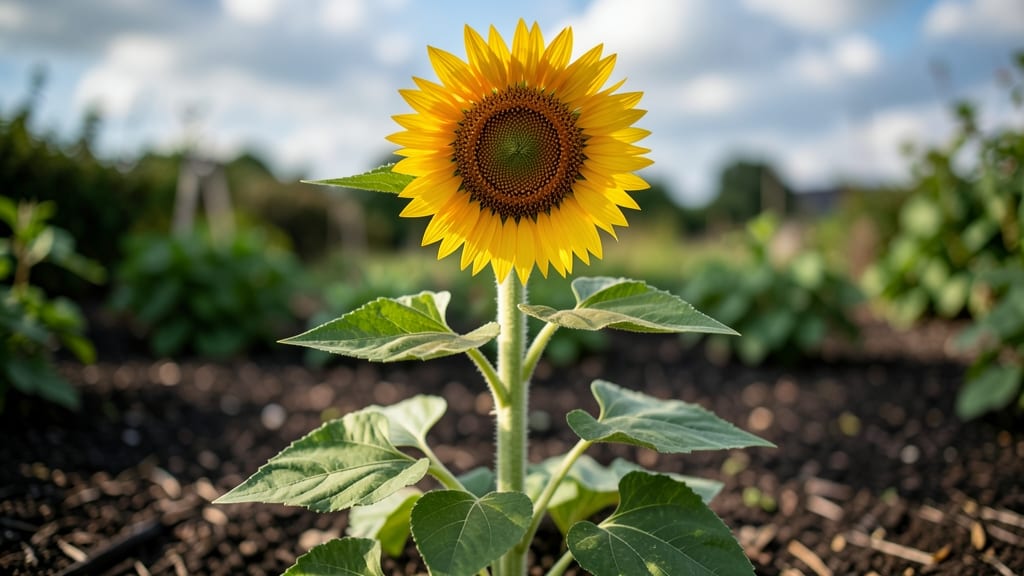
Sunfinity sunflowers behave as perennials in warm climates (USDA zones 9-11) but die back each winter in colder regions, regrowing from their roots annually.
This behavior isn't about true perennial classification but rather their ability to survive winter's chill. 🌱 In frost-free zones, they thrive year-round, but in colder areas, their roots remain dormant until spring.
The key difference lies in their hardiness—while they may not survive freezing temperatures above ground, their underground system ensures new growth each season.
Gardeners in cooler climates often treat them like annuals due to this dieback, but with proper winter care—like mulching or container overwintering—they can persist for years. This makes Sunfinity sunflowers unique: they're not annuals or perennials in the strictest sense, but their growth cycle adapts to local conditions.
💡 In This Article
- Why Sunfinity Sunflowers Die Back Each Winter
- How to Overwinter Sunfinity Sunflowers in Cold Climates
Why Sunfinity sunflowers die back each winter
Sunfinity sunflowers exhibit a fascinating survival strategy rooted in their root systems. Unlike true annuals, which complete their entire lifecycle in one season, these sunflowers develop a robust taproot that can store nutrients and energy underground.
When temperatures drop below 28°F—the threshold for most varieties—the above-ground stems and foliage freeze and die back, but the roots remain dormant, conserving resources for spring regrowth. This behavior is why they're often called "semi-perennials" or "short-lived perennials." 🌱
The key difference between their behavior in warm climates (USDA zones 9-11) and colder regions lies in frost tolerance. In frost-free zones, their growth is uninterrupted, allowing them to bloom continuously year-round. However, in zones 3-8, the roots can survive 10-15°F dips but only if protected.
The plant's ability to regenerate from roots each spring is what makes it persist for multiple seasons, even if it appears to die annually. This is similar to how asparagus behaves—it's not a true perennial in cold climates but can regrow yearly with proper care.
What most gardeners don't realize is that the dieback isn't a sign of weakness but an evolutionary adaptation. Sunfinity sunflowers prioritize root development early in their growth cycle, storing up to 30% more carbohydrates in their roots than annual sunflower varieties.
These stored reserves fuel their rapid regrowth in spring, often producing flowers within 60-75 days of new growth. This root-driven resilience is why they can return for 3-5 years with consistent care, even in marginal climates.
The USDA zone limitations aren't about the plant's inherent hardiness but about environmental conditions. In zone 9, for example, Sunfinity sunflowers may produce continuous blooms year-round, while in zone 5, they'll die back completely each winter but resprout from roots if protected.
The critical factor is soil temperature—roots remain active until soil temps drop below 32°F, at which point they enter dormancy. This explains why mulching (which insulates soil) can extend their growing season by 4-6 weeks in transitional zones.
Here's what's happening botanically: Sunfinity sunflowers belong to the Helianthus annuus species but have been selectively bred for cold tolerance. Their stems contain higher levels of antifreeze proteins (similar to those in winter wheat) that prevent cellular damage from ice crystal formation.
However, these proteins only work within limits—prolonged exposure to below 10°F will still kill the plant's above-ground parts, even if roots survive. This is why they're classified as "perennial" in warm climates but behave like annuals in freezing winters.
Consider this comparison: A true perennial like peonies can survive -20°F winters with minimal protection, while Sunfinity sunflowers max out at 15°F survival. The difference lies in their native habitat—original sunflower species evolved in North America's warm central regions, where frost was rare.
Modern Sunfinity varieties represent a hybrid adaptation for cooler climates, but their limitations remain tied to their botanical origins. 💫