
Light Requirements
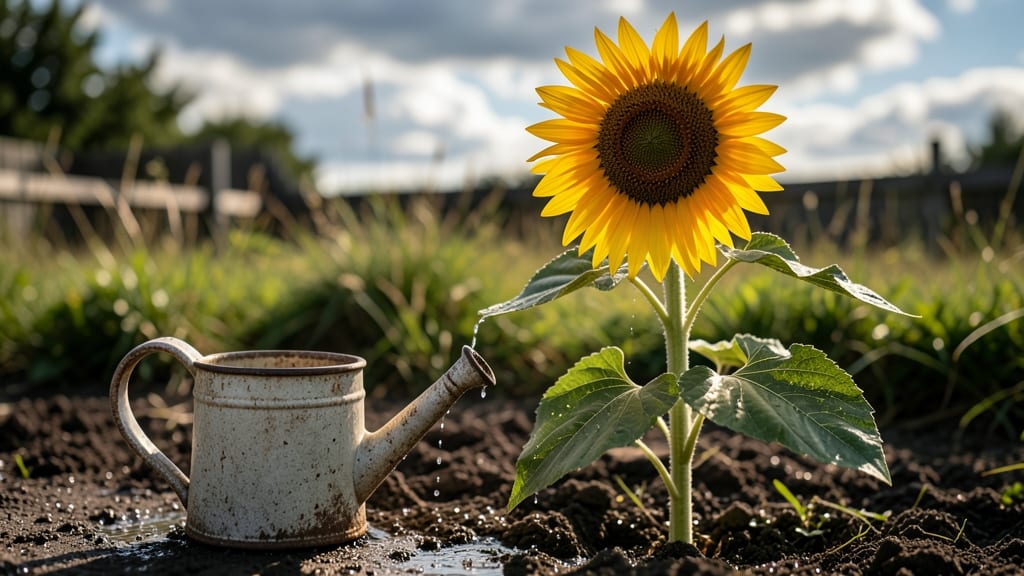
Sunflowers thrive with the right water requirements—deep, consistent hydration that rivals their love for full sun. Picture this: your 🌻 seedlings wilt before they even reach knee height, or your mature plants droop despite your best efforts.
The issue isn’t just how much you water but when and how deeply. Too little, and their roots struggle; too much, and you risk drowning them before they’ve had a chance to establish.
From germination to flowering, sunflowers demand a smart schedule—one that adapts to their growth stage, your climate, and even the soil type. In dry regions like USDA Zone 6a, they’ll need more frequent deep watering, while humid areas can stretch the intervals without stress.
The key? Checking soil moisture before reaching for the hose.
In this guide, I’ll break down the exact watering needs at every stage, how to spot overwatering or drought stress, and the pro tips (like mulching and drip irrigation) that make all the difference for those 15-foot giants you’ve always dreamed of growing.
How much water do sunflowers need by growth stage?
Sunflowers thrive on consistent moisture, but their water needs shift dramatically as they grow. Young seedlings demand frequent hydration to establish roots, while mature plants develop deep taproots that store water.
Understanding these stages helps you avoid overwatering (which causes rot) or underwatering (which stunts growth). Let’s break down the ideal watering schedule for each phase of your sunflower’s life cycle.
For seedlings, the key is keeping soil evenly moist—never soggy. Their shallow roots can’t reach deep water sources, so I water mine every 2-3 days with just enough to saturate the top 1-2 inches of soil.
Overhead watering works here, but avoid wetting the leaves to prevent fungal diseases like powdery mildew. Once they reach 3-4 inches tall, you can gradually reduce frequency while increasing depth.
Here’s a quick reference for watering by growth stage—perfect for tracking your sunflower’s progress:
During the vegetative stage (4-8 weeks), when sunflowers shoot up rapidly, I switch to deep watering—soaking the soil to a depth of 4-6 inches. This encourages roots to grow downward, making them more resilient. A simple test: stick your finger 2 inches into the soil.
If it feels dry, it’s time to water. Mulching with straw or wood chips helps retain moisture and reduces evaporation, cutting water needs by up to 30%.
The flowering stage (8-12 weeks) is when sunflowers become surprisingly drought-tolerant. Their deep roots now access water reserves, so I water every 5-7 days, letting the topsoil dry slightly between sessions.
Overwatering here can lead to bud rot or weakened stems. If your sunflower’s head droops in the heat, it’s likely thirsty—but give it a drink only if the soil is bone-dry.
Once your sunflower reaches maturity (12+ weeks), watering becomes minimal. Established plants can go 10-14 days without water in most climates, especially if mulched. I only intervene during prolonged dry spells or extreme heatwaves. At this stage, focus on deep, infrequent watering to prevent shallow root systems from developing.
Regional adjustments are key: sunflowers in arid climates (like Arizona) need deeper, less frequent watering, while those in humid areas (like the Pacific Northwest) may require more frequent but shallower sessions.
Always check soil moisture—never rely solely on a schedule. For container-grown sunflowers, water every 2-3 days since pots dry out faster.
Pro tip: water in the early morning (before 10 AM) to minimize evaporation and fungal risks. Avoid evening watering, as damp leaves at night create perfect conditions for mildew. With this stage-by-stage approach, your sunflowers will grow tall, strong, and disease-resistant, rewarding you with those iconic golden blooms.
Signs of overwatering and underwatering in sunflowers (with fixes)
Sunflowers thrive on consistency, but their deep taproots can easily confuse new gardeners—too little water stunts growth, while too much suffocates roots. Learning the subtle differences between water stress and overwatering is key to keeping your sunflowers reaching for the sky.
Even experienced growers sometimes misjudge, leading to yellowing leaves or mushy stems.
One of the first signs of underwatering is when sunflower leaves start curling at the edges, often with a dull, grayish hue. Young plants may wilt dramatically by midday, even if soil feels slightly moist at the surface.
This happens because sunflowers draw water from deep layers—surface checks can be misleading. Established plants may drop buds prematurely when thirsty, cutting your harvest potential.
⚠️ callout warning ⚠️
🌱 Sunflower Water Warning Signs
Overwatering: Yellow leaves, mushy stems, fungus growth (white mold), foul soil smell
Underwatering: Crispy leaf edges, wilting by noon, grayish foliage, buds dropping
💡 Fix: Check soil 2-3 inches deep—if dry, water deeply. If soggy, reduce watering and improve drainage.
Overwatering creates its own set of problems, often starting with yellowing leaves that stay soft to the touch. Unlike nutrient deficiencies, these leaves typically start at the bottom of the plant and progress upward.
A telltale sign is white fungal growth at the soil line or on stems—a clear indicator of root rot. In extreme cases, stems may develop a blackened, mushy base, causing the entire plant to collapse.
To diagnose water issues, perform the finger test at least 2-3 inches deep. If the soil feels dry but crumbly, your sunflowers need water.
If it's cold and clumps together, you're overdoing it. Mulching with straw helps maintain even moisture while preventing soil compaction—a common issue in heavy clay soils where water pools around roots.
For underwatered sunflowers, a deep watering session in the morning can revive wilted leaves within hours. Focus on the root zone, applying water slowly to encourage absorption.
If buds have already dropped, consider applying a low-nitrogen fertilizer to support remaining growth. In drought-prone areas, drip irrigation delivers water directly to roots while minimizing evaporation.
Remember, sunflowers are surprisingly resilient once established—they can handle brief dry spells better than soggy conditions. The key is consistent moisture during their first 6-8 weeks of growth. By tuning into these visual cues, you'll keep your sunflowers thriving from seedling to 12-foot giants. 🌻