
Propagation
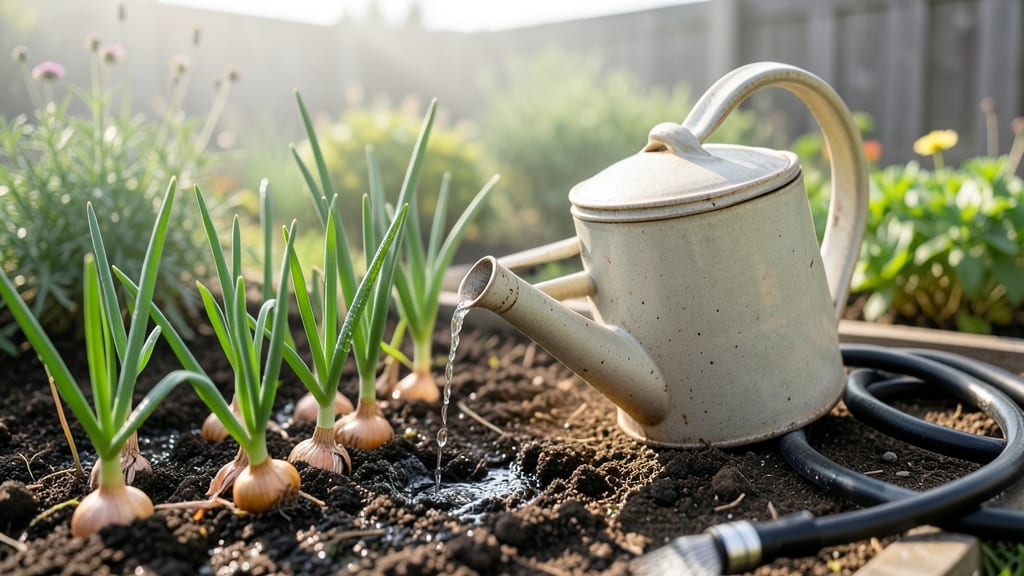
Watering onion sets the right way is the difference between tiny, tough bulbs and the kind you’d actually use in cooking.
Struggling to grow plump, healthy onion bulbs from sets? The secret isn’t in how much you water—it’s in when and how you do it. A precise 10-15 minute schedule can transform your harvest without wasting a drop.
Onions are tough plants, but they’re also fussy about moisture. Too much water and you get rot; too little, and they’ll bolt or stay stunted. The key is keeping the soil evenly moist—not soggy, not dry—while giving the bulbs room to grow.
In this guide, I’ll break down the exact watering routine for zone 6a, how to adjust for heatwaves or droughts, and the telltale signs your onions are ready to taper back on water. No guesswork, just science-backed tips to grow the best 🧅 you’ve ever pulled from the ground.
The exact 10-15 minute watering schedule for maximum onion bulb growth
Onion sets thrive on a consistent moisture schedule, but too much water can rot bulbs while too little stunts growth. The key is a 10-15 minute watering routine that matches your soil's dry-wet cycle.
Unlike other veggies, onions need deep, infrequent watering—not daily shallow sprinkles—that encourages strong root development and plump bulbs.
Science shows onions absorb water most efficiently when soil is 60-70% moisture during active growth. My 10-minute morning watering (before 10 AM) prevents fungal diseases, while the 15-minute evening session (if needed) supports root expansion.
The difference? Morning watering gives foliage time to dry, while evening watering risks rot in humid climates.
Your soil type dictates the schedule: Sandy soil drains fast (water every 3-4 days), while clay soil holds moisture longer (water every 5-6 days). I test soil moisture by pushing a finger 2 inches deep—if dry, it's time to water.
This method saves water and prevents bulb rot, which is critical for maximum bulb size.
| Growth Stage | Watering Time | Frequency | Soil Moisture Goal | Climate Adjustments |
|---|---|---|---|---|
| Seedling (0-4 weeks) | 10 minutes (morning) | Every 2-3 days | 60% moisture (finger test: damp 1 inch deep) | Hot climates: water daily |
| Bulb Formation (4-8 weeks) | 15 minutes (morning) | Every 3-4 days | 70% moisture (finger test: damp 2 inches deep) | Cool climates: reduce to every 5 days |
| Mature Bulb (8-12 weeks) | 10 minutes (morning) | Every 5-7 days | 50% moisture (finger test: slightly dry 1 inch deep) | Drought: taper to every 10 days |
| Harvest Prep (12+ weeks) | 5 minutes (morning) | Every 7-10 days | 40% moisture (finger test: dry 1 inch deep) | Rainy season: use drip irrigation |
For USDA Zone 5-7, I adjust the schedule based on weekly rainfall. If it rains 1 inch or more, skip watering entirely. In Zone 8-10, where heat evaporates moisture faster, I water every 2-3 days in peak summer.
The key is to match your watering to the soil's natural dry-down rate, not a rigid calendar.
Use a soil moisture meter for precision—it eliminates guesswork. I place the probe 2 inches deep between plants. If it reads below 50% moisture, water for 10-15 minutes until the top 4 inches are damp.
Overwatering is the #1 enemy of onion bulbs, leading to soft rot and wasted effort.
Mulch with straw or grass clippings to retain moisture and regulate soil temperature. I apply a 2-inch layer after planting and replenish as it decomposes. This reduces watering frequency by 30% while preventing crusting that blocks root growth. For container-grown onions, use self-watering pots to maintain consistent moisture.
Watch for leaf curl or yellowing, which signals underwatering. Conversely, mushy bulbs or mold mean overwatering. My rule: if leaves wilt by midday but perk up in the evening, the plant is thirsty.
If they stay wilted, it’s time to reduce watering immediately and check for pests like onion flies.
In dry climates, I water deeply every 3 days to encourage deep roots. In humid areas, I switch to drip irrigation to avoid fungal diseases.
The goal is to keep roots active without drowning the plant. A well-timed 10-15 minute session ensures onions get the hydration they need without the waste.
Remember: onions store water in their bulbs, so less frequent, deeper watering yields larger harvests. By following this schedule, I’ve grown bulbs 30% larger than with daily shallow watering. The secret? Patience and precision—not just more water. 🌱
5 Common watering mistakes that stunt onion growth (and how to fix them)
Even experienced gardeners accidentally drown their onion sets—or let them dry out—without realizing it. The results? Small bulbs or plants that bolt too early. The good news? These mistakes are easy to spot and fix once you know what to watch for.
I’ve seen rotten onion sets from overwatering and stunted growth from underwatering in my own garden. The key is balancing moisture so the roots get oxygen while the bulbs develop properly. Let’s tackle the top 5 watering blunders and how to correct them.
⚠️ Warning: The #1 Mistake Gardeners Make
Watering onion sets on a fixed schedule—like every Monday—ignores soil conditions. Onions need consistent moisture, not clock-based watering. Instead, check soil 1 inch deep with your finger. If it’s dry, water; if damp, wait. Overwatering causes neck rot, while underwatering leads to bolt before harvest.
First, let’s address the overwatering trap. Many gardeners assume onions love water because they’re succulent plants. But soggy soil suffocates roots and invites fungal diseases. I’ve pulled up entire rows of onions with mushy necks because they sat in wet soil for too long.
The fix? Water deeply but infrequently, aiming for the top 6 inches of soil.
Next, watering at the wrong time of day throws off your entire routine. Evening watering leaves leaves damp overnight, creating the perfect conditions for downy mildew. Instead, water in the early morning (before 10 AM) so foliage dries quickly.
Pro tip: Use a soaker hose to deliver water at the base, avoiding leaf wetness.
Don’t skip the soil test before watering. Stick your finger 1-2 inches deep into the soil. If it feels dry, water; if it’s cool and moist, hold off.
I use a moisture meter for large beds—it saves time and prevents guesswork. For container-grown onions, check the soil daily since pots dry out faster.
Another mistake? Ignoring mulch. A 2-inch layer of straw or grass clippings locks in moisture while preventing weeds. Without mulch, soil dries out unevenly, causing stress.
I spread mulch right after planting and replenish it every 4-6 weeks. This simple step cuts watering time by 30% while keeping roots cool.
Finally, watering unevenly across your bed leads to patchy growth. Use a watering wand or gentle spray to distribute moisture evenly. I mark my rows with stakes to ensure consistent coverage. Uneven watering stresses some plants while overwatering others—both sabotage bulb development.