
How To
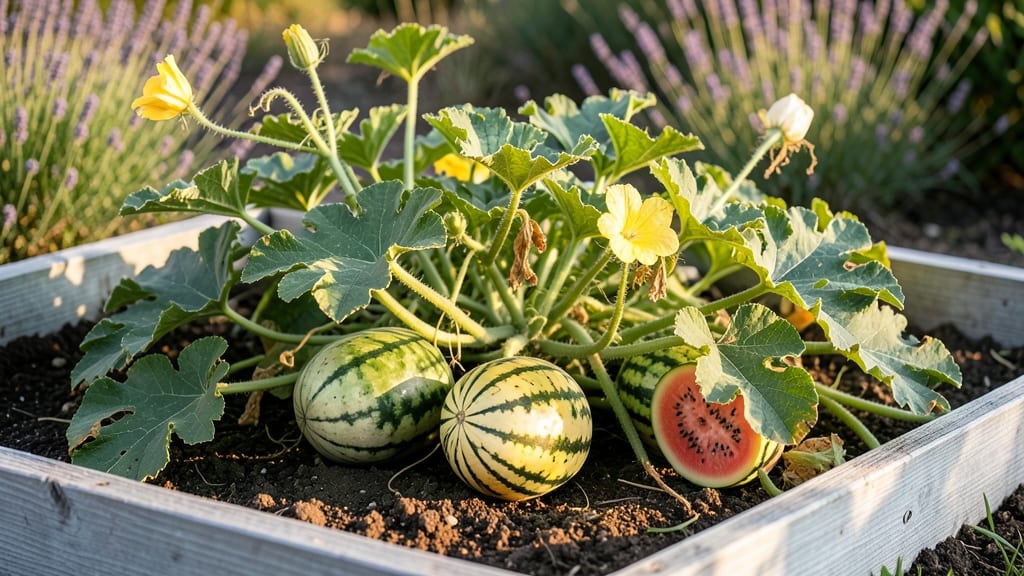
Understanding the watermelon days to maturity is the key to planning your summer harvest—because a 70-day variety won’t wait for a 90-day one, and neither should you.
If you’ve ever wondered why some watermelons ripen in just 70 days while others take nearly twice as long, the answer lies in their variety—and understanding this timeline can mean the difference between a bountiful harvest and wasted effort.
In this guide, I’ll break down the exact maturity timelines for popular varieties, from speedy bush types to sprawling vining giants, so you can pick the perfect fit for your growing season.
You’ll also learn how climate, planting time, and soil conditions can shave weeks off—or add them on—and how to track growth stages to nail your harvest window every time.
Watermelon variety maturity timeline: fastest to longest growing types
Choosing the right watermelon variety can make all the difference in your harvest timeline. Some varieties mature in as little as 60 days, perfect for short growing seasons, while others take 100+ days to reach full ripeness.
Understanding these differences helps you plan planting dates and set realistic expectations for your garden.
Hybrid varieties often deliver faster results with consistent yields, while heirlooms may take longer but offer unique flavors. Let’s break down the fastest-growing types to the longest, so you can pick the perfect match for your climate and timeline.
Hybrid varieties like Sugar Baby and Tiny Tim are my top picks for quick harvests, especially in cooler climates. Their compact size and fast maturity make them ideal for containers or small gardens where space is limited.
These varieties also tend to have better disease resistance, which is a huge plus for beginners.
If you’re growing in a region with a longer growing season, heirlooms like Moon and Stars or Charleston Gray offer unique flavors and larger fruits. Just be prepared for a longer wait—these can take up to 100 days to mature.
The trade-off is often worth it for the rich, old-fashioned taste they provide.
For bush-type watermelons, expect maturity in 70-80 days, making them perfect for gardeners with limited space. These varieties don’t vine as aggressively, so they’re easier to manage and require less trellising.
My garden always includes at least one bush type because they’re low-maintenance and still produce sweet, juicy fruit.
Vining varieties, like the Congo, take the longest but reward you with massive fruits. They’re best suited for warm climates with plenty of space to sprawl.
If you’re in a hot, sunny region, these varieties can thrive and produce some of the largest watermelons you’ve ever seen—just give them room to stretch out!
When selecting varieties, also consider your local frost dates. Planting a fast-maturing variety like Sugar Baby ensures you’ll have a harvest before the first frost, while slower varieties may need to be started indoors or in a greenhouse for an earlier jumpstart.
Always check your last frost date and count backward from the variety’s maturity timeline to plan your planting schedule.
Pro tip: Keep a growth journal to track your watermelons’ progress. Note when you planted, when flowers appeared, and when fruits started forming. This helps you refine your planting strategy year after year and ensures you’re always picking the best varieties for your conditions.
🌱
How climate and planting time affect watermelon maturity dates
Your local climate zone and planting timing can shift watermelon maturity by 2-4 weeks—sometimes even more. In hot, southern regions like USDA Zone 9-10, a 60-day variety might ripen in just 7 weeks, while the same seeds in Zone 5 could take 10+ weeks if planted late.
The key is understanding how frost dates and heat accumulation interact with your chosen variety.
Watermelons thrive in warm soil (at least 70°F/21°C) and need consistent heat to mature. If you plant too early in cooler climates, your days-to-maturity clock stretches out because growth slows.
Conversely, in desert climates, rapid heat can speed up ripening—sometimes so much that fruit quality suffers if water isn’t managed carefully.
Here’s how to adjust your planting strategy based on your local frost dates and heat zone:
- 1 Calculate your frost-free days: Subtract your average last frost date from your first frost date to find your growing season length. For example, in Zone 6 (150 frost-free days), you’ll need a variety that matures in 85-90 days or use early planting tricks.
- 2 Adjust for heat zones: In Zones 7-10, watermelons mature 10-20% faster due to longer daylight and higher soil temps. A 75-day variety might ripen in 60 days if planted in Zone 9 with proper care.
- 3 Use early planting for cooler climates: Start seeds indoors 3-4 weeks before last frost, then transplant after soil warms. In Zone 4, this can add 2-3 weeks to your effective growing season.
- 4 Try succession planting: In short seasons, plant a fast-maturing variety (60-70 days) early, then follow with a longer-season type (85+ days) 2 weeks later to stagger harvests.
- 5 Monitor soil temperature: Use a soil thermometer to ensure temps stay above 70°F (21°C). If soil is too cool, growth stalls, adding 10+ days to maturity.
For example, if you’re in Zone 5 with a 90-day variety, planting on May 1st (after soil warms) gives you a July 30th harvest.
But if you plant on April 15th when soil is still cool, you might not see ripe fruit until August 15th—or risk early frost damage if your season is short.
Pro tip: Use a growing degree day calculator (available from your local extension office) to fine-tune your planting schedule. These tools account for your specific climate and can help you predict harvest dates with 90% accuracy.
In my Zone 7 garden, this method helped me extend the season by 3 weeks last summer!
Remember, late planting in hot climates can also backfire—watermelons stressed by high heat or drought may bolt (flower prematurely) or produce small, seedy fruit. Balance is key: aim to harvest before September 1st in most regions to avoid bitter, low-quality melons.