
Orchid Care
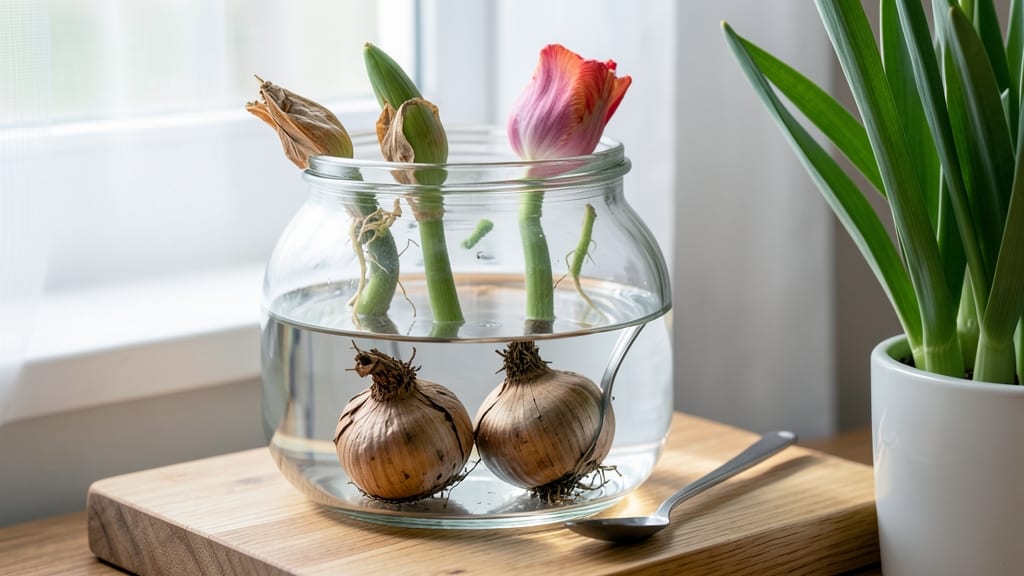
After tulip bulbs flower in water, trim the faded blooms, leave the foliage intact for 6-8 weeks to restore energy, then store bulbs in a dry, cool place until replanting. Avoid forcing them again immediately to prevent exhaustion.
When you force tulip bulbs to bloom indoors, their foliage becomes the secret weapon for next year's success. 🌱 The leaves perform photosynthesis even after flowering, converting sunlight into stored energy that fuels future growth.
Removing them too soon can starve the bulb, leading to weak or no blooms—water-forced bulbs need this extra care because they've already expended energy blooming indoors instead of in the garden.
Once the leaves turn yellow and die back naturally, carefully dig up the bulbs and let them dry in a shaded spot for a day.
Store them in a breathable container like a mesh bag or paper sack with dry peat moss or sand, keeping them in a cool (40-50°F) place until replanting in fall. This curing process prevents rot and ensures they'll have the strength to bloom again.
💡 In This Article
- Why Tulip Bulbs Need Foliage After Water Forcing
- Proper Tulip Bulb Storage for Future Blooms
Why tulip bulbs need foliage after water forcing
Tulip bulbs rely on their foliage to recharge through photosynthesis, even after flowering. When you force bulbs indoors in water, they expend energy blooming earlier than their natural cycle.
The leaves continue converting sunlight into glucose and starches, which get stored in the bulb's scales—this process can take 6-8 weeks to fully restore the bulb's energy reserves. Without this recovery period, the bulb may produce weak stems or fail to bloom next year entirely.
The key difference between water-forced bulbs and garden-grown ones is energy allocation. Garden tulips bloom in spring when they've already completed their photosynthetic cycle outdoors. Water-forced bulbs, however, bloom indoors during winter when they're not getting natural sunlight.
This means their leaves must work harder to compensate. 🌿 Removing foliage too soon (like when it yellows) cuts off this energy source, leaving the bulb depleted. In extreme cases, premature removal can even cause the bulb to rot from lack of stored nutrients.
Here's what happens during this critical recovery phase: Chlorophyll in the leaves captures sunlight, powering the conversion of carbon dioxide and water into glucose through photosynthesis. This glucose travels down the stem into the bulb, where it's transformed into fructose and stored as starch.
The bulb's papery outer layers act like a natural battery, holding this energy until replanting time. Without this process, the bulb lacks the fuel needed to push up new shoots in spring.
Water-forced bulbs also face unique challenges because they've already used up some of their stored energy to bloom indoors. Unlike garden bulbs that can draw from soil nutrients, water-forced ones depend entirely on their foliage.
This is why you'll often see them produce fewer leaves after forcing—they're already energy-depleted. The 6-8 week foliage period gives them time to rebuild these reserves before storage.
Visual cues help determine when foliage has completed its job. The leaves will turn completely yellow and crispy, signaling they're no longer photosynthesizing. At this stage, you can safely remove them, but only after they've fully dried out.
Cutting healthy green leaves prematurely is like unplugging a phone mid-charge—it leaves the bulb with insufficient power for next year's performance.
For best results, place your water-forced tulips in a sunny windowsill after blooming. South-facing windows provide the most light, which maximizes photosynthesis. If natural light is limited, supplement with a grow light for 12-14 hours daily.
This extra light can make a significant difference in how quickly the bulb rebuilds its energy stores.