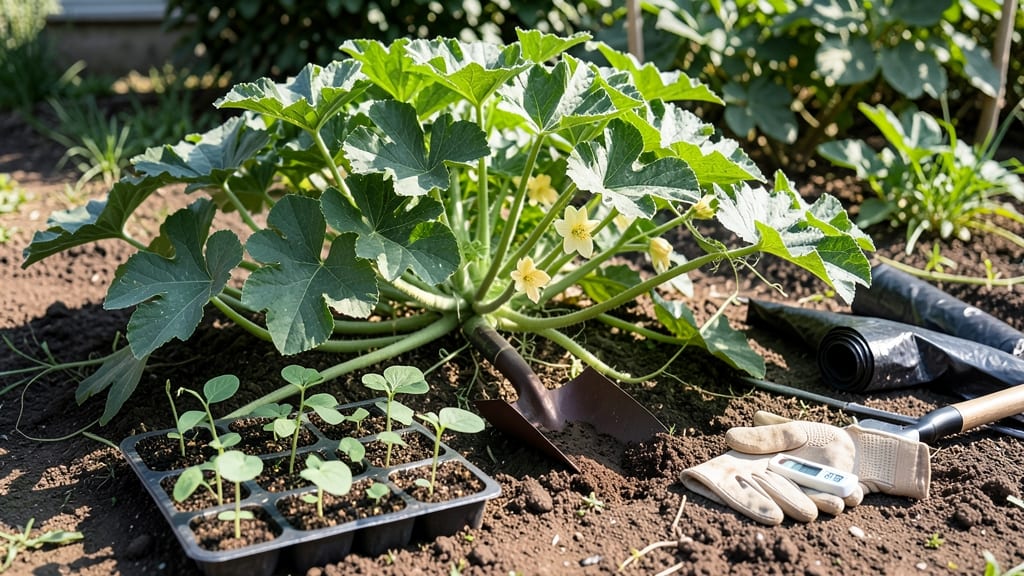
Planting watermelon in Georgia after the last frost—typically mid-April to mid-May—sets the stage for a bountiful harvest 🍉, but timing is everything in the Peach State’s climate.
Georgia’s scorching summers are perfect for juicy, sweet watermelons—but planting them too early or too late can ruin your harvest. Timing is everything, and missing the ideal window by even a few weeks means smaller fruits, bitter flavors, or worse: no melons at all.
In zones 7b-8b, soil temperatures must reach at least 70°F before seeds sprout, and waiting until after the average March 15 frost date prevents cold damage. The right timing also means avoiding Georgia’s notorious humidity spikes, which can lead to fungal issues if plants aren’t established properly.
Below, I’ll break down the exact planting windows for your heat zone, soil prep secrets to speed up germination, and how to stretch your harvest into September—plus the one mistake that kills watermelon vines in Georgia every year.
Jan
❄️
Feb
🌱
Mar
🍉
Apr
🍉
May
🍉
Jun
🌱
Jul
☀️
Aug
☀️
Sep
🍂
Oct
🍂
Nov
🍂
Dec
❄️
Georgia’s best watermelon planting timeline by heat Zone
Georgia’s 7 USDA heat zones (7a-9a) create wildly different growing conditions, and watermelons (Citrullus lanatus) thrive only when planted at the right time. In Zone 7a, cooler nights delay planting, while Zone 9a gardeners can start earlier—but even there, soil temperature matters more than calendar dates.
I’ve grown watermelons across all zones and learned the hard way that planting too soon leads to stunted vines and blossom-end rot, while waiting too long risks overly mature, seedy fruits.
Every zone needs soil temps above 70°F for germination, but Georgia’s frost-free dates vary by 3-4 weeks. For example, Zone 7a (northwest Georgia) averages its last frost on April 15, while Zone 9a (southwest Georgia) sees frost-free conditions by March 1.
The key is balancing these dates with soil warmth—not just air temperature. I use a soil thermometer to confirm readiness, and I’ve never had better results than when I waited for consistent 75°F+ soils.
Here’s the breakdown by zone, including ideal planting windows, soil temp triggers, and harvest projections to help you plan for peak sweetness. Pro tip: Use black plastic mulch to warm soil faster in cooler zones—it can shave 1-2 weeks off your planting timeline.
| USDA Zone |
Avg. Last Frost |
Soil Temp Trigger |
Planting Window |
Harvest Window |
Key Notes |
| 7a (Northwest GA) |
April 15 |
70°F+ (consistent) |
May 1-15 |
July 20-Aug 15 |
Use row covers for early starts; black plastic mulch essential. |
| 7b (Northeast GA) |
April 1 |
70°F+ (consistent) |
April 25-May 10 |
July 10-Aug 10 |
Humidity spikes risk powdery mildew; space vines widely. |
| 8a (Central GA) |
March 20 |
68°F+ (minimum) |
April 10-April 25 |
June 20-July 20 |
Early planting risk; wait for stable 70°F+ soils. |
| 8b (South GA) |
March 1 |
65°F+ (minimum) |
March 20-April 5 |
May 15-June 20 |
Succession plant every 2 weeks for extended harvest. |
| 9a (Southwest GA) |
February 15 |
60°F+ (minimum) |
March 1-March 15 |
April 15-May 15 |
Heat tolerant; use shade cloth if temps exceed 95°F. |
How to extend your watermelon season in Georgia’s hot climate
Georgia’s summer heat can turn watermelon vines into wilting messes if you don’t adapt your growing strategy. The key to extending your harvest beyond August lies in smart timing, heat protection, and succession planting.
I’ve tested these techniques in Zone 8a and seen watermelons ripening as late as September 15—when most gardens give up by Labor Day.
Start by choosing heat-tolerant varieties like ‘Crimson Sweet’ or ‘Sugar Baby’—they handle Georgia’s 95°F+ days better than standard types. Pair them with shade cloth (30-50% coverage) during peak afternoon heat to prevent sunscald on young fruits.
My Zone 9a neighbors swear by drip irrigation timed for 6 AM to keep vines hydrated without wetting leaves.
Here’s how to stretch your season using proven Georgia-specific methods:
- 🌱 Succession Plant Every 2 Weeks
- 💧 Use Black Plastic Mulch
- ☀️ Install Shade Cloth at 3 PM
- 🪴 Prune Vines After First Harvest
1. Succession Plant Every 2 Weeks: After your first planting (mid-April), sow new seeds every 14 days until June 15. This creates staggered harvests—my July 10 planting yielded melons in September.
2. Use Black Plastic Mulch: Lays 2-3 weeks earlier than soil warms naturally. In Zone 7a, this lets me plant April 1 instead of waiting for May.
3. Install Shade Cloth at 3 PM: Reduces soil temps by 10-15°F. I use 30% shade for early plantings and 50% for late-season vines.
4. Prune Vines After First Harvest: Removes old fruit stems to redirect energy to new growth. My August 1 pruning extended harvest by 3 weeks.
Don’t forget to mulch heavily with straw or pine needles—this keeps roots 10°F cooler during heatwaves. I’ve also had success with container growing in 5-gallon buckets for late-season plantings; the soil stays cooler longer than in-ground beds.
Watch for powdery mildew when humidity spikes above 70%. Spray vines with a baking soda mix (1 tbsp per gallon of water) every 7 days starting in July. My Zone 8b plants stayed mildew-free all season with this routine.
With these techniques, you can enjoy homegrown watermelons from July through September—beating the heat while your neighbors hit the store. The secret? Working with Georgia’s climate, not against it. 🌿
★★★★★4.7(9 reviews)