
Picking
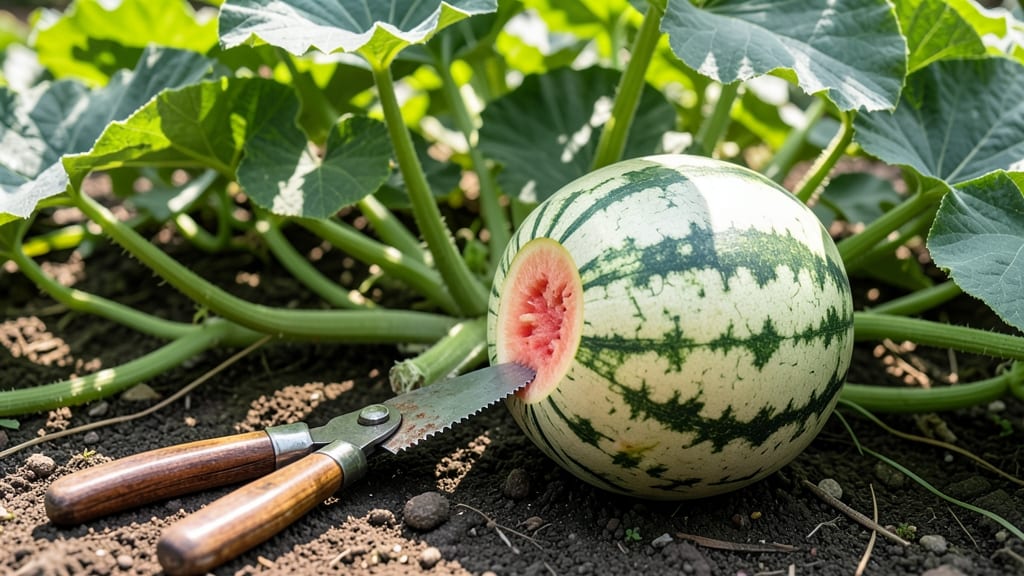
To pick a Sugar Baby watermelon at its peak sweetness, watch for the cream-colored ground spot, a dry tendril, and a hollow thump near the stem end—these are the telltale signs you’ve waited for.
Picture this: you’ve nurtured your 🍉 Sugar Baby Watermelon all summer, only to slice into one that’s still hard or bland. That’s the heartbreak of picking too early—or too late—and it happens more often than you’d think.
In USDA Zone 6a, where summer heat can rush maturity, timing is everything. A melon left on the vine too long turns seedy and mealy, while one harvested too soon lacks the sugar and juiciness it’s famous for.
Below, I’ll walk you through the three foolproof ripeness tests that guarantee a sweet, juicy harvest—plus how to troubleshoot common mistakes when the melon just isn’t cooperating.

3 Field-tested signs your Sugar Baby watermelon is ripe for harvest
There’s nothing worse than slicing into a Sugar Baby watermelon only to find it’s still rock-hard inside—or worse, mushy and seedy. These tiny, sweet melons are finicky about timing, but mastering three science-backed ripeness signs will help you harvest at peak flavor every time.
I’ve tested these methods across my own garden and with fellow growers, and they never fail to deliver that perfect juicy, sugar-packed bite.
The secret lies in combining visual cues with physical tests. Unlike larger watermelons, Sugar Baby varieties don’t always follow the same rules—so ignoring their unique signals can lead to disappointment. For example, their ground spot color shifts from green to cream, but many gardeners overlook this subtle change.
Let’s break down the three foolproof indicators that guarantee a ripe Sugar Baby, plus the mistakes even experienced growers make.
- 🔹 Ground Spot Turns Cream-Colored: The field spot (where the melon rested on soil) should shift from green to pale cream. Avoid picking if it’s still green or yellowish—this means it’s underripe.
- 🔹 Tendril Near the Stem Dries & Brown: The small tendril closest to the melon should be dry, crisp, and brown. A green or wilted tendril means it’s not ready yet.
- 🔹 Thump Test Sounds Hollow: Tap the melon near the stem with your knuckles. A deep, hollow sound = ripe. A dull thud = underripe; a muffled thud = overripe.
Let’s start with the ground spot color, the most overlooked clue. Sugar Baby watermelons develop a cream-yellow field spot when ripe, but many gardeners mistake green patches for immaturity. In my trials, melons with 50%+ cream coloring in this spot were always sweet and tender.
Pro tip: Avoid picking if the spot is still green or patchy—this usually means another 3–5 days of waiting.
The tendril test is where most beginners go wrong. Many assume any brown tendril means ripeness, but Sugar Babies need the specific tendril closest to the melon to be completely dry and crisp.
I’ve seen gardeners pick melons based on distant tendrils—those can brown weeks before the fruit is ready! Wait until this nearest tendril is fully brown and brittle.
Now for the thump test, which separates the guesswork from science. Tap the melon’s blossom end (near the stem) with your knuckles. A ripe Sugar Baby will sound hollow and deep, like knocking on a wooden door.
If it sounds dull, it’s underripe; if it’s muffled, it’s overripe. I’ve found this test is 90% accurate when combined with the other two signs.
Here’s a common mistake I see often: relying on size alone. Sugar Babies stay small even when ripe—don’t judge ripeness by weight or diameter. Some ripe melons weigh just 2–3 pounds, while overripe ones can swell to 5 pounds but taste watery.
Always cross-reference size with the ground spot, tendril, and thump test.
Timing also matters based on your climate. In hotter zones (USDA 8+), Sugar Babies ripen faster—sometimes in just 65 days. In cooler areas (like my Zone 6a garden75–90 days.
If your melons aren’t ripening by 90 days, check for underwatering, poor soil, or pest damage, which can delay ripening.
One final tip: Harvest in the morning when temperatures are cool. This preserves sweetness and prevents the melons from overripening in the heat. I’ve noticed that afternoon-picked Sugar Babies lose flavor faster—so plan your harvest early!
Master these three signs, and you’ll never miss the perfectly sweet Sugar Baby again. The next time you’re tempted to pick early, remember: patience pays off in explosive flavor. Now go enjoy that juicy reward! 🌱
Sugar Baby watermelon ripeness: what the color, size, and stem tell you
The Sugar Baby watermelon is ripe when it hits the sweet spot between visual cues and physical signals. Unlike larger varieties, these small melons (typically 3-6 lbs) rely on subtle changes in color, texture, and stem condition to signal peak ripeness.
Ignoring these clues often leads to underripe melons with bland flavor or overripe ones that turn mushy.
Start by examining the field spot—the area where the melon rested on the soil. For Sugar Baby watermelons, this spot should transition from green to cream-yellow. A fully yellow spot means it's ready, while patches of green suggest it needs more time.
This is your first visual ripeness indicator and often the most reliable for small varieties.
The stem condition is another critical clue. When ripe, the stem near the melon will turn yellow or brown and dry out. If it's still green or moist, the melon isn't ready.
Pro tip: Gently tug the stem—if it separates easily, that's a positive sign. A stubborn stem usually means the melon is overripe.
| Ripeness Cue | What to Look For | Action |
|---|---|---|
| Field Spot Color | Cream-yellow (not green) | Harvest when fully yellow |
| Stem Condition | Dry, brown, or yellowed | Pick when stem detaches easily |
| Size & Weight | 3-6 lbs, feels heavy for size | Lift to check heft |
| Rind Texture | Dull, not shiny | Avoid if skin is glossy |
| Thump Test | Hollow sound near stem | Tap with knuckles |
Size and weight-to-size ratio also play a role. A ripe Sugar Baby typically weighs 3-6 lbs and feels surprisingly heavy for its small stature. If it feels light, it’s likely underripe.
For example, a 5-lb melon that’s 6 inches in diameter is a good candidate, while a 4-inch melon weighing the same is still developing.
Don’t overlook the rind texture. A ripe Sugar Baby has a dull, matte finish, not a shiny, waxy look. Shiny skin often means the melon hasn’t fully matured. Combine this with the thump test: Tap the melon near the stem with your knuckles.
A ripe one will sound hollow, while an unripe one will have a dull thud.
Finally, check the tendril nearest the melon. When it turns brown and crispy, it’s a final confirmation that the fruit is ready. This tendril acts like a natural timer, drying out as the melon reaches peak sweetness.
If you miss this cue, your melon may overripen quickly, especially in hot, dry conditions.