
Plants
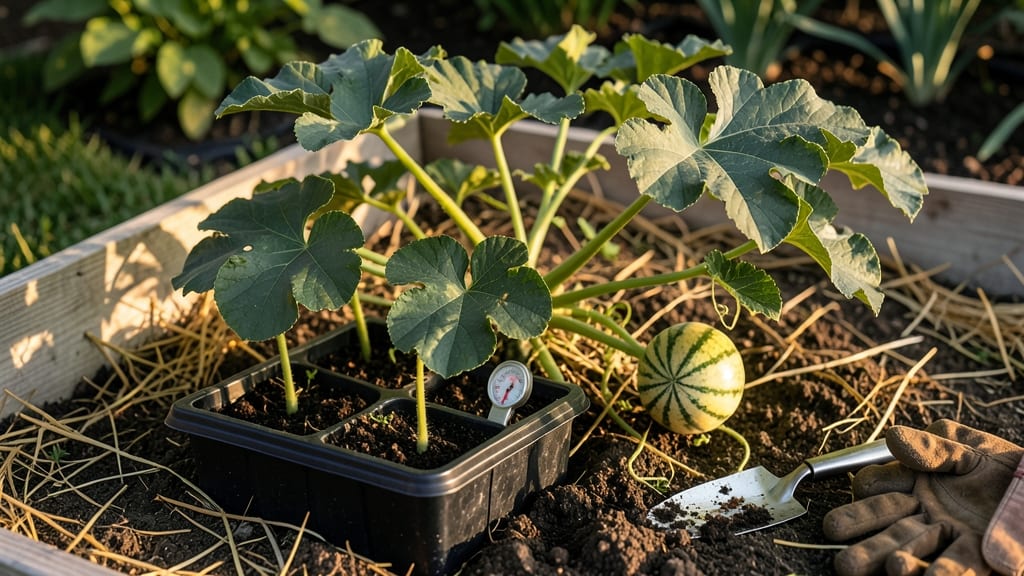
To plant watermelon in Zone 8a, time it between mid-April and mid-June when soil temperatures hit 70°F and frost risk fades.
Planting too early can leave your 🍉 vines struggling in cold soil, while waiting too late risks stunted growth as summer heat arrives. The key is aligning your schedule with both frost-free dates and the 90-day growth window most varieties need.
This guide breaks down the exact frost triggers, soil warmth thresholds, and how to adjust for early or late varieties—so you avoid the common mistakes that leave gardeners with half-grown melons.
You’ll learn how to extend the season, spot signs of early planting gone wrong, and pick the perfect transplant window for your Zone 8a location.
Zone 8a watermelon planting timeline: frost-free dates vs. heat requirements
In Zone 8a, where winters are mild but spring can linger chilly, timing your watermelon planting is critical. The average last frost date ranges from March 15 in coastal areas to April 15 inland, but frost isn't the only factor.
Watermelons need soil temperatures above 70°F to germinate properly—something coastal areas hit earlier than inland zones. This means your planting window can shift by 3-4 weeks depending on location.
Understanding these heat triggers prevents common mistakes like premature germination in cold soil or stunted growth from late-season frosts. For example, Sugar Baby varieties mature in 70 days, while Crimson Sweet takes 85 days.
Planting too early risks losing your crop to late frosts in November, while planting too late may leave you with underripe fruit before the first frost.
Coastal areas of Zone 8a often enjoy warmer microclimates due to ocean breezes, allowing you to start 2-3 weeks earlier than inland gardeners. For example, San Diego typically sees soil temperatures hit 70°F by early April, while Phoenix may need to wait until mid-April.
Always check your local Almanac frost dates and adjust for 3-5 days of buffer—this accounts for unexpected late frosts that can sneak in even in Zone 8a.
If you're planting seedlings instead of seeds, start them indoors 4-6 weeks before your last frost date. Use grow lights to maintain 75°F daytime temperatures and 65°F nights until transplanting.
Harden off seedlings for 7-10 days before moving them outdoors to prevent transplant shock from temperature swings. Pro tip: Transplant on a cloudy day to reduce stress on young plants.
For direct sowing, use black plastic mulch to raise soil temperatures by 5-10°F faster than bare soil. This is especially helpful in inland Zone 8a where nights can still dip into the 50s°F in early spring.
Plant seeds 1 inch deep and 6 inches apart in hills, thinning to 2 feet apart once seedlings emerge. Germination typically takes 7-10 days at 80°F soil temps, but can take 2-3 weeks if soil is cooler.
Watch for heat accumulation—watermelons need 1,200-1,500 growing degree days (GDD) to mature. Coastal areas often reach this threshold by mid-July, while inland areas may not hit it until early August. Use a growing degree day calculator to track progress and
How to adjust planting for early vs. late varieties in Zone 8a
Zone 8a gardeners face a unique challenge when growing watermelons—the short growing season demands careful variety selection and planting timing. Early varieties like 'Sugar Baby' mature in just 60-65 days, while long-season types like 'Crimson Sweet' need 85-90 days of warmth.
The key is matching your variety to your last frost date (typically November 15 in Zone 8a) while ensuring soil stays above 70°F for germination.
For early varieties, I start seeds indoors 4-6 weeks before the last frost date, then transplant hardened-off seedlings when soil reaches 70°F (around mid-April).
This gives them enough time to mature before summer heat peaks. Late varieties, however, require a later start—direct-sow seeds after May 15 when nighttime temperatures stay above 60°F consistently.
To extend the season for late varieties, I rely on black plastic mulch, which warms soil by 10-15°F and speeds up germination. For early starts, row covers protect tender seedlings from unexpected 50°F nights in April.
I also use drip irrigation to maintain consistent moisture, which is critical during watermelon's flowering and fruiting stages.
Succession planting is my secret weapon in Zone 8a. By sowing early varieties every 2 weeks from April to June, I create a continuous harvest window from June through August.
For example, I plant 'Sugar Baby' in early April, followed by 'Black Diamond' in late April, and 'Crimson Sweet' in early June. This staggered approach ensures I always have ripe melons ready to pick.
Watch for heat stress in late summer—watermelons wilt easily when temperatures exceed 90°F. I provide afternoon shade with shade cloth during peak heat and mulch heavily to retain soil moisture. This simple adjustment keeps vines productive even as summer winds down.
If frost threatens early, I harvest any near-ripe melons and use row covers to protect remaining plants. For unripe fruit, I wrap individual melons in burlap sacks to insulate them from cold snaps. With these strategies, I’ve successfully grown watermelons well into October in Zone 8a.