
Watering
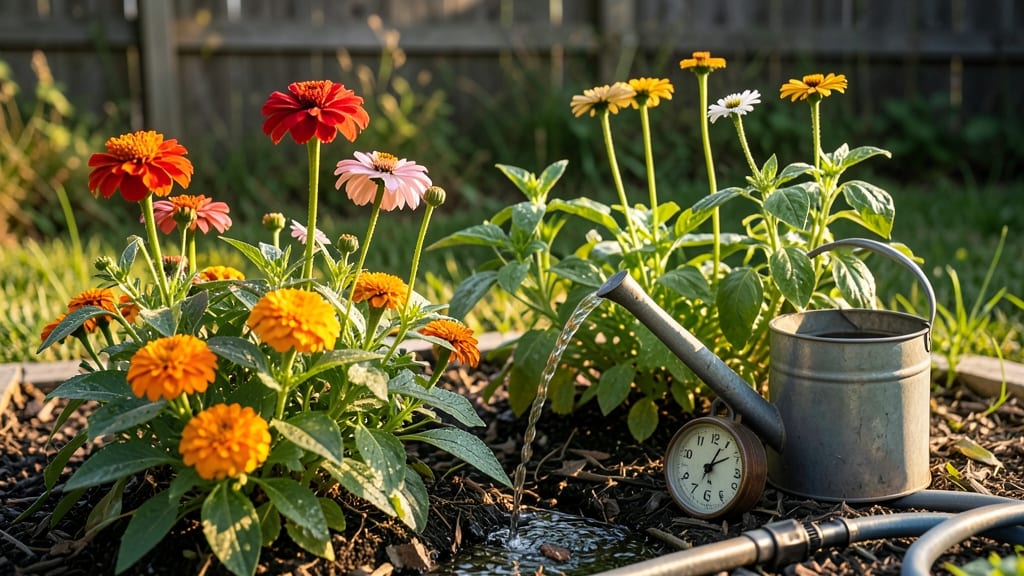
Watering outdoor plants at the right time is the difference between lush, thriving 🌱 greenery and struggling, stressed foliage — and most gardeners get it wrong without even realizing it.
Struggling to keep your outdoor plants thriving? The when of watering matters just as much as the how — and getting it wrong can lead to wilting, disease, or wasted water.
Whether you're dealing with spring blooms or summer heat, timing your watering sessions can mean the difference between a healthy garden and one that's fighting for survival.
Morning watering is often the golden rule, but evening sessions have their place too — especially in hot climates where evaporation is a major concern. The key is understanding how your local climate, soil type, and plant needs interact to create the perfect watering schedule.
In this guide, I’ll break down the science behind morning vs. evening watering, share seasonal adjustments for USDA Zone 6a, and give you actionable tips to keep your outdoor plants happy year-round.
Morning watering vs. evening watering: which is better for plant health?
The age-old debate of morning watering vs. evening watering isn't just about convenience—it directly impacts your plants' health, growth rate, and even their susceptibility to disease. As someone who's spent years perfecting my garden's watering routine, I can tell you that timing is everything.
Watering at the wrong time can lead to fungal infections, wasted water, or stressed plants that never reach their full potential.
Most gardeners assume evening watering keeps plants hydrated overnight, but that's not always the case. In reality, watering in the morning often gives plants a head start on absorbing moisture before the heat of the day kicks in.
However, this isn't a one-size-fits-all rule—your local climate, plant types, and even soil conditions play crucial roles in determining the best time to water.
Let's break down the key differences between morning and evening watering, including how each affects evaporation rates, root development, and disease prevention. By the end, you'll know exactly when to water your specific plants for maximum health.
| Factor | Morning Watering (6-9 AM) | Evening Watering (6-9 PM) |
|---|---|---|
| Evaporation Rate | Low (cooler temps, less wind) | High (warmer temps linger, humidity drops) |
| Fungal Risk | Low (foliage dries quickly) | High (moisture lingers overnight) |
| Root Development | Optimal (roots absorb moisture all day) | Slower (less time for absorption) |
| Best For | Vegetables, flowers, shrubs | Drought-prone areas, potted plants |
| Climate Suitability | Humid, dry, or moderate climates | Arid climates only (with caution) |
Morning watering is the gold standard for most gardeners because it allows plants to absorb water before the day's heat causes evaporation.
When you water in the early morning—ideally between 6 and 9 AM—you give your plants a full day to soak up moisture, which encourages deeper root growth. This is especially critical for vegetables like tomatoes and peppers, which need consistent hydration to produce high-quality fruit.
For flowers and shrubs, morning watering also reduces the risk of powdery mildew and other fungal diseases. Wet foliage that sits overnight creates the perfect conditions for spores to spread.
I've seen firsthand how roses and hydrangeas thrive when watered in the morning—their leaves stay dry, and they bloom more vigorously than when watered in the evening.
Evening watering has its place, particularly in hot, dry climates where daytime evaporation is extreme. In these cases, watering in the late afternoon or early evening can help conserve water by reducing loss to heat.
However, this method requires extra caution. Always water at the base of the plant rather than overhead to minimize fungal risks, and finish by 6 PM to allow foliage to dry before nightfall.
Your local climate zone plays a huge role in deciding the best time to water. In humid regions, morning watering is almost always the best choice because excess moisture lingers longer in the air.
Conversely, in arid zones, you might need to water in the evening to prevent rapid evaporation, but you'll still need to monitor for fungal issues closely.
Succulents and cacti are exceptions to these rules. These drought-tolerant plants thrive on infrequent, deep watering—preferably in the morning. Their thick skins store water efficiently, so they don't need the same frequent hydration as other plants.
Overwatering them in the evening can lead to root rot, which is why I always water mine early in the day and let the soil dry out completely between waterings.
If you're still unsure about the best time to water, start by observing your plants' stress signals. Wilting leaves by midday often indicate underwatering, while yellowing leaves or moldy stems suggest overwatering.
Adjust your schedule based on these cues, and don't forget to consider seasonal changes—your watering needs in summer will differ drastically from those in winter.
Ultimately, the best watering time depends on your specific plants, climate, and even the time of year. Experiment with both morning and evening watering to see what works best for your garden.
With the right approach, you'll notice healthier plants, fewer pests, and less wasted water—making your gardening efforts far more rewarding.
How to determine the best watering time for your specific plants and climate
Finding the perfect watering schedule for your garden isn't one-size-fits-all. Your tomatoes and succulents have completely different needs, and your local humidity or soil type can shift what works best. The key is understanding how these factors interact to create the ideal routine for each plant in your space.
Start by grouping your plants by their water requirements. For example, vegetables like lettuce and herbs like basil need consistent moisture, while succulents and lavender thrive on neglect.
Then, factor in your climate zone—humid areas may need more frequent light watering, while arid regions benefit from deep, infrequent soaks.
- 🌱 Vegetables & Herbs: Water early morning (6-9 AM) for deep root growth. Avoid evenings to prevent fungal diseases.
- 🌵 Succulents & Cacti: Water late morning (10 AM-12 PM) every 2-3 weeks—soil must dry completely between waterings.
- 🌸 Flowers & Shrubs: Water deeply in morning 2-3 times per week, adjusting for rainfall (skip if >1 inch of rain).
- 🌳 Trees & Large Plants: Water slowly at base during early morning or late afternoon (avoid midday heat stress).
- 🌿 Lawns: Water before 10 AM or after 4 PM for 1-1.5 inches per week (including rainfall).
- 🌡️ Hot/Dry Climates: Water very early morning (5-7 AM) to minimize evaporation and heat stress.
- 🌧️ Humid Climates: Water lightly in morning and monitor for yellowing leaves (sign of overwatering).
Your soil type plays a huge role too. Sandy soil drains quickly, so you’ll need to water more frequently but less deeply, while clay soil holds moisture longer, requiring deeper but less frequent watering.
Stick your finger 1-2 inches into the soil—if it's dry, it's time to water. For potted plants, check the top inch of soil daily during summer.
Seasonal shifts demand flexibility. In summer, water early morning to combat evaporation and heat stress, while in winter, reduce watering by 50% since plants grow slower. Always adjust for rainfall—skip watering if you’ve gotten 1 inch of rain in the past week.
Watch for overwatering signs: yellowing leaves, mold on soil, or plants leaning away from light. Underwatering shows as crispy edges, wilting despite moist soil, or a dull, grayish appearance. If you spot these, adjust your schedule immediately—plants recover faster from underwatering than overwatering.
Pro tip: Use a moisture meter or the "squeeze test" (grab a handful of soil—if it crumbles easily, it’s dry). Pair this with a watering journal to track what works for each plant type in your unique microclimate.
With time, you’ll develop a routine that keeps your garden thriving with minimal guesswork.