
Vegetables
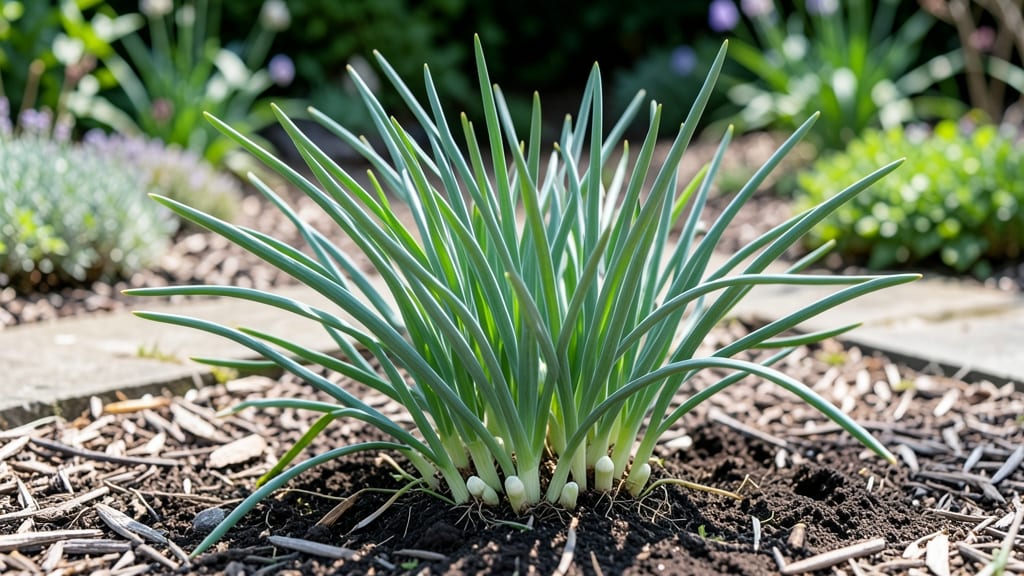
Bunching onions aren't true perennials—they act like biennials or short-lived perennials, dying back in winter but often regrowing from their base in spring if conditions are favorable. Their longevity varies by climate and care, with most lasting 2-3 years before weakening.
This dieback-and-regrowth cycle happens because bunching onions store energy in their small bulbs rather than developing large, overwintering structures like true perennials. 🌱 When temperatures drop, their tops yellow and collapse, but the base remains alive underground.
In milder climates, they'll often bounce back stronger in spring, while harsh winters may kill them completely. The key difference from perennials is their limited energy reserves—once they've produced multiple harvests, their bulbs weaken and eventually fail to regrow.
What this means for gardeners is that you can treat them like perennials for 1-2 years, but plan to replace them eventually. Their resilience makes them great for succession planting—just save seeds or divide regrown shoots to extend your harvest window.
💡 In This Article
- Why Bunching Onions Die Back and Regrow
- Extending Bunching Onion Lifespan in Your Garden
Why bunching onions die back and regrow
Bunching onions go through a dramatic seasonal transformation because their biology prioritizes energy storage over long-term survival. Unlike true perennials like asparagus (which develop thick, insulated rhizomes), bunching onions store energy in small, shallow bulbs that resemble miniature onions.
When temperatures dip below 40°F for extended periods, these plants trigger a survival mechanism: leaf senescence. The chlorophyll breaks down, causing the familiar yellowing, while nutrients migrate back to the bulb to prevent frost damage.
The dieback you see isn't death—it's dormancy. These bulbs contain meristematic cells (growth centers) that remain viable through winter if protected from freezing. In USDA zones 5-8, where winters average 20-35°F, the bulbs typically survive, while zone 4 (below 0°F) often proves fatal.
What's fascinating is how the regrowth process works: when soil temperatures reach 50°F in spring, the meristems reactivate, sending up new shoots from the same base—proof these aren't annuals but plants with built-in resilience.
This biennial behavior explains why some gardeners mistake them for perennials. In their first year, they focus on leaf production, storing energy. Year two often produces flowers and seeds, signaling the plant's natural lifecycle completion.
However, if you harvest leaves carefully (never taking more than 30% of the plant), you can coax them into a third year of production—though each harvest weakens the bulb's reserves, accelerating decline.
The key difference from true perennials lies in their root structure. Bunching onions develop fibrous roots that spread shallowly (typically 6-12 inches deep), while perennials like chives have deeper, more robust root systems.
This shallow network makes them vulnerable to soil compaction and poor drainage—two factors that can prevent successful regrowth after winter. The trade-off is their rapid growth: from seed to harvest in just 60-70 days, compared to perennial onions that take years to mature.
What most gardeners miss is how light affects this cycle. In short-day conditions (fall/winter), the plants prioritize bulb development over leaf growth, while long days (spring/summer) trigger regrowth.
This photoperiod sensitivity explains why northern climates often see more reliable regrowth than southern areas—cooler springs delay the "green-up" signal until soil conditions are optimal.
Consider this: a bunching onion bulb contains only enough stored energy for 2-3 harvest cycles before declining. Each time you cut leaves, you're tapping into these reserves.
This is why professional growers rotate crops—after two years, even the hardiest bunching onions will produce smaller, weaker regrowth, signaling it's time to replant.