
Plants
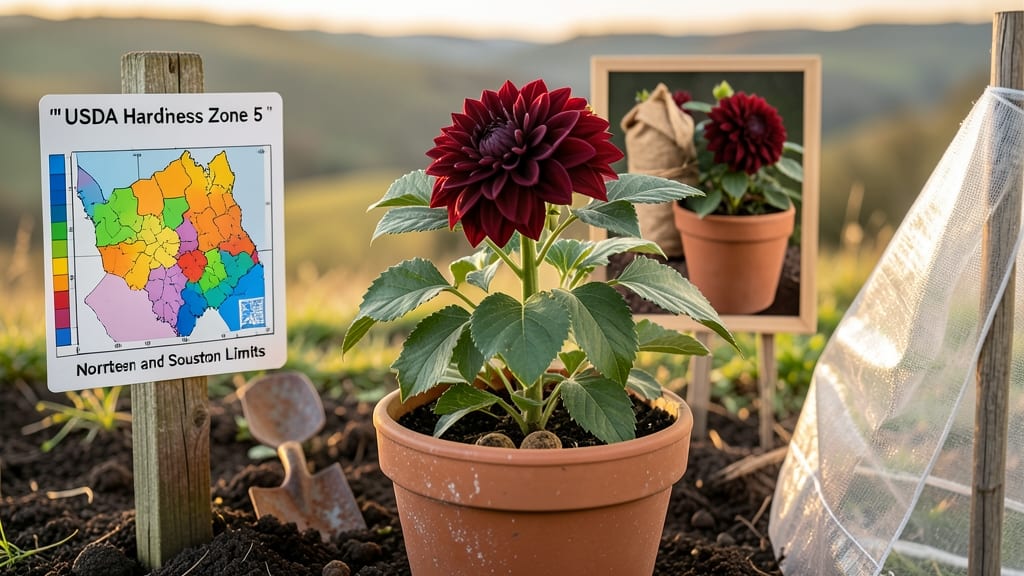
In Zone 5, dahlias are not perennials without winter protection, as they die back when temperatures fall below 20°F. Their tubers need to be dug up and stored indoors to survive harsh winters, though some hardy varieties might return with extra insulation.
Zone 5's cold winters push dahlias beyond their natural limits. 🌱 These plants thrive in zones 7-10, where they naturally overwinter in the ground. The key issue is tuber dormancy—when temperatures drop below 20°F, the stored energy in tubers freezes, killing the plant.
Even mulching only provides limited protection against prolonged sub-zero spells. Some gardeners report success with extra insulation, but most reliable results come from digging tubers before the first frost and storing them in a cool, dark place until spring.
What makes this tricky is that dahlias can look dead in winter but still have viable tubers. The real test comes in spring when you replant—patience is key as regrowth can take several weeks.
I've found that storing tubers in 40-50°F conditions with 50-60% humidity gives them the best chance to survive until planting season.
💡 In This Article
- How Cold Temperatures Affect Dahlia Tubers in Zone 5
- Zone 5 Dahlia Winter Care: Digging, Storing, and Spring Revival
How cold temperatures affect dahlia tubers in Zone 5
Dahlia tubers enter dormancy as temperatures drop, but their survival threshold sits at 20°F—a critical point where cellular damage begins. Zone 5 winters frequently dip below -10°F, triggering ice crystal formation within tuber cells.
These crystals rupture cell membranes, causing irreversible damage even in hardy varieties. The process is similar to how frost cracks tree bark, but on a microscopic scale within the tuber's energy storage tissues.
Soil moisture plays a surprising role in this vulnerability. Wet tubers freeze more easily because water expands as it crystallizes, creating internal pressure. In contrast, dry tubers can tolerate slightly lower temperatures.
This is why gardeners in Zone 5 often wait for soil to dry before digging—typically after the first frost when ground moisture has receded. Mulching helps, but only by 2-4°F compared to unprotected soil, making it insufficient for prolonged sub-zero spells.
The comparison between Zone 5 and dahlia's native hardiness zones (7-10) highlights the mismatch. In warmer climates, tubers naturally overwinter in 50-60°F soil temperatures. Zone 5's extreme cold forces tubers into a survival mode they weren't evolved for.
Even the hardiest dahlia varieties, like 'Café au Lait' or 'Bishop,' struggle without intervention, as their tuber insulation only extends protection to roughly 15°F.
What most gardeners overlook is the tuber's secondary growth cycle. After dormancy, tubers must undergo a 4-6 week period of 50-60°F conditions to break dormancy and regrow. This explains why spring replanting often yields disappointing results if tubers were stored too cold or too long.
The biological clock in dahlia tubers is finely tuned to their native climate's gradual temperature shifts, not Zone 5's abrupt seasonal changes.
Consider this: A single 20°F night in Zone 5 can kill unprotected tubers, while the same temperature in Zone 8 might only slow growth. The difference lies in duration—Zone 5's prolonged cold periods (often 3-4 months below freezing) create a cumulative stress that even hardy tubers can't withstand.
This biological reality is why most gardeners treat dahlias as annuals unless they implement winter storage protocols.
The science behind this involves tuber respiration rates. Cold temperatures slow metabolic activity, but not enough to prevent cellular damage when combined with freezing. The ideal overwintering scenario mimics natural conditions: 40-50°F temperatures with 50-60% humidity—conditions that preserve tuber viability while preventing rot or desiccation.
This balance is what gardeners must recreate indoors during Zone 5 winters.