
Flowers
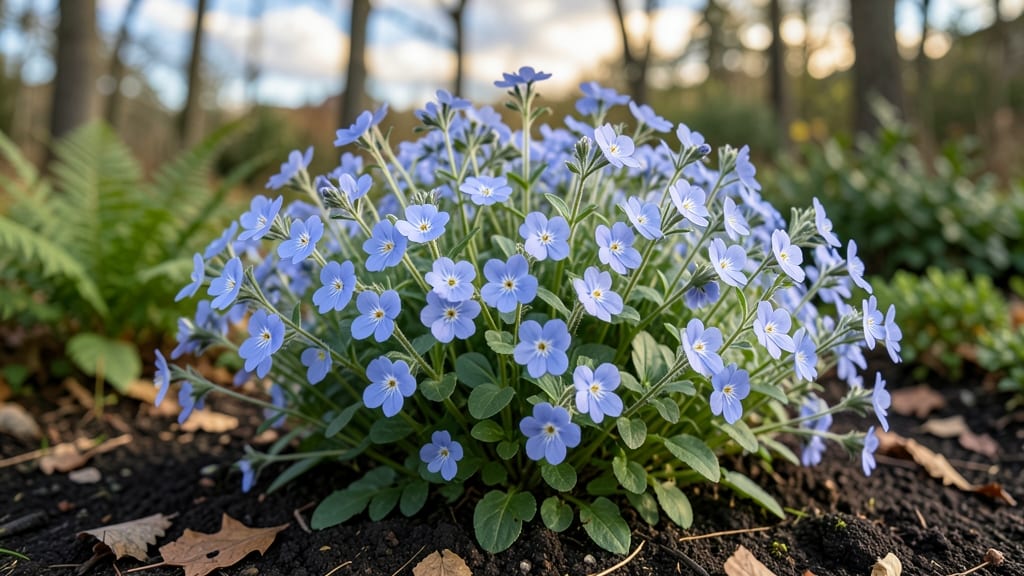
Forget-me-nots are not true perennials in most climates—they usually behave as annuals or biennials, completing their life cycle in one or two years before dying back. Only in USDA zones 3-7 might they persist as short-lived perennials, with cold tolerance and soil quality playing key roles in their survival.
Forget-me-nots (Myosotis) thrive in cool climates but rarely survive harsh winters outside zones 3-7, where their delicate roots struggle to establish deep systems. 🌱 Unlike true perennials like hostas, which regrow yearly from the same rootstock, forget-me-nots often self-seed prolifically—giving the illusion of returning growth.
To extend their blooms, plant them in well-draining soil with morning sun and afternoon shade, and deadhead spent flowers regularly. In colder zones, mulching heavily in fall can help protect their roots for potential regrowth next spring.
These charming blue flowers are best enjoyed as seasonal accents rather than long-term garden staples. Their brief but vibrant displays make them perfect for spring containers or wildflower meadows, where their self-seeding habit can create naturalizing clusters over time.
💡 In This Article
- Forget-Me-Not Life Cycle: Annual, Biennial, or Short-Lived Perennial?
- Extending Forget-Me-Not Blooms: Planting and Care Tips for Longer Seasons
Forget-me-not life cycle: annual, biennial, OR short-lived perennial?
The forget-me-not (Myosotis spp.) belongs to the boraginaceae family, which includes both annual and perennial species—but its growth pattern depends entirely on climate. In warmer zones (8-11), forget-me-nots behave as true annuals, completing their entire life cycle in a single growing season.
They sprout from seed in early spring, bloom prolifically for 6-8 weeks, produce copious seeds, and die back by early summer. This rapid turnover explains why they’re often sold as annual bedding plants.
The key difference emerges in cooler climates. In USDA zones 3-7, forget-me-nots may act as biennials or even short-lived perennials—their roots can survive mild winters if protected by mulch or snow cover.
The secret lies in their cold hardiness: most varieties tolerate down to -20°F to -30°F (zones 3-6), but their shallow root systems struggle in freeze-thaw cycles. Unlike true perennials like lavender (which regrows from deep, woody roots), forget-me-nots rely on new seed germination each year rather than persistent rootstock.
What most gardeners mistake for perennial behavior is actually self-seeding. Forget-me-nots release thousands of tiny seeds that germinate eagerly in spring, creating dense clusters that look like returning plants. This prolific seeding is their survival strategy—nature’s way of ensuring the species persists even when individual plants die back.
True perennials like hostas, by contrast, regrow from the same root system year after year without relying on seeds.
Here’s how to tell the difference: Annual forget-me-nots vanish entirely after their first bloom cycle, while biennial varieties may produce basal leaves in year one and flowers in year two.
In zones 3-7, you might see 3-5 years of limited regrowth if conditions are ideal, but this is more about seedling survival than true perennialism. The plants’ delicate stems (often 6-12 inches tall) and fine foliage also make them vulnerable to winter dieback.
For comparison, consider lavender (a true perennial) which lives 5-10+ years from the same root base, or hostas, which spread aggressively via rhizomes. Forget-me-nots lack these structures—their entire energy goes into seed production rather than root expansion. This biological trade-off explains why they’re classified as marginal perennials at best.
🌿 The bottom line: Forget-me-nots are nature’s opportunists—they thrive where they can, but their survival depends on annual seed renewal rather than persistent root systems. Their charm lies in this ephemeral beauty, not longevity.