
Plants
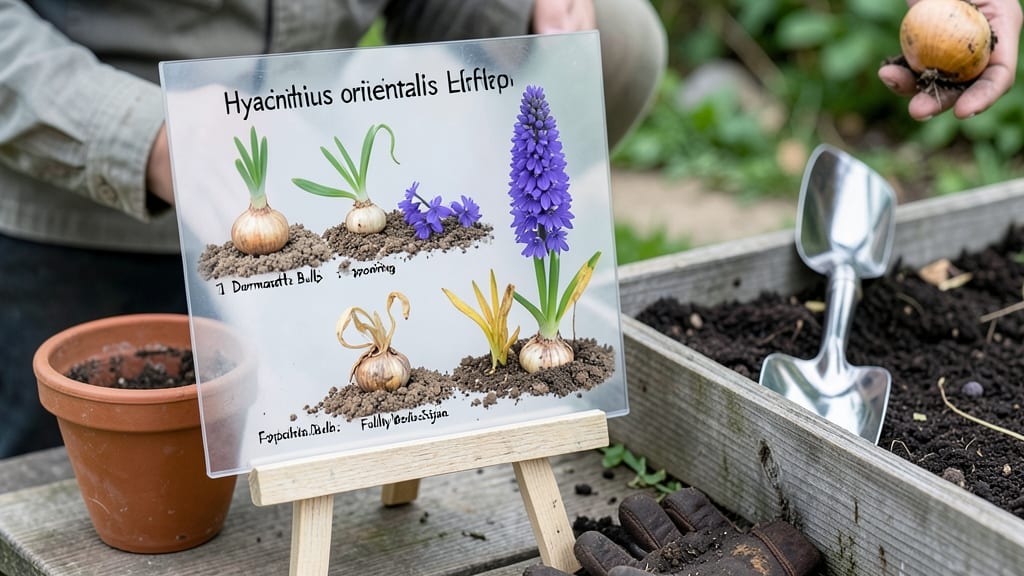
Yes, hyacinths are perennials in USDA Zones 3-8, returning each year with proper care, though they often decline after 3-5 years without division or replanting. In colder climates, they require winter mulch for survival.
Hyacinths earn their perennial label because they grow from bulbs that store energy underground, allowing them to regrow season after season. 🌱 Their cold hardiness means they can survive winter dormancy in zones as cold as Zone 3, though their blooming vigor depends heavily on proper winter protection.
The key to their longevity lies in understanding their natural life cycle—bulbs typically last 3-5 years before needing division to prevent overcrowding and nutrient depletion.
What sets hyacinths apart from annuals is their ability to store nutrients in the bulb, which fuels new growth each spring. However, this system has limits—without regular bulb division every 3-4 years, their flowering performance gradually declines.
In colder regions, adding a thick layer of mulch (like straw or shredded leaves) before the first frost creates an insulating barrier that prevents bulb freeze damage.
Their true lifespan can actually extend beyond 5 years with proper care, but many gardeners find they get the most reliable blooms by refreshing their stock every few seasons. This makes hyacinths a fantastic perennial choice for gardeners who want reliable spring color with minimal annual replanting.
💡 In This Article
- Hyacinths as Perennials: Climate and Growth Cycle Science
- Extending Hyacinth Lifespan: Planting and Care Tips
Hyacinths as perennials: climate and growth cycle science
Hyacinths (Hyacinthus orientalis) are classified as true perennials because they rely on underground bulbs to store energy and nutrients for multiple growing seasons.
Unlike annuals that complete their life cycle in one year, hyacinth bulbs enter a natural dormancy phase during winter months, then regenerate foliage and flowers each spring.
This bulb-based system allows them to persist for years when conditions are favorable. 🌱 The key mechanism is their ability to convert starches into sugars during dormancy, which fuels new growth when temperatures rise above 50°F.
Their cold hardiness stems from evolutionary adaptations that protect the bulb's central growth point. In USDA Zones 3-8, hyacinths can survive winter temperatures down to -30°F when properly mulched, though their flowering intensity often diminishes in Zone 8's hotter summers without adequate shade.
The bulb's papery tunic acts as a natural insulator, while the fleshy scales store moisture and nutrients. What's fascinating is how these bulbs trigger flowering through a process called vernalization—requiring exposure to 4-6 weeks of cold temperatures (35-45°F) before they'll bloom reliably in spring.
Seasonal growth patterns follow a precise timeline: bulbs begin active growth when soil temperatures reach 50°F, producing leaves that photosynthesize to build energy reserves. Flower stalks emerge after 6-8 weeks of growth, with blooms lasting 2-3 weeks per stalk.
The challenge comes in late summer when foliage yellows—this is when bulbs need 6-8 more weeks of growth to fully replenish their energy stores before dormancy. Skipping this step weakens future blooms, which explains why many gardeners see declining performance after 3-5 years.
What most gardeners overlook is how bulb size directly correlates with flowering quality. A mature hyacinth bulb (about 2-3 inches in diameter) produces 3-5 flower stalks, while smaller bulbs may only yield 1-2 stalks.
The bulb's lifespan is tied to its ability to produce offsets (smaller bulbs) around the parent bulb—when these aren't separated, they compete for nutrients, accelerating decline. This biological reality makes division every 3-4 years essential for maintaining vigor.
Another critical factor is soil temperature during dormancy. Research shows bulbs stored at 40-50°F during winter maintain better viability than those exposed to fluctuating temperatures.
In colder climates (Zones 3-5), this means planting depth matters—bulbs should be 6-8 inches deep to protect them from freeze-thaw cycles that can damage tender roots. The science here is straightforward: deeper planting creates a more stable microclimate around the bulb.
For gardeners in marginal zones (like Zone 8), the real challenge isn't winter survival but summer heat stress. Hyacinths prefer daytime temperatures below 85°F—above this, their foliage often scorches, reducing energy reserves.
This explains why many Zone 8 gardeners report better results when planting hyacinths in partial shade or near deciduous trees that provide summer shade while allowing winter sun exposure for vernalization.