
Plants
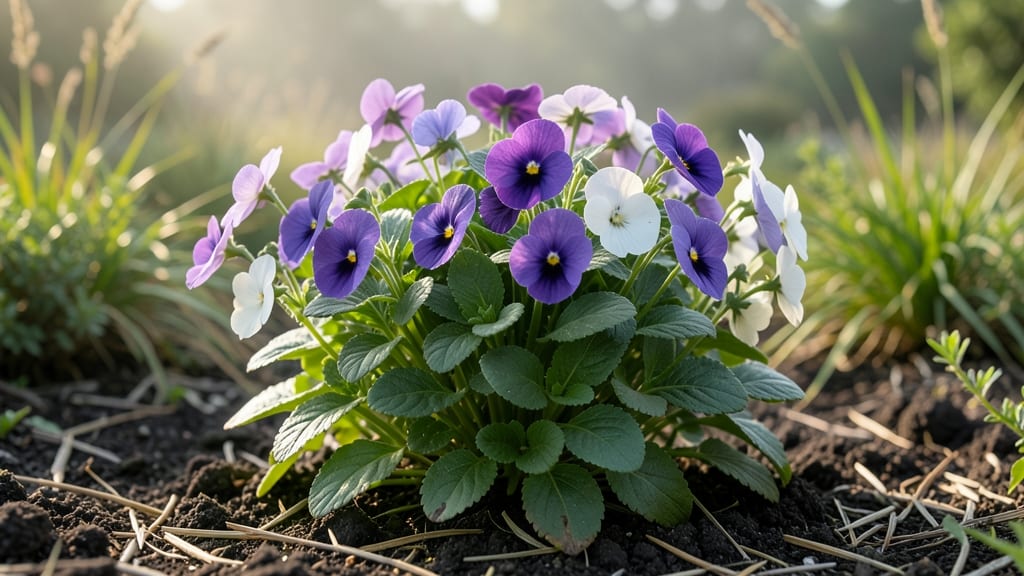
Violas are perennials in USDA zones 4-9, thriving as cold-hardy plants that regrow yearly from roots or self-seed. In warmer zones, they often behave as annuals but may persist with proper care and seasonal adjustments.
Violas earn their perennial reputation because their roots survive winter's chill, allowing them to bounce back each spring. 🌱 In colder regions like zones 4-7, they naturally enter dormancy when temperatures drop, only to burst forth with vibrant blooms when warmth returns.
The key difference in warmer climates is that violas often struggle to endure extreme heat without extra care—think of them as "perennial-wannabes" that can stretch their lifespan with the right conditions.
What sets violas apart from true annuals is their ability to self-seed, creating new plants from dropped seeds. This natural propagation means even if your main plants don't survive winter, you might get surprise blooms the following season.
For gardeners in zones 10+, the secret to keeping violas thriving year-round lies in proper mulching and shade management during summer's peak heat.
💡 In This Article
- Viola Cold Hardiness by USDA Plant Zones
- Extending Viola Lifespan in Warm Climates
Viola cold hardiness by USDA plant zones
Violas earn their perennial status because their root systems can withstand freezing temperatures down to 10°F in ideal conditions, though most varieties struggle below 20°F without protection.
The science lies in their deep taproots, which store carbohydrates during summer to fuel regrowth when temperatures rise again. 🌱 In USDA zones 4-6, violas naturally enter dormancy when nighttime temperatures drop below 32°F, with their foliage dying back but roots remaining alive beneath the soil.
Zone 7-9 violas face different challenges—they can handle brief cold snaps but often suffer from prolonged exposure to 20°F or lower. The critical factor is duration: a 24-hour freeze at 25°F may damage foliage but won't kill the roots, while 48 hours below 20°F risks complete die-off.
This explains why violas in zone 8 might survive winter in sheltered microclimates but fail in exposed garden beds. The hardiest varieties like Viola cornuta (cornuta) can push these limits further, sometimes enduring 15°F with proper mulching.
Dormancy is where violas outperform many perennials. Unlike plants that require constant moisture, violas can enter a semi-dormant state where their metabolic processes slow dramatically, using stored energy to protect vital tissues.
This adaptation explains why you might see violas blooming again in spring after what appeared to be total winter kill—the roots were quietly waiting for warmth. 💛 The trade-off is that their regrowth speed depends on how well they've stored reserves, which is why consistent summer care matters even for winter survival.
Regional exceptions create fascinating patterns. In the Pacific Northwest (zone 7-8), violas often thrive as perennials because of the region's mild winters and high humidity, which reduces frost damage.
Conversely, in the Midwest (zone 5-6), violas may need winter protection like 3-4 inches of mulch to prevent soil temperature fluctuations that can stress roots. The key difference is soil insulation—warmer ground temperatures in the Pacific Northwest mean violas experience less extreme root zone stress than in continental climates.
What most gardeners don't realize is that violas' cold tolerance varies by cultivar. The classic pansy varieties (Viola × wittrockiana) typically top out at zone 7 hardiness, while native woodland violas (Viola sororia) can handle zone 4 conditions.
This explains why some gardeners in zone 6 report violas returning year after year while others see them disappear after the first winter—the difference often comes down to selecting the right variety for your specific microclimate. 🌿
For those in marginal zones (6-7), the secret to perennial success lies in creating a "winter blanket" effect. Combine 2-3 inches of straw mulch with a layer of evergreen boughs to block wind and radiant heat loss.
This simple technique can raise soil temperatures by 5-10°F during cold snaps, making the difference between root survival and die-off. The mulch also prevents soil heaving—when water freezes and expands, pushing roots out of the ground where they can be exposed to lethal cold.