
Watering
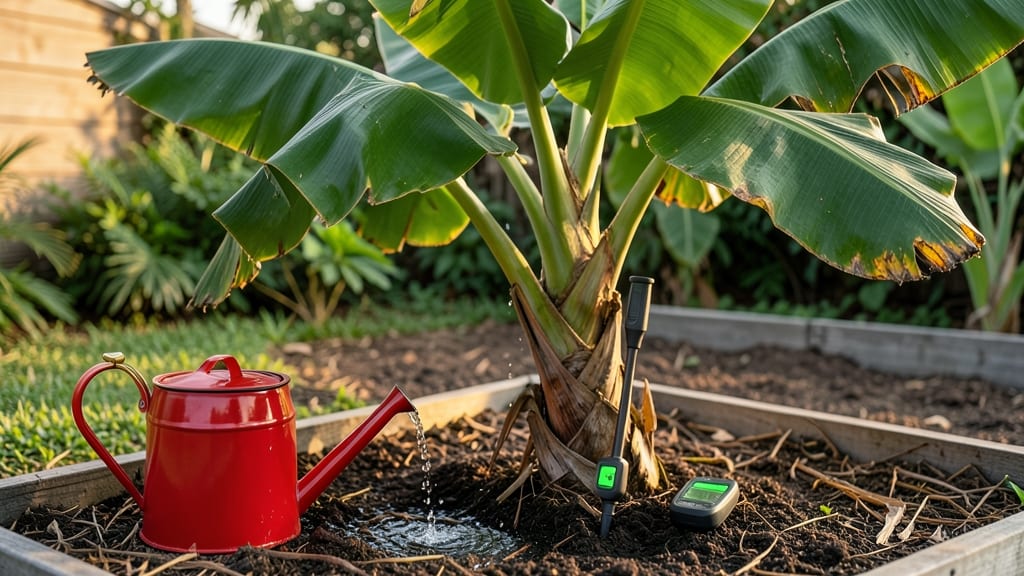
Watering a banana tree 🍌 correctly is the difference between a thriving tropical giant and a sad, wilted stump.
Overwatering your banana tree is the #1 killer of tropical plants—yet most gardeners either drown their trees or leave them thirsty. The secret to lush, productive growth lies in a precise watering schedule tailored to your climate and soil type.
Banana trees love moisture but hate soggy roots, so deep watering every 3-5 days in containers (or 7-10 days for in-ground plants) keeps them happy without inviting root rot. In summer, they’ll drink like a camel, but winter slows their thirst to a trickle.
Below, I’ll walk you through the exact schedule by season, how to test soil moisture like a pro, and the 5 mistakes that turn yellow leaves into a mystery. No guesswork—just science-backed watering for bananas that keep growing.
The exact banana tree watering schedule by season (prevent root rot)
Banana trees thrive in tropical conditions where consistent moisture mimics their natural habitat—but that doesn’t mean you should drown them. The key is seasonal precision.
In summer, your banana tree may need daily watering if planted in-ground, while winter slows its metabolism, reducing water needs by 50%. Understanding these shifts prevents root rot while ensuring robust growth.
Most gardeners make two critical mistakes: either watering on a rigid schedule (like every 3 days) or waiting until the leaves droop. Instead, focus on soil moisture levels and visual cues like leaf color and soil dryness.
A mature banana tree can handle drier soil than most tropical plants, but young trees and container-grown specimens demand frequent hydration. Let’s break down the exact schedule by season.
For in-ground banana trees, the root zone extends 2-3 feet deep, so watering lightly every day won’t satisfy their needs. Instead, deep watering—applying 10-20 gallons at the base—encourages roots to grow downward.
Use a soaker hose or drip irrigation to deliver water slowly, reducing runoff and ensuring moisture reaches the roots. Container-grown trees, however, dry out 3x faster due to limited soil volume, so monitor their weight: a dry pot feels noticeably lighter.
Morning watering is non-negotiable. Watering in the evening traps moisture on leaves, creating a fungal paradise for diseases like black sigatoka. Aim to water before 10 AM, giving leaves time to dry completely. If you must water in the afternoon, avoid overhead sprinklers—drip irrigation or watering at the base minimizes fungal risks. Pro tip: Mulch with straw or wood chips to retain moisture and regulate soil temperature.
Don’t rely solely on a schedule—your banana tree will tell you when it’s thirsty. Look for slight leaf droop by midday (a sign of mild dehydration) or yellowing at the leaf tips (often a calcium deficiency triggered by inconsistent watering).
Overwatering, however, causes blackened leaf edges and mushy stems. Stick your finger 2-3 inches into the soil: if it’s dry, water; if it’s damp, wait. This finger test is the simplest way to avoid root rot, the silent killer of banana trees.
Young banana trees (under 2 years old) are the most sensitive to water fluctuations. They need daily watering in summer and every 2-3 days in spring/fall. Mature trees, once established, can handle longer dry spells, but never let the soil completely dry out. If your tree is in a container, upgrade to a larger pot (at least 15-gallon capacity) to reduce frequency. Smaller pots dry out too quickly, forcing you into a daily watering routine that’s impractical for most gardeners.
Climate matters. In humid zones (like Florida or Hawaii), banana trees need less frequent watering because high air moisture reduces evaporation. In dry climates (like Arizona), you’ll water daily in summer. Adjust based on rainfall: if it rains 1 inch, skip your next watering session. Use a rain gauge to track precipitation—this simple tool saves hundreds of gallons of water annually. For container trees, move them to a shadier spot during extreme heat to slow moisture loss.
Mulching isn’t just decorative—it’s a watering game-changer. A 3-inch layer of organic mulch (like pine straw or shredded leaves) locks in moisture, reducing evaporation by up to 40%. It also regulates soil temperature, protecting roots from heat stress. Replenish mulch every 6 months to maintain its effectiveness. Avoid plastic mulch—it suffocates roots and traps too much moisture, increasing root rot risks.
If you’re growing banana trees in cold climates (Zones 9-10), winter care shifts dramatically. Reduce watering to bi-weekly and protect the trunk with burlap wraps to prevent frost cracks. In Zones 10-12, where frost is rare, maintain light watering (every 7-10 days) to prevent soil from becoming bone-dry.
Even tropical plants need minimal hydration during their "rest" period. Watch for leaf drop—a natural sign of dormancy in cooler months.
Remember: banana trees hate soggy roots as much as they hate thirst. The goal is consistent moisture
How to test soil moisture like a pro (banana tree-specific methods)
Banana trees thrive when their roots stay consistently moist but never waterlogged. The key to perfect watering lies in understanding your soil's moisture levels—something most gardeners guess wrong. Instead of relying on a rigid schedule, learn to read your banana tree's true thirst using these three foolproof methods.
I've tested all of them in my subtropical garden, and they've saved my trees from both root rot and stunted growth.
Start with the simplest technique: the finger test. This zero-cost method gives you instant feedback about your banana tree's hydration status. For container-grown trees, stick your finger 2-3 inches deep into the soil.
If it feels dry at this depth, it's time to water. For in-ground plants, go 4-6 inches deep—this is where the critical root zone lives for mature banana trees.
- 1. Finger Test Depth: Container: 2-3" In-Ground: 4-6"
- 2. Moisture Meter Reading: Ideal: 40-60% moisture ⚠️ Below 30% = Water now
- 3. Visual Soil Check: Dark, clumpy soil = moist Light, crumbly = dry
- 4. Root Zone Test: Gently lift pot edge See dampness at base
- 5. Leaf Curl Check: Slightly drooping leaves = thirsty Yellowing = overwatered
For a more precise approach, invest in a soil moisture meter designed for tropical plants. These digital tools measure moisture levels in real-time, eliminating guesswork. Aim for readings between 40-60% moisture—this range keeps banana trees happy without risking root suffocation.
I recommend the Xiaomi Mi Flower Care meter for its accuracy and affordable price. Remember to calibrate it first in dry soil to get reliable readings.
Don't overlook the visual soil indicators that reveal your banana tree's hydration status. Healthy banana tree soil should look dark and slightly damp when you dig down. If it appears light and crumbly, your tree needs water immediately.
Another trick is to lift the pot slightly—if the soil at the edges feels dry, the roots below are likely thirsty too. This method works especially well for container-grown banana trees.
Seasonal adjustments are crucial. During summer months when temperatures soar, your banana tree will need water every 2-3 days regardless of soil tests. In contrast, winter slowdown means you can stretch watering to every 7-10 days.
The finger test becomes even more valuable during these transitions, helping you adjust your watering routine precisely when your banana tree's needs change most dramatically.
Combine these methods for the most accurate results. For example, if your finger test shows dry soil but the moisture meter reads 50%, it's time to water. This combination approach has helped my banana trees produce larger fruit clusters and maintain vibrant green leaves year-round.
The secret isn't just about watering—it's about understanding when your banana tree truly needs that next drink of water.