
Light Requirements
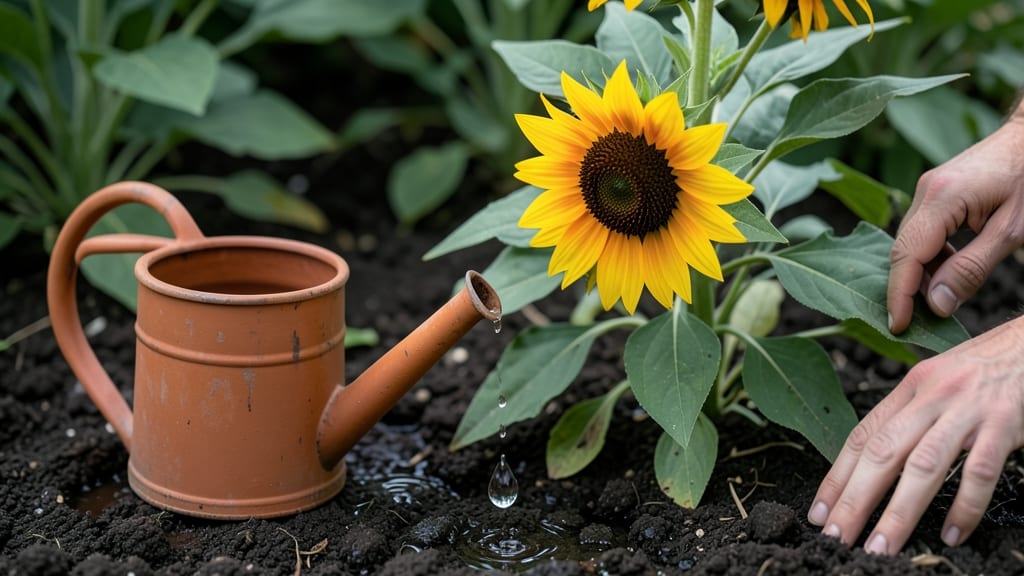
The black-eyed Susan water requirements are simple: these sun-loving perennials thrive with moderate water—enough to keep the soil lightly moist but not soggy, which is the key to their drought-resistant charm.
Struggling to keep your Black-Eyed Susans thriving without drowning them in water? These hardy perennials can survive drought—but only if you water them right.
Too little water, and they’ll wilt under the summer sun; too much, and their roots will rot. The trick is a consistent schedule that adapts to your climate and soil type.
In this guide, I’ll break down the exact watering routine—from seedlings to full bloom—plus how to spot over- or under-watering before it’s too late.
Black Eyed Susan water requirements: how much and when to water for optimal growth
Black Eyed Susans (Rudbeckia hirta) are famously drought-tolerant, but that doesn't mean they thrive on neglect. These cheerful perennial flowers need consistent moisture during key growth stages to produce their signature golden-yellow blooms.
The trick? Watering deeply but infrequently—especially in drought-prone climates—while avoiding soggy soil that invites disease. Let's break down their exact needs by growth phase so you can keep your plants happy without wasting water.
Newly planted seedlings and young Black Eyed Susans demand the most attention. During their first 30-60 days in the ground, they need 1 inch of water per week to establish strong roots. This means watering 2-3 times per week (about 1 cup per plant) until they're well-rooted.
Overwatering here is riskier than underwatering—root rot can kill tender seedlings faster than drought. Always check soil moisture by sticking your finger 2 inches deep; if it's dry, water again.
Once established, mature Black Eyed Susans (after their first growing season) become remarkably self-sufficient. In spring and fall, aim for 1 inch of water every 7-10 days, adjusting based on rainfall.
During peak summer blooming, increase to 1-1.5 inches weekly, but water deeply—soaking the soil to 6 inches deep—rather than frequent light watering. This encourages deep root growth and drought resistance.
Mulching with 2-3 inches of organic mulch (like straw or shredded leaves) retains moisture and reduces evaporation by up to 30%.
Here’s your quick reference for Black Eyed Susan water needs by growth stage and season:
| Growth Stage | Water Frequency | Depth per Watering | Best Time to Water | Seasonal Notes |
|---|---|---|---|---|
| Seedlings (0-30 days) | Every 2-3 days | 1 inch deep | Morning (6-9 AM) | Keep soil consistently moist; avoid overhead watering |
| Established Plants (Spring/Fall) | Every 7-10 days | 2-3 inches deep | Early morning or late afternoon | Reduce frequency if rainfall exceeds 0.5 inch/week |
| Blooming Season (Summer) | Every 5-7 days | 3-4 inches deep | Morning (before 10 AM) | Mulch to retain moisture; water at soil level to prevent fungal issues |
| Dormancy (Winter) | Monthly (if no snow) | 1 inch deep | Mid-morning | Only water if soil is bone-dry; avoid wet foliage |
| Container-Grown | Every 3-5 days | Soil surface to drainage holes | Morning | Use well-draining soil; empty saucers after watering |
One of the biggest mistakes gardeners make is watering Black Eyed Susans on a strict schedule without checking soil conditions. Instead, use the finger test: Insert your finger 2-3 inches deep into the soil. If it feels dry, water thoroughly.
If it’s still damp, wait another day. Overwatering shows up as yellowing leaves or mushy stems, while underwatering causes wilting or drooping blooms—even in hot weather.
In clay soil, reduce watering by 20% since it retains moisture longer; in sandy soil, increase frequency by 30% to compensate for drainage.
Drought-prone areas require extra strategy. Group Black Eyed Susans with other drought-tolerant perennials like coneflowers or sedum to create a low-water garden zone. Install a drip irrigation system set to deliver 0.5-1 inch per week, or use soaker hoses to water at the base.
For container plants, switch to terracotta pots (which dry out faster) and place them in shaded spots during peak heat to reduce evaporation. Even in dry climates, mulch heavily—this simple trick can cut your watering needs by nearly half.
Timing matters just as much as amount. Always water in the early morning (between 6-9 AM) to let foliage dry before evening, reducing fungal diseases like powdery mildew. Avoid watering at night, as damp leaves stay cold overnight, inviting rot.
If you must water in summer heat, do it in the late afternoon (after 4 PM) to give plants a chance to absorb moisture
Drought-resistant watering schedule: monthly calendar for Black Eyed Susans in different climates
Black Eyed Susans (Rudbeckia hirta) are famously drought-tolerant, but that doesn’t mean they thrive on neglect. The key lies in seasonal adjustments and soil-specific watering—especially when transitioning between USDA zones 3-10. In sandy soil, roots dry out faster, while clay soil holds moisture longer.
Mastering this schedule can cut your water needs by up to 30% while keeping those golden blooms vibrant. Let’s break it down month by month, with climate-specific tweaks to avoid over- or under-watering.
Your watering strategy should always start with mulching. A 2-3 inch layer of organic mulch (like straw or shredded leaves) locks in moisture and blocks weeds. Apply it after planting and replenish as it breaks down.
Pair this with rainfall substitution rules: if you get 0.5 inches of rain, skip your scheduled watering for that week. Track rainfall with a simple rain gauge or weather app to stay precise.
🌱 Numbered Highlights: Monthly Watering Guide for Black Eyed Susans
- Spring (March-May): Water deeply once a week (1-1.5 inches). Sandy soil? Add a second watering midweek. Clay soil? Reduce to bi-weekly if rain occurs.
- Summer (June-August): Increase to every 5-7 days (1.5-2 inches). Zones 8-10? Water morning-only to prevent fungal risks. Zones 3-5? Stick to evening watering to combat heat stress.
- Fall (September-November): Taper to bi-weekly (1 inch). First frost approaching? Reduce to monthly. Mulch heavily to protect roots.
- Winter (December-February): No watering in zones 3-6. Zones 7-10? Water monthly only if soil is bone-dry (stick a finger 2 inches deep—if dry, water lightly).
💧 Pro Tip: Always water at the base, not overhead, to prevent mildew and encourage deep root growth.
Adjustments for container-grown Black Eyed Susans are critical. Potted plants dry out 3x faster than in-ground varieties. Water every 3-5 days in summer, checking soil moisture daily. Use terracotta pots—they wick moisture away faster than plastic, helping prevent root rot.
For containers, drip irrigation or self-watering globes are game-changers, delivering consistent moisture without waste.
Watch for visual cues to fine-tune your schedule. Wilted leaves by midday? You’re underwatering. Yellowing foliage or mushy stems? Overdoing it. Black Eyed Susans in full sun (their ideal condition) will wilt faster than those in partial shade, so increase water by 20% in hotter microclimates.
Pair this with drip irrigation for precision—it delivers water directly to roots, reducing evaporation by up to 40%.
Don’t forget rainfall substitution rules. If your area gets 1 inch of rain, skip your next scheduled watering. Use a rain gauge (or a tuna can buried in your garden) to measure accurately.
In clay-heavy soils, rainfall penetrates slowly—wait 24 hours after rain before checking moisture levels. For sandy soils, rainfall evaporates quickly, so water the day after a light rain to maintain consistency.
By following this monthly calendar and adjusting for your soil type and climate, your Black Eyed Susans will reward you with bold, long-lasting blooms—even in drought conditions. Start with mulch, track rainfall, and water deeply but infrequently. Your plants (and your water bill) will thank you. 🌻